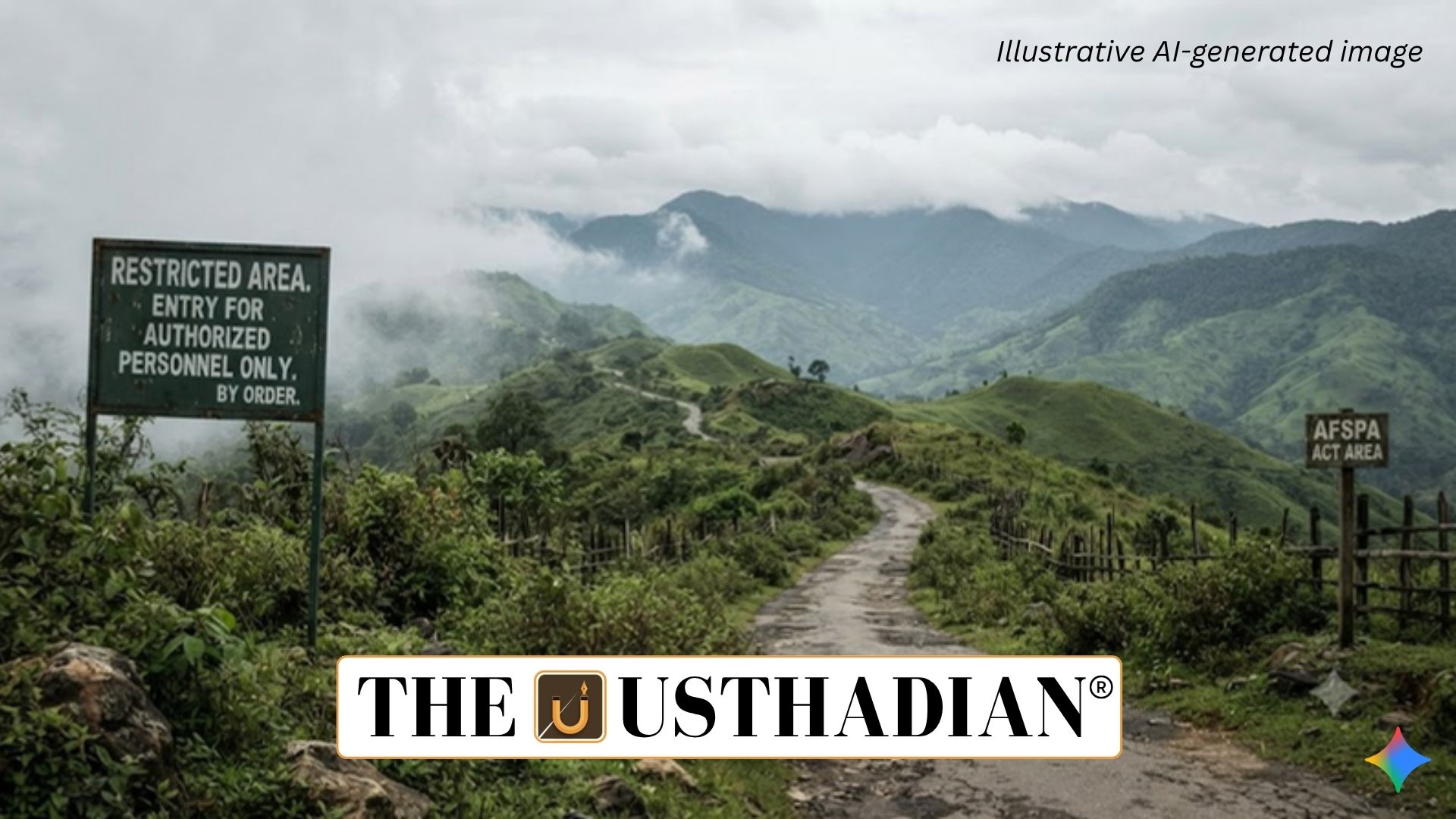
AFSPA Extended for Six Months
AFSPA Extension Continues in Parts of Northeast India: The Central Government has extended the application of the Armed Forces (Special Powers) Act, 1958 (AFSPA) in specified areas of Manipur, Nagaland and Arunachal Pradesh for another six months.
The latest extension will operate from 1 October 2026 to 31 March 2027, unless withdrawn earlier. The notifications were issued by the Ministry of Home Affairs (MHA) following a review of the law-and-order situation in the concerned areas.
AFSPA applies only to areas officially declared as “disturbed areas” under the Act. Its continuation therefore differs across districts and police-station jurisdictions.
Manipur
In Manipur, the disturbed-area declaration has been extended across the state with specified exclusions. Areas under 13 police stations in five districts have been kept outside the latest extension.
The excluded police-station areas include Imphal, Lamphel, City, Singjamei, Patsoi, Wangoi, Porompat, Heingang, Irilbung, Thoubal, Bishnupur, Nambol and Kakching.
Consequently, the extension does not apply uniformly to every part of Manipur. The notification identifies the specific jurisdictions where the disturbed-area declaration continues.
Nagaland
In Nagaland, the extension covers nine districts: Dimapur, Niuland, Chumoukedima, Mon, Kiphire, Noklak, Phek, Peren and Meluri.
AFSPA will also remain applicable in areas under 21 police stations located in five other districts. These districts are Kohima, Mokokchung, Longleng, Wokha and Zunheboto.
The arrangement demonstrates that AFSPA coverage can be defined both by complete districts and by specific police-station jurisdictions.
Arunachal Pradesh
In Arunachal Pradesh, the disturbed-area order continues in Tirap, Changlang and Longding districts.
It also covers areas under Namsai, Mahadevpur and Chowkham police stations in Namsai district. These areas are significant because Namsai district is contiguous with Assam.
The continuation of these specified areas follows the pattern used in earlier Central Government notifications concerning AFSPA in Arunachal Pradesh.
Key Provisions of AFSPA
The Armed Forces (Special Powers) Act, 1958 provides specified powers to authorised armed-forces personnel operating in areas declared disturbed under the legislation.
Section 3 empowers the appropriate government to declare an area a disturbed area when it considers the use of armed forces necessary for maintaining or restoring public order in circumstances covered by the Act.
In a disturbed area, authorised personnel may exercise certain statutory powers. These include using force, including force that may result in death, under specified circumstances.
They may also arrest without warrant and search without warrant subject to the conditions prescribed by the Act. The legislation further provides powers relating to the destruction of arms dumps, fortified positions and shelters used by armed groups, within its statutory framework.
Static GK fact: AFSPA was enacted in 1958 for the then Naga Hills and adjoining areas. The legislation is distinct from the Armed Forces (Punjab and Chandigarh) Special Powers Act, 1983, which was enacted separately.
Static Usthadian Current Affairs Table
AFSPA Extension Continues in Parts of Northeast India:
| Fact | Detail |
| Full Name | Armed Forces (Special Powers) Act, 1958 |
| Latest Extension | 1 October 2026 to 31 March 2027 |
| Reviewing Ministry | Ministry of Home Affairs |
| Key Provision | Section 3 – declaration of disturbed areas |
| Manipur | Specified areas; 13 police-station jurisdictions excluded |
| Nagaland | Nine districts plus areas under 21 police stations in five districts |
| Arunachal Pradesh | Tirap, Changlang and Longding, plus specified Namsai areas |
| Major Powers | Arrest, search and use of force under specified conditions |
| Nature of Application | Limited to areas declared as disturbed |