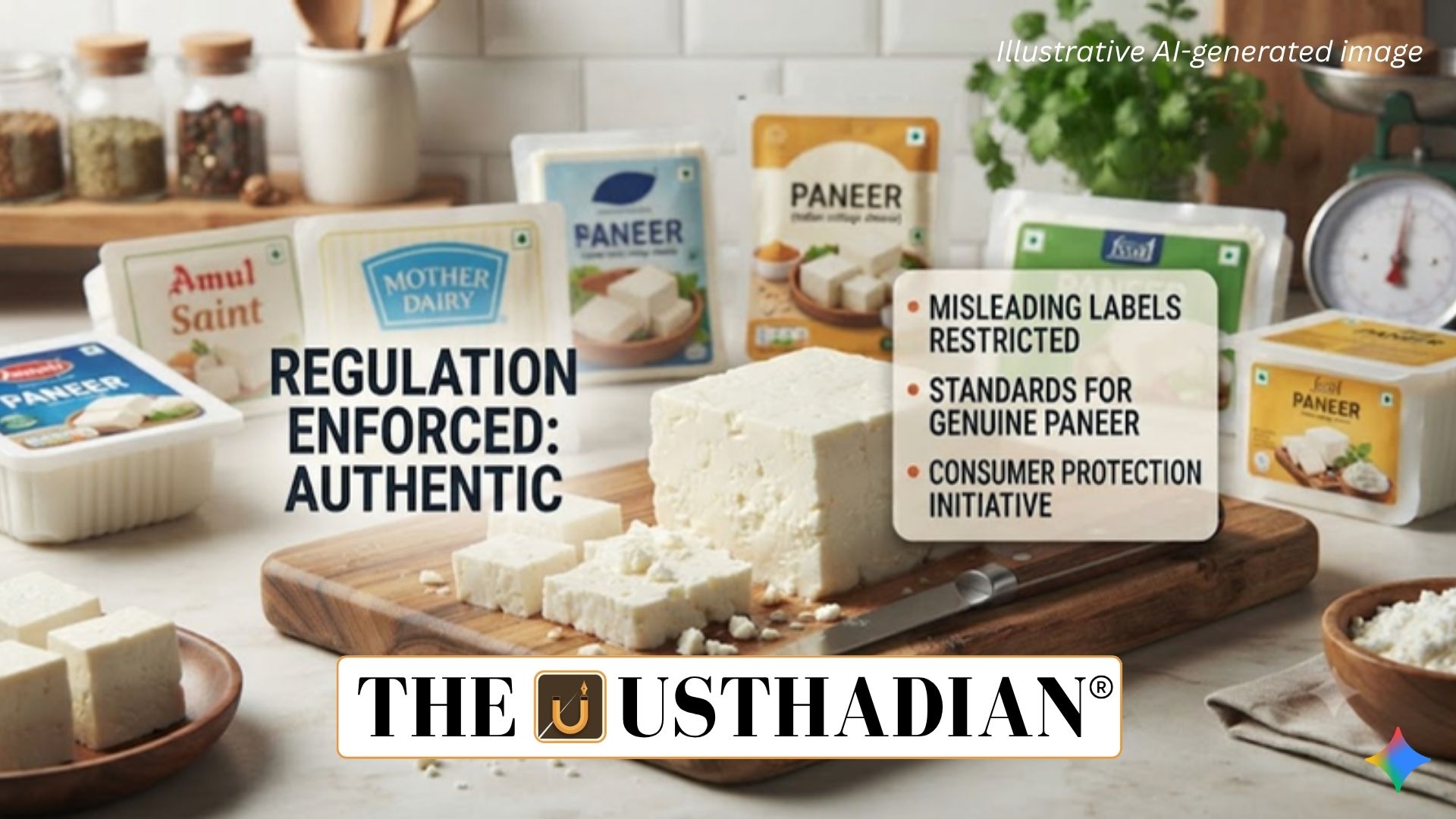
FSSAI Proposes New Paneer Labelling Rule
FSSAI Moves to Restrict Misleading Use of Paneer Label: The Food Safety and Standards Authority of India (FSSAI) has proposed restrictions on the use of the term “paneer” for certain non-milk products. The proposal is contained in the draft Food Safety and Standards (Prohibition and Restrictions on Sales) Amendment Regulations, 2026, published on 24 September 2026.
FSSAI has invited objections and suggestions from stakeholders during a 60-day consultation period. The proposal is intended to ensure that food names and labels accurately communicate the nature and composition of products to consumers.
Static GK fact: FSSAI is India’s statutory food regulator and functions under the Food Safety and Standards Act, 2006.
What the Draft Proposes
The draft seeks to restrict products classified under “Analogue in Dairy Context” from using the word “paneer” in their product name or labelling.
Such products may imitate the appearance, texture or functional characteristics of conventional dairy foods while using non-milk ingredients to replace one or more milk constituents. The proposed restriction therefore focuses on preventing consumers from assuming that an analogue product is genuine milk-based paneer.
The measure is currently only a draft proposal. It will undergo the prescribed consultation process before any final regulatory change takes effect.
Understanding Dairy Analogue Products
A dairy analogue is a product formulated to resemble a conventional milk-based food but in which one or more milk components are replaced with non-milk ingredients.
These products can be designed to provide characteristics similar to dairy foods, including appearance, texture or performance. The distinction becomes important when products are marketed because consumers may rely on names and labels to determine whether food is actually derived from milk.
Clear nomenclature can therefore help consumers distinguish between traditional dairy products and dairy analogues.
Static GK Tip: Food labelling is important because consumers must be able to identify the composition and nature of packaged and processed foods without being misled by their presentation.
Earlier Action on Cheese Analogues
The latest proposal follows earlier regulatory attention to non-dairy cheese analogues. In April 2026, FSSAI’s West Region issued a public notice concerning compliance requirements for cheese analogues.
The notice highlighted that marketing a cheese analogue as “paneer” could violate applicable food-safety requirements. It also emphasised the need for appropriate and transparent product nomenclature.
The September draft seeks to provide a more explicit regulatory basis by proposing an amendment to the Food Safety and Standards (Prohibition and Restrictions on Sales) Regulations, 2011.
Why Labelling Matters
The proposed change primarily concerns consumer information and accurate nomenclature, rather than a blanket ban on dairy analogue products.
Analogue products may continue to exist subject to applicable food-safety and labelling requirements. The central issue is whether their names or descriptions could create an incorrect impression about their ingredients or dairy origin.
The consultation process allows food businesses, manufacturers, consumers and other stakeholders to submit their views before the proposal is finalised.
Role of FSSAI
The Food Safety and Standards Authority of India was established under the Food Safety and Standards Act, 2006. Its responsibilities include establishing food standards, regulating food businesses and supporting enforcement of food-safety requirements.
The proposed paneer restriction reflects FSSAI’s broader role in ensuring that food products are properly identified, safely produced and transparently labelled.
Static Usthadian Current Affairs Table
FSSAI Moves to Restrict Misleading Use of Paneer Label:
| Fact | Detail |
| Regulator | Food Safety and Standards Authority of India |
| Draft published | 24 September 2026 |
| Consultation period | 60 days |
| Main proposal | Restrict use of “paneer” for specified dairy analogue products |
| Relevant category | Analogue in Dairy Context |
| Main objective | Prevent misleading product nomenclature and labelling |
| Earlier intervention | FSSAI West Region notice in April 2026 |
| Regulations proposed to be amended | Food Safety and Standards (Prohibition and Restrictions on Sales) Regulations, 2011 |
| Parent legislation | Food Safety and Standards Act, 2006 |
| Nature of September proposal | Draft, not yet a final prohibition |