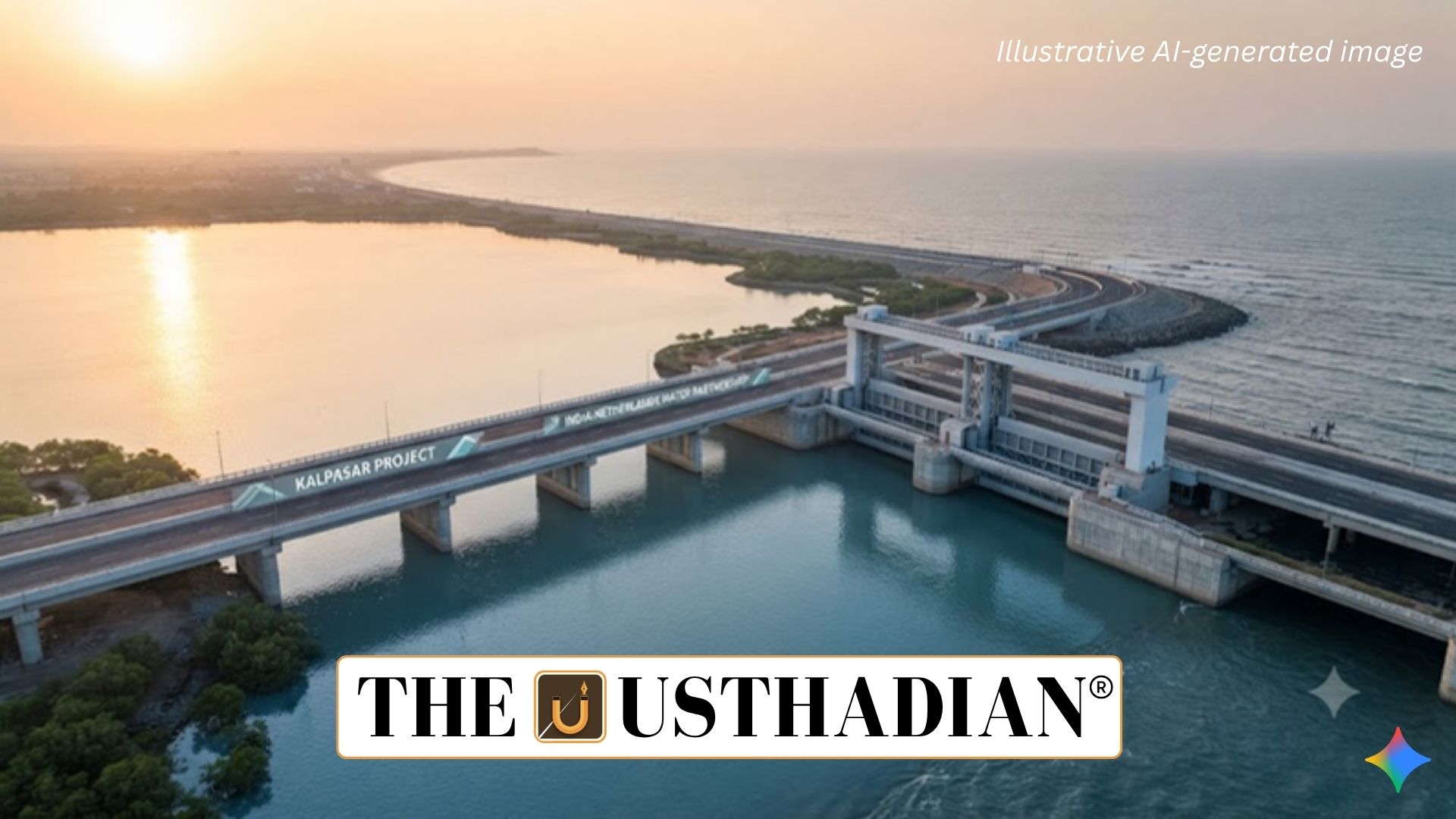
India Netherlands Sign Water Sector MoUs
India and Netherlands Deepen Water Cooperation Through Kalpasar Project: India and the Netherlands have strengthened cooperation in water management through two Tripartite Memorandums of Understanding (MoUs) linked to Gujarat’s Kalpasar Project.
The agreements involve India’s Central Water Commission, the Kalpasar Department of the Government of Gujarat, and Dutch institutions Deltares and TU Delft. The partnership will provide technical expertise in hydraulic and hydrological modelling, coastal engineering, climate resilience and water-resource management.
The cooperation follows a Letter of Intent for technical collaboration signed during Prime Minister Narendra Modi’s visit to the Netherlands in May 2026.
Understanding the Kalpasar Project
The Kalpasar Project, also known as the Gulf of Khambhat Project, is a major water-resource initiative proposed by Gujarat. It envisages constructing a barrier or barrage across the Gulf of Khambhat to create a large freshwater reservoir.
The proposed reservoir would utilise freshwater from rivers including the Narmada, Mahi, Dhadhar and Sabarmati. A major objective is to improve water availability, particularly for the water-stressed Saurashtra region.
The project also envisages infrastructure connectivity through a highway and railway corridor. According to the Ministry of Jal Shakti, the broader plan includes around 2,470 MW of hybrid renewable-energy generation on reclaimed land.
Static GK fact: The Gulf of Khambhat is located along Gujarat’s coast and is an important tidal gulf opening into the Arabian Sea.
Technical Areas Covered by the MoUs
The Dutch partnership will bring specialised expertise into the planning and technical assessment of the project. Major areas of cooperation include hydraulic and hydrological modelling, coastal and structural engineering, climate-resilient infrastructure and salinity management.
The collaboration will also cover technical evaluation of project designs, ecological considerations, digital applications, knowledge transfer and capacity building.
Such expertise is particularly relevant because a large coastal water project must account for tides, sediment movement, salinity, hydrological flows, ecological impacts and climate-related risks.
Improving the Project Design
The Ministry of Jal Shakti has indicated that the cooperation will contribute to strengthening the Detailed Project Report (DPR) for Kalpasar. International experience in coastal engineering and water management is expected to support technical evaluation and improve the project’s resilience.
The partnership also creates opportunities for technology transfer and institutional capacity building between Indian and Dutch water-sector organisations.
Static GK Tip: Deltares is a Netherlands-based independent institute specialising in water and subsurface research, while TU Delft is one of the Netherlands’ major technical universities.
Afsluitdijk and Dutch Water Expertise
The cooperation also draws attention to the Netherlands’ long experience in managing water and coastal risks. During his May 2026 Netherlands visit, Prime Minister Narendra Modi visited the Afsluitdijk, a major Dutch dam and causeway.
The Afsluitdijk stretches approximately 32 kilometres and is associated with flood protection, water management and land-reclamation efforts in the Netherlands.
Its engineering experience provides a useful reference point for discussions surrounding large-scale coastal and hydraulic infrastructure, although the Kalpasar Project has its own distinct geographical and technical requirements.
Broader India Netherlands Water Partnership
The Kalpasar MoUs form part of wider India-Netherlands cooperation in water management. The Netherlands is also among the cooperating countries associated with India International Water Week 2026.
The partnership combines India’s regional water-resource requirements with Dutch expertise in coastal engineering, hydraulic modelling and climate-resilient water infrastructure.
Static Usthadian Current Affairs Table
India and Netherlands Deepen Water Cooperation Through Kalpasar Project:
| Fact | Detail |
| Project | Kalpasar Project |
| Alternative name | Gulf of Khambhat Project |
| State | Gujarat |
| Indian institutions | Central Water Commission and Gujarat Kalpasar Department |
| Dutch institutions | Deltares and TU Delft |
| Main focus | Water management and technical cooperation |
| Major rivers | Narmada, Mahi, Dhadhar and Sabarmati |
| Proposed renewable capacity | 2,470 MW hybrid renewable energy |
| Key technical areas | Hydraulic modelling, coastal engineering and climate resilience |
| Major concern | Salinity, ecology and coastal impacts |
| Dutch reference project | Afsluitdijk |
| Afsluitdijk length | About 32 km |
| Related Indian initiative | India International Water Week 2026 |