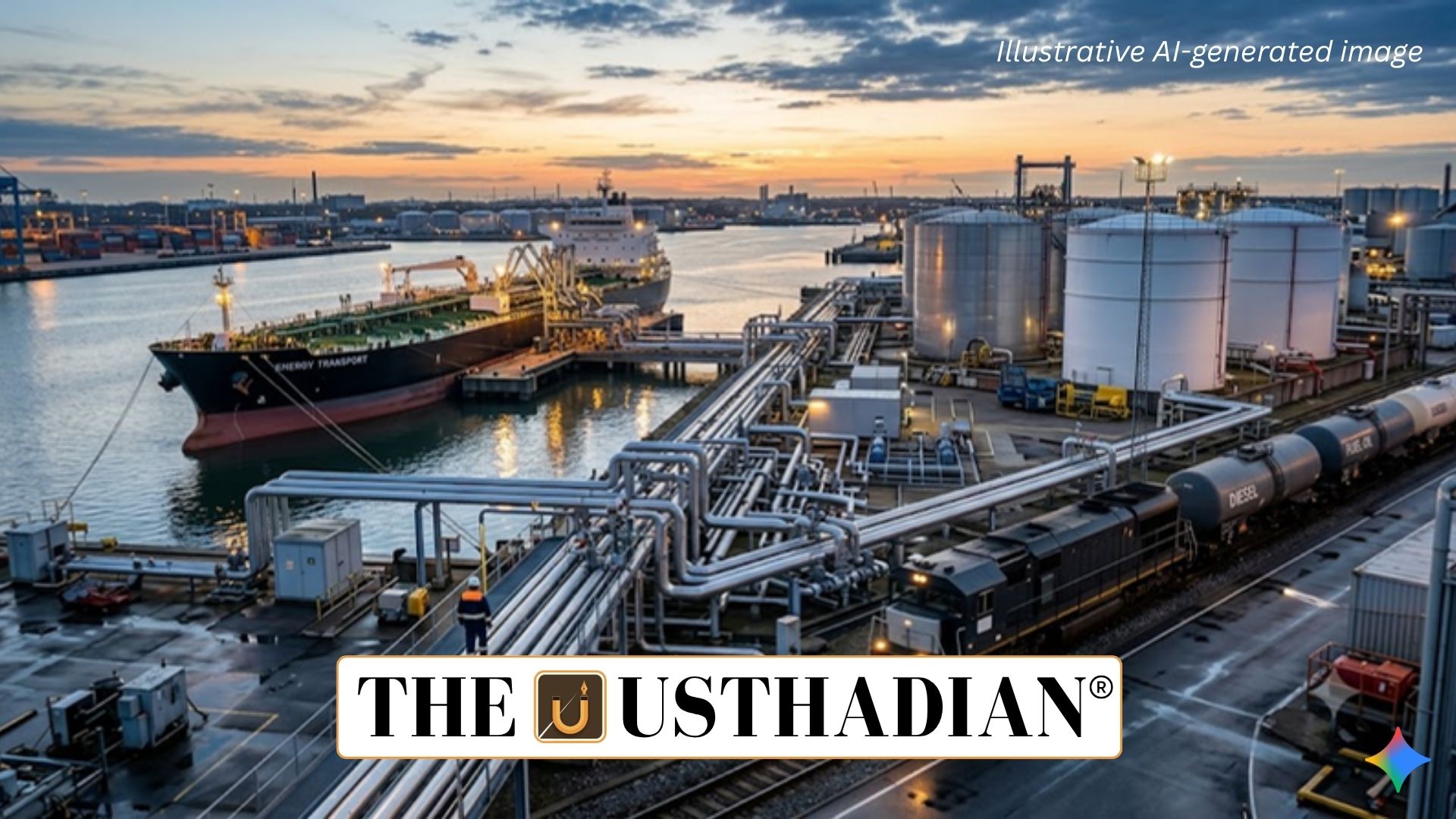
US Changes Course on Russian Diesel
US-Russia Diesel Deal Gives India Leverage on Russian Oil: The reported US-Russia diesel arrangement has renewed debate over Washington’s policy towards Russian energy exports. While the United States has pressured India over its purchases of Russian crude oil, the reported temporary authorisation for Russian-origin diesel transactions highlights the tension between sanctions policy and domestic energy requirements.
US President Donald Trump has faced pressure to address rising fuel prices. Diesel is essential for freight transport, agriculture and construction, making price increases a concern for businesses, consumers and policymakers.
According to the supplied report, disruptions affecting fuel movement through the Strait of Hormuz, together with attacks on Russian energy infrastructure, contributed to tighter diesel supplies and higher prices.
Static GK fact: The Strait of Hormuz connects the Persian Gulf with the Gulf of Oman and the Arabian Sea. It is a major global route for oil and liquefied natural gas shipments.
Details of the Reported Deal
The report states that Trump announced Russian diesel supplies in several stages: an initial shipment exceeding 300,000 tonnes, followed by 500,000 tonnes in November, one million tonnes subsequently and a further three million tonnes within a short period, subject to Russian refinery conditions.
It also describes a temporary US general licence permitting specified transactions involving Russian-origin diesel until 7 April of the following year.
However, the additional volumes may not be sufficient to resolve a wider global supply disruption. Russian export restrictions, damage to refinery infrastructure and tanker availability could constrain deliveries. The arrangement may ease immediate market concerns without providing a lasting solution to fuel-price pressures.
India’s Dependence on Russian Crude
India increased purchases of discounted Russian crude after Russia’s invasion of Ukraine in February 2022 prompted several Western countries to restrict Russian energy trade.
Russian oil subsequently became a major component of India’s crude imports. The supplied report states that Russia accounted for nearly half of India’s oil imports in August 2026, although the share had previously declined following sanctions on major Russian oil companies and trade-related pressures.
Supply disruptions in West Asia can increase the importance of alternative sources. As one of the world’s largest crude oil importers, India must consider price stability, reliable supplies and the broader consequences of external restrictions.
Static GK Tip: India imports a substantial share of its crude oil requirements, making international prices, exchange-rate movements and shipping-route disruptions important factors in its energy security.
Sanctions and the Graham Act
The supplied report refers to the Lindsey O. Graham Sanctioning Russia and Iran Act of 2026, described as enabling tariffs of up to 100% on countries purchasing Russian oil or gas, subject to presidential discretion and applicable provisions.
Such measures could affect India’s trade relations, energy costs and diplomatic engagement with Washington. Their actual consequences would depend on the legislation’s final legal scope, implementation and any waivers granted.
India’s Diplomatic Opportunity
The reported diesel arrangement gives India a potential argument in discussions with the United States: energy purchases should be assessed in the context of supply security and economic necessity.
Washington could respond that its temporary authorisation addresses exceptional market conditions rather than representing a general change in sanctions policy. India can nevertheless highlight its dependence on imported energy and seek predictable treatment, appropriate exemptions and continued access to affordable supplies.
The broader issue is strategic autonomy—India’s ability to make independent foreign-policy and economic decisions while maintaining important international partnerships.
Static Usthadian Current Affairs Table
US-Russia Diesel Deal Gives India Leverage on Russian Oil:
| Fact | Detail |
| US President | Donald Trump |
| Main issue | US policy towards Russian energy exports |
| Reported arrangement | Temporary authorisation for specified Russian diesel transactions |
| Initial reported supply | More than 300,000 tonnes |
| Key maritime route | Strait of Hormuz |
| India’s energy concern | Dependence on imported crude oil |
| Russian oil trade shift | Expanded after February 2022 |
| Legislation mentioned | Lindsey O. Graham Sanctioning Russia and Iran Act of 2026 |
| Potential tariff cited | Up to 100%, subject to applicable provisions |
| India’s diplomatic approach | Energy security, waivers and strategic autonomy |
| Core concept | Balancing sanctions policy with domestic energy requirements |