India Plans a Critical Mineral Stockpiling Policy
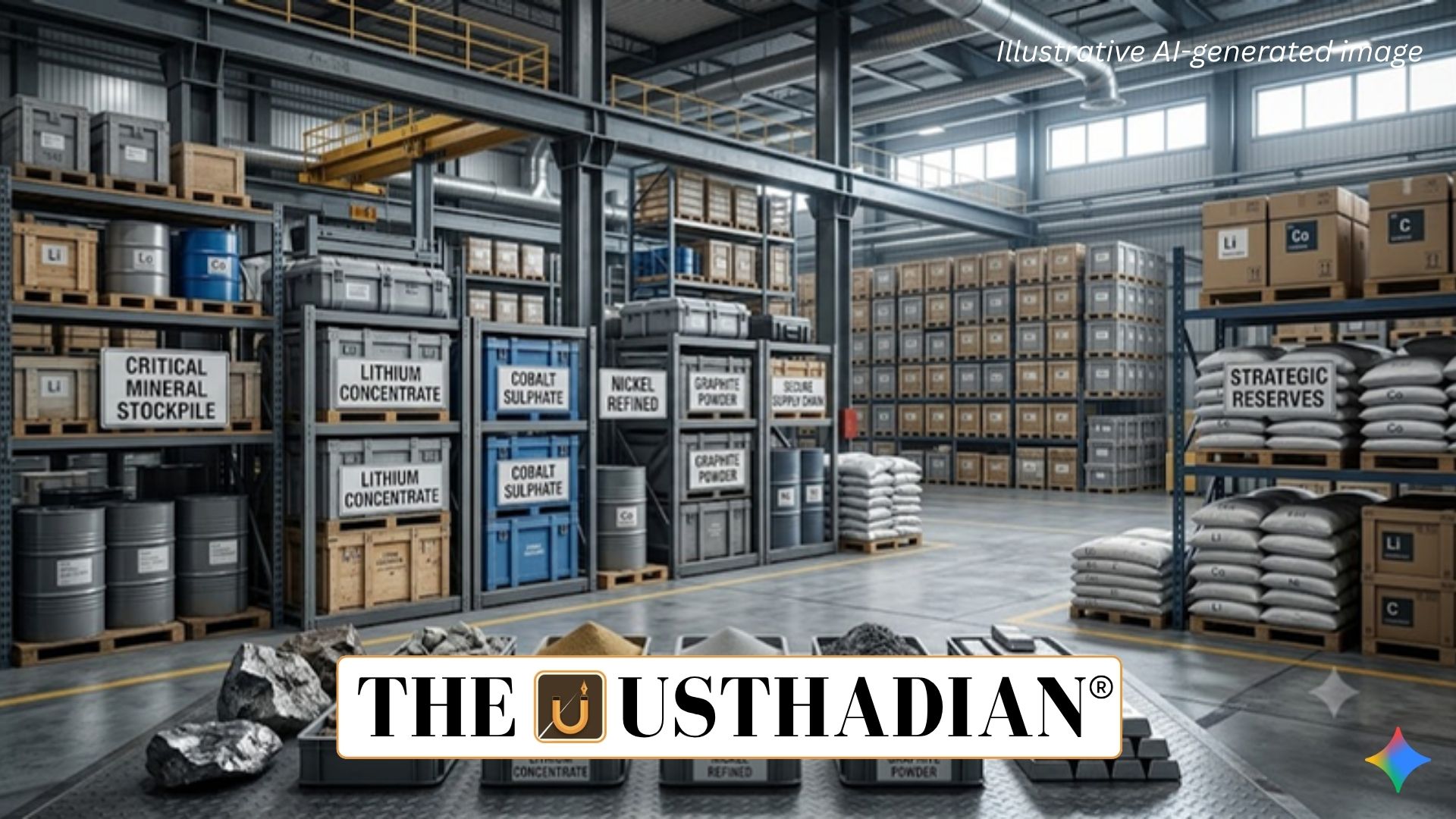
India Plans Strategic Stockpiles to Secure Critical Mineral Supplies: The Ministry of Mines is preparing a policy for strategic stockpiling of critical minerals to reduce import dependence and protect Indian industries from global supply disruptions. According to the supplied report, the policy is expected to be finalised within a month.
Critical minerals are raw materials essential for economic growth, technological development and national security. Their supply may be vulnerable because of geopolitical tensions, concentrated production and limited processing facilities.
Lithium and cobalt are important for rechargeable batteries, while nickel supports battery manufacturing and industrial applications. Copper is essential for electricity networks and renewable energy infrastructure. Rare earth elements are used in wind turbines, advanced electronics and other strategic technologies.
Why India Needs Strategic Mineral Reserves
A strategic stockpile is a reserve of essential materials maintained to ensure availability during emergencies or supply disruptions. India faces several challenges in securing critical minerals.
- Import dependence: Limited domestic production and processing expose industries to international price fluctuations and supply interruptions.
- Concentrated processing capacity: China accounts for approximately 90% of global critical mineral processing capacity, according to the supplied material. This concentration creates risks for countries dependent on international supplies.
- Geopolitical tensions: Export restrictions and trade disputes can affect electric vehicles, battery manufacturing and clean-energy infrastructure.
- Overseas acquisition difficulties: Projects involving foreign mineral assets can face financial, regulatory and implementation delays.
India has pursued overseas mineral investments through Khanij Bidesh India Ltd. (KABIL). Progress has been reported in Argentina, where KABIL has acquired five lithium brine blocks in Catamarca province. Other proposed investments have faced challenges.
Static GK fact: KABIL is a joint venture of three Central Public Sector Enterprises—National Aluminium Company Limited (NALCO), Hindustan Copper Limited (HCL) and Mineral Exploration and Consultancy Limited (MECL)—formed to secure critical and strategic minerals from overseas sources.
National Critical Minerals Mission
The National Critical Minerals Mission (NCMM) aims to strengthen India’s critical mineral supply chains through exploration, mining, overseas partnerships, recycling and domestic processing.
The mission proposes a National Critical Mineral Stockpile Programme with the following features:
| Component | Proposed provision |
| Financial allocation for stockpiling | ₹500 crore |
| Mission period | 2024–25 to 2030–31 |
| Minimum mineral coverage | At least five critical minerals |
| Institutional participation | Central PSUs and private companies |
| Primary objective | Maintain supplies during disruptions |
The proposed policy is expected to establish arrangements for selecting minerals, determining reserve quantities, storing materials and releasing them during emergencies.
Expanding Domestic Processing Capacity
Stockpiling offers short-term protection, but long-term security requires domestic processing capabilities and technological development. The government is considering specialised processing parks in four states to develop industrial ecosystems for particular minerals.
Such facilities could support processing infrastructure, specialised supply chains and downstream manufacturing. However, establishing them requires investment, technical expertise, skilled workers and reliable access to raw materials.
The Ministry of Mines has also identified nine Centres of Excellence to support indigenous processing technology development. A separate scheme for lithium and nickel processing has also been under consideration, given the importance of these minerals to battery manufacturing.
Static GK Tip: Mineral processing converts extracted ores or mineral-bearing materials into usable forms. Mining a mineral domestically does not automatically ensure supply security if the country still depends on overseas processing technology or facilities.
Challenges and Way Forward
India must address technological gaps, delays in overseas acquisitions and uncertainty over the implementation of strategic reserves. Effective stockpiling also requires clear institutional responsibilities, secure storage, regular replenishment and transparent release procedures.
The government should diversify international suppliers, accelerate domestic exploration, promote mineral recycling and strengthen partnerships with private industry. Indigenous research and environmentally responsible mining will also be important.
A coordinated strategy combining strategic reserves, overseas partnerships, domestic processing and technological self-reliance can help India reduce exposure to global supply shocks while supporting its clean-energy and manufacturing ambitions.
Static Usthadian Current Affairs Table
India Plans Strategic Stockpiles to Secure Critical Mineral Supplies:
| Fact | Detail |
| Nodal ministry | Ministry of Mines |
| National mission | National Critical Minerals Mission |
| Stockpiling allocation cited | ₹500 crore |
| Mission period | 2024–25 to 2030–31 |
| Proposed minimum stockpile coverage | Five critical minerals |
| Overseas mineral company | Khanij Bidesh India Ltd. |
| Lithium project location | Catamarca, Argentina |
| Centres of Excellence identified | Nine |
| Important battery minerals | Lithium, cobalt and nickel |
| Major supply-chain concern | Concentration of global processing capacity |
| Long-term strategy | Diversification, domestic processing and recycling |