UAPA and Its Legal Framework
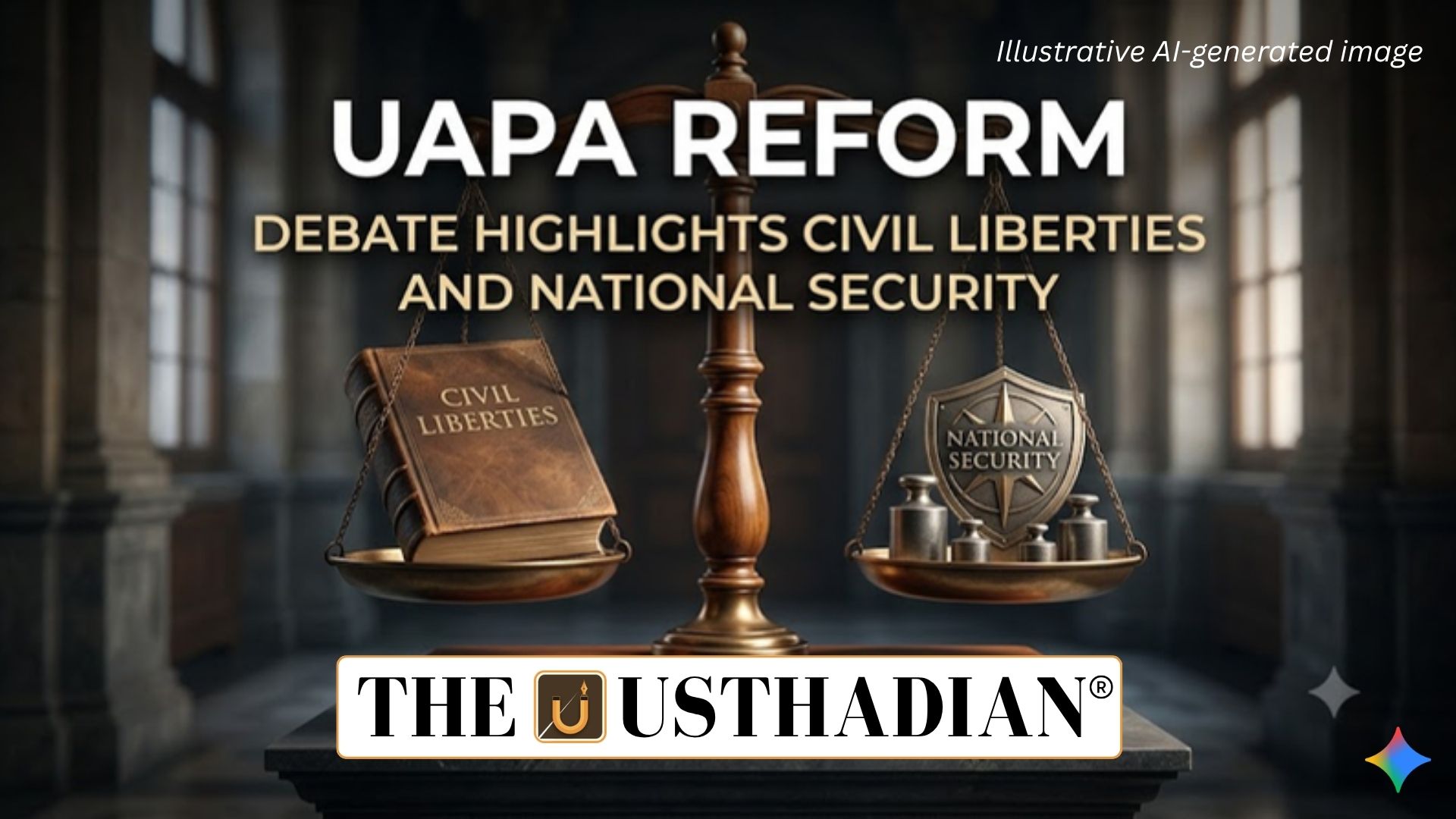
UAPA Reform Debate Highlights Civil Liberties and National Security: The Unlawful Activities (Prevention) Act, 1967 (UAPA) is a major Indian law dealing with unlawful activities and terrorism-related offences. It provides a legal framework for addressing threats to India’s sovereignty, integrity and security.
The death anniversary of former Delhi University professor G. N. Saibaba, observed on 12 October, has renewed debate about the law’s stringent bail conditions, broad provisions and implications for individual liberty.
The central issue is how to address genuine security threats while ensuring that enforcement remains consistent with constitutional safeguards.
Static GK fact: The UAPA was enacted in 1967. The 42nd Constitutional Amendment Act, 1976 moved public order and police-related subjects within the State List framework unchanged, while the 44th Amendment Act, 1978 strengthened certain safeguards relating to personal liberty.
Concerns About Prolonged Detention
Critics argue that individuals accused under the UAPA may spend years in prison before their trials conclude. Such cases raise questions about timely justice and the consequences of prolonged pre-trial detention.
Professor G. N. Saibaba, who had a severe physical disability, was arrested in 2014 over alleged links with Maoist organisations. A trial court convicted him in 2017 and sentenced him to life imprisonment. In 2024, the Bombay High Court acquitted him, highlighting concerns surrounding lengthy incarceration and criminal proceedings.
The case has renewed discussion about ensuring timely trials and meaningful judicial review. An acquittal is a judicial outcome and should not be confused with a general finding that every UAPA prosecution is unjustified.
Broad Provisions and Membership Questions
Another concern relates to the interpretation of unlawful organisational membership and terrorism-related conduct. Critics contend that broadly worded provisions can create uncertainty about the boundary between punishable activities and constitutionally protected expression or association.
Clear legal definitions and consistent interpretation are important to ensure that investigative powers operate within established legal limits.
Stringent Bail Conditions Under Section 43D(5)
Section 43D(5) of the UAPA imposes special restrictions on granting bail in cases involving specified UAPA offences. Bail may be denied when, after examining the case material in the legally prescribed manner, the court finds reasonable grounds for believing that the accusations are prima facie true.
Critics argue that this standard can make bail difficult, particularly when trials are delayed. Judicial decisions have also examined how courts should assess prosecution material and whether prolonged detention or delay justifies relief.
The Supreme Court has recognised that constitutional courts can grant relief where prolonged incarceration and trial delays violate fundamental rights, notwithstanding statutory bail restrictions.
Static GK Tip: Prima facie means “at first sight” or based on an initial assessment of the available material, rather than a final determination of guilt.
Constitutional Implications
The UAPA debate concerns several constitutional principles:
- Article 21: Protects life and personal liberty, subject to constitutionally valid legal procedures.
- Article 14: Guarantees equality before the law and equal protection of the laws.
- Due process and fair procedure: Criminal proceedings require appropriate safeguards and judicial scrutiny.
- Rule of law: Legal powers must operate within clear, consistent and accountable limits.
- Judicial independence: Courts review detention, interpret legislation and protect constitutional rights.
Priorities for Reform
Reform discussions focus on clarifying ambiguous provisions, improving judicial capacity, ensuring timely trials and developing consistent principles for bail decisions. Stronger case management and careful scrutiny of evidence may help reduce unnecessary detention without preventing action against genuine security threats.
Any reform must account for both national security requirements and the constitutional rights of accused persons.
Static Usthadian Current Affairs Table
UAPA Reform Debate Highlights Civil Liberties and National Security:
| Fact | Detail |
| Full form | Unlawful Activities (Prevention) Act |
| Year enacted | 1967 |
| Primary purpose | Address unlawful activities and terrorism-related offences |
| Key bail provision | Section 43D(5) |
| Constitutional safeguard | Article 21 |
| Equality provision | Article 14 |
| Legal term | Prima facie means based on an initial assessment |
| G. N. Saibaba case | Bombay High Court acquitted him in 2024 |
| Major reform concerns | Bail, trial delays, legal clarity and civil liberties |
| Central challenge | Balancing national security with constitutional freedoms |