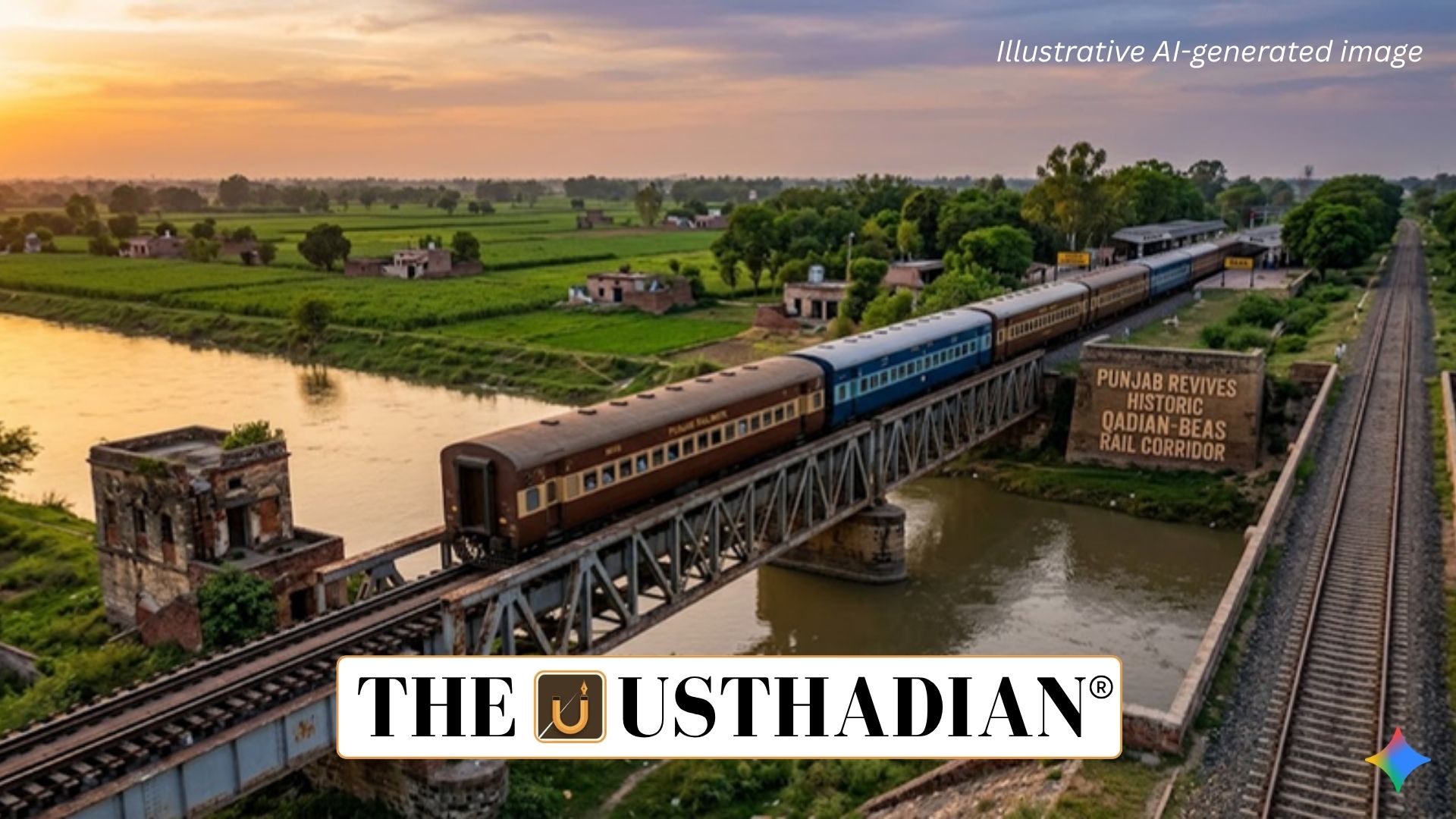
Century-Old Railway Project Gets New Momentum
Punjab Revives Historic Qadian Beas Rail Corridor: The Qadian–Beas Railway Line Project has been revived after remaining dormant for nearly a century. Announced by Union Minister of State for Railways and Food Processing Industries Ravneet Singh Bittu, the project will establish a 39.68-km broad-gauge railway corridor connecting Qadian in Gurdaspur district with Beas in Amritsar district.
The railway line is expected to improve regional connectivity, promote economic development, and provide better transportation facilities for the Majha region of Punjab. The project also strengthens the railway network in northern India by creating an additional rail corridor.
Route and Infrastructure
The proposed rail corridor will be developed by Northern Railway and will pass through Qadian, Dhapai, Ghuman, Butala, Sathiala, and Beas. The project will connect several underserved towns and villages to the national railway network, reducing travel time and improving access to markets and public services.
The project includes two crossing stations at Ghuman and Butala, ensuring smoother train movement and operational efficiency. Modern railway infrastructure will also be incorporated to enhance passenger safety and reliability.
Static GK fact: Northern Railway is one of the 18 railway zones of Indian Railways, with its headquarters located in New Delhi.
Modern Engineering Features
The railway corridor has been designed with advanced infrastructure to meet modern operational standards. It includes 11 major bridges, 121 minor bridges, and 54 Road Under Bridges (RUBs) to improve road-rail integration and reduce accidents at level crossings.
The line will also be equipped with advanced signalling systems, modern telecommunication facilities, and the Kavach Train Collision Avoidance System, India’s indigenous automatic train protection technology.
Static GK Tip: Kavach is an indigenous Automatic Train Protection (ATP) system developed to prevent train collisions by automatically applying brakes when required.
Historical Background
The Qadian–Beas railway project traces its origin to 1928–29, when it was sanctioned by the North-Western Railway during British rule. Construction had reportedly begun in the early 1930s but was later discontinued due to changing administrative priorities.
The project was subsequently included under the Socially Desirable Rail Connectivity Programme and featured in the Supplementary Railway Budget 2010–11. After years of administrative delays, the project has now been revived to improve regional infrastructure.
Strategic and Economic Importance
Apart from improving local transportation, the railway line will serve as an alternative route to the Amritsar–Pathankot railway section, enhancing operational flexibility during emergencies or maintenance work.
The project is expected to stimulate trade, create employment opportunities, and strengthen economic activities across Punjab’s Majha region. Improved railway connectivity will also facilitate faster movement of agricultural produce and commercial goods.
Boost to Religious Tourism
The new rail corridor will significantly improve access to several important religious destinations in Punjab. Pilgrims will find it easier to visit Qadian, the birthplace of the Ahmadiyya Muslim Community, Dera Baba Jaimal Singh (Beas), Sri Darbar Sahib, Dera Baba Nanak, Gurdwara Achal Sahib, Gurdwara Bhagat Namdev Ji, and other prominent places of worship.
Improved accessibility is expected to increase tourism, strengthen the local economy, and support the hospitality sector across the region.
Static GK fact: Sri Darbar Sahib (Golden Temple) is located in Amritsar, Punjab, and is the holiest shrine of Sikhism.
Static Usthadian Current Affairs Table
Punjab Revives Historic Qadian Beas Rail Corridor:
| Fact | Detail |
| Project | Qadian–Beas Railway Line |
| State | Punjab |
| Length | 39.68 km |
| Railway Zone | Northern Railway |
| Announced By | Ravneet Singh Bittu |
| Original Approval | 1928–29 |
| Crossing Stations | Ghuman and Butala |
| Major Bridges | 11 |
| Minor Bridges | 121 |
| Road Under Bridges | 54 |
| Safety Technology | Kavach Train Collision Avoidance System |
| Major Benefit | Improved connectivity, strategic rail route and religious tourism |