RBI’s Latest Reform
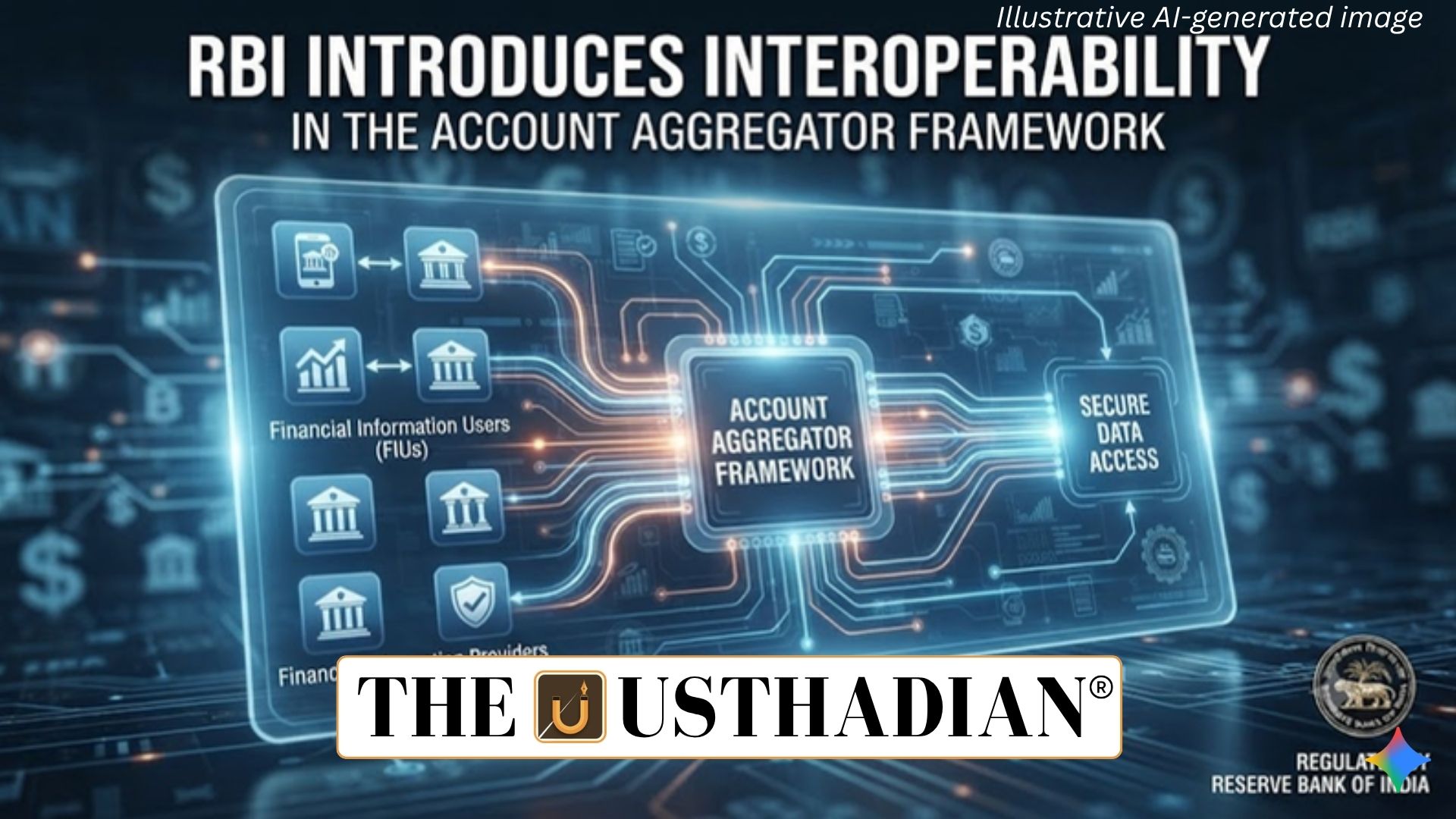
RBI Introduces Interoperability in the Account Aggregator Framework: The Reserve Bank of India (RBI) has permitted interoperability among financial Account Aggregators (AAs), enabling financial information from different systems to be brought together more efficiently. The reform aims to make it easier for individuals to view their bank deposits and market-linked investments through a more comprehensive Consolidated Account Statement (CAS).
The measures also facilitate SEBI-regulated depositories in including bank deposit information in consolidated statements. Implementation is scheduled for 31 December 2026, according to the supplied report.
What Are Account Aggregators?
Account Aggregators are entities registered with the RBI as Non-Banking Financial Companies (NBFCs) under the Account Aggregator framework. They enable the secure transfer of financial information between institutions through the customer’s explicit consent.
An AA acts as a bridge between a financial information provider, such as a bank, and a financial information user, such as a lender. It facilitates data sharing but does not own the customer’s financial assets or independently use the information for unrelated purposes.
Static GK fact: The RBI regulates banks and NBFCs in India. Its statutory foundation is the Reserve Bank of India Act, 1934.
What Has Changed Under the New Framework?
Earlier, financial information could remain fragmented across different systems. A consolidated statement might cover banking assets, such as deposits, or securities held in dematerialised form, such as shares, mutual funds and bonds.
The RBI’s interoperability reform aims to connect these systems more effectively. It also enables the inclusion of bank deposit information in consolidated statements issued through SEBI-regulated depositories.
The intended consolidated view may cover:
- Fixed and recurring deposits
- Stocks and shares
- Mutual funds
- Bonds and other securities
- Other eligible financial instruments within the participating regulatory framework
The banking information covered by this reform relates to deposit accounts, not loans.
Importance for Investors
Interoperability could reduce the need to collect separate statements from multiple financial institutions. Investors may find it easier to understand the distribution of their financial assets and monitor their overall investment position.
The reform may also reduce information fragmentation and improve convenience in digital financial management. Access to financial information remains subject to applicable rules and customer consent.
Static GK Tip: A demat account holds securities in electronic form. In India, securities depositories operate under the regulatory framework of the Securities and Exchange Board of India (SEBI).
Benefits for MSMEs and Credit Assessment
Micro, Small and Medium Enterprises (MSMEs) sometimes face difficulties in obtaining credit because lenders may lack a complete picture of their cash flows and financial position.
An interoperable AA ecosystem could help lenders access verified financial information more efficiently, subject to customer consent. Potential benefits include better cash-flow assessment, quicker loan processing, improved risk evaluation and more informed lending decisions.
However, interoperability does not guarantee loan approval or eliminate the need for collateral in every case. Lending decisions will continue to depend on the lender’s policies and assessment of risk.
RBI–SEBI Coordination
The reform highlights the importance of coordination between financial regulators. The RBI regulates banks and the NBFC-AA framework, while SEBI regulates securities markets and securities depositories.
Integrating information across these sectors can help create a more connected financial-information ecosystem. Further expansion into insurance-related information could require coordination with the Insurance Regulatory and Development Authority of India (IRDAI) and the relevant regulatory framework.
Significance for Digital India
Account Aggregator interoperability is an important step towards a more integrated, consent-based financial data architecture. It can simplify personal financial management, reduce information gaps between borrowers and lenders, and support data-driven credit assessment.
Its success will depend on effective implementation, data security, privacy safeguards and meaningful customer control over information sharing.
Static Usthadian Current Affairs Table
RBI Introduces Interoperability in the Account Aggregator Framework:
| Fact | Detail |
| Reform | Account Aggregator interoperability |
| Main regulator | Reserve Bank of India |
| Account Aggregator category | NBFC-AA |
| Main purpose | Consent-based sharing of financial information |
| Consolidated statement | Consolidated Account Statement (CAS) |
| Banking regulator | RBI |
| Securities market regulator | SEBI |
| Insurance regulator | IRDAI |
| Expected implementation date | 31 December 2026 |
| Potential beneficiaries | Individual investors, borrowers and MSMEs |
| Key principle | Customer consent and secure data sharing |