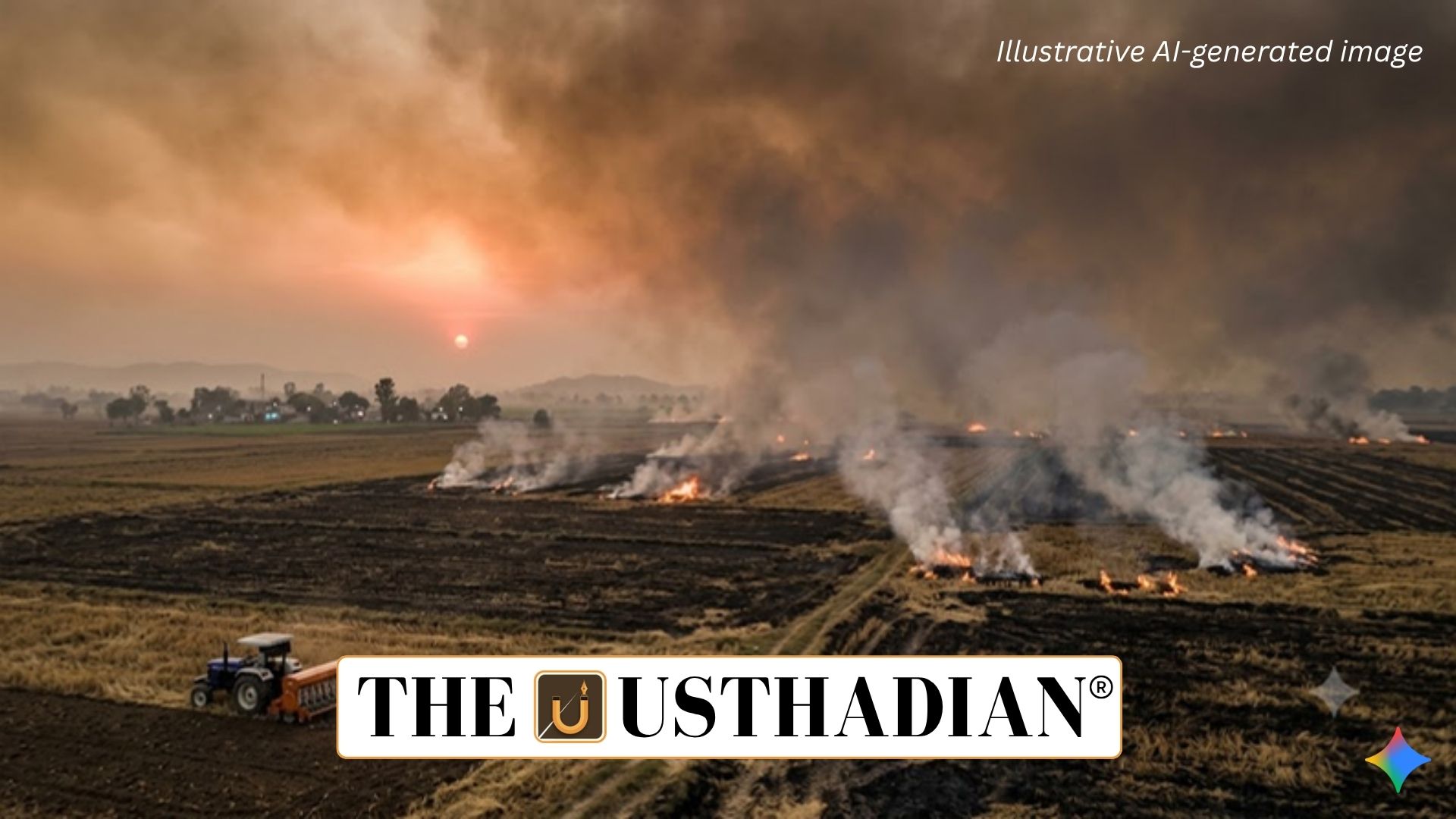
Understanding Stubble Burning
India’s Stubble Burning Crisis and Policy Solutions: Stubble burning involves setting fire to crop residue left after harvesting, particularly paddy straw. The practice is widespread in Punjab, Haryana and parts of Uttar Pradesh between October and November, contributing to seasonal air pollution in northern India.
Punjab and Haryana together generate approximately 29 million tonnes of paddy straw. Burning releases particulate matter, carbon monoxide and other pollutants while damaging soil nutrients and organic matter.
The Groundwater Connection
The practice became more widespread after combine harvesters reduced the time available for manual residue removal. The Punjab Preservation of Sub-Soil Water Act, 2009 restricted early paddy sowing and transplantation to conserve groundwater.
These restrictions shifted harvesting towards October and November, leaving farmers only 10–15 days to prepare fields for wheat. Long-duration paddy varieties, such as PUSA-44, further narrow this period.
Static GK fact: Groundwater conservation is important for sustainable agriculture because excessive extraction can lower water tables and increase dependence on energy-intensive irrigation.
Why Farmers Continue Burning Stubble
The problem is linked to agricultural incentives and limited alternatives. Government procurement provides relatively assured markets for paddy and wheat, particularly in Punjab and Haryana, encouraging farmers to continue cultivating these crops.
Free or highly subsidised electricity also reduces the immediate cost of groundwater-based irrigation. Meanwhile, residue-management machinery can be expensive, difficult to access during peak harvesting periods and costly to operate.
Technological and Policy Solutions
In-situ management involves incorporating residue into the soil or sowing wheat directly through it using equipment such as Happy Seeders and Super Seeders. Ex-situ management involves collecting straw for uses such as bioethanol and compressed biogas production.
Both approaches face cost and logistical barriers. Effective implementation requires timely machinery access, financial assistance, stronger residue markets and suitable short-duration paddy varieties.
Punjab and Haryana Approaches
Punjab has relied heavily on in-situ crop residue management, while Haryana has adopted additional incentive-based measures. These include reported payments of ₹1,000 per acre for crop residue management, ₹4,000 per acre for direct-seeded rice and ₹7,000 per acre for shifting to alternative crops.
The Commission for Air Quality Management (CAQM) coordinates air-pollution mitigation measures across the National Capital Region and adjoining areas. Enforcement is important, but parliamentary recommendations have also emphasised remunerative markets for straw and support for farmers.
Static GK Tip: The National Green Tribunal (NGT), established in 2010, adjudicates environmental disputes and supports the enforcement of environmental protections.
Measuring Progress and the Way Forward
Claims of a 90% reduction in stubble-burning incidents in 2025 compared with 2022 require careful interpretation. Satellite monitoring can miss fires outside observation windows, meaning recorded incidents may not fully represent actual burning.
Long-term solutions must combine reliable monitoring with crop diversification, affordable machinery, viable straw procurement and clean-energy industries that use agricultural residue. Punitive action alone cannot resolve the economic pressures behind the practice.
Static Usthadian Current Affairs Table
India’s Stubble Burning Crisis and Policy Solutions:
| Fact | Detail |
| Main stubble-burning season | October–November |
| Major affected states | Punjab and Haryana |
| Key crop residue | Paddy straw |
| Groundwater law | Punjab Preservation of Sub-Soil Water Act, 2009 |
| In-situ solutions | Happy Seeder, Super Seeder, direct residue management |
| Ex-situ solutions | Bioethanol and compressed biogas |
| Air-quality authority | CAQM |
| Environmental tribunal | National Green Tribunal |
| Long-term priorities | Crop diversification, residue markets and accurate monitoring |