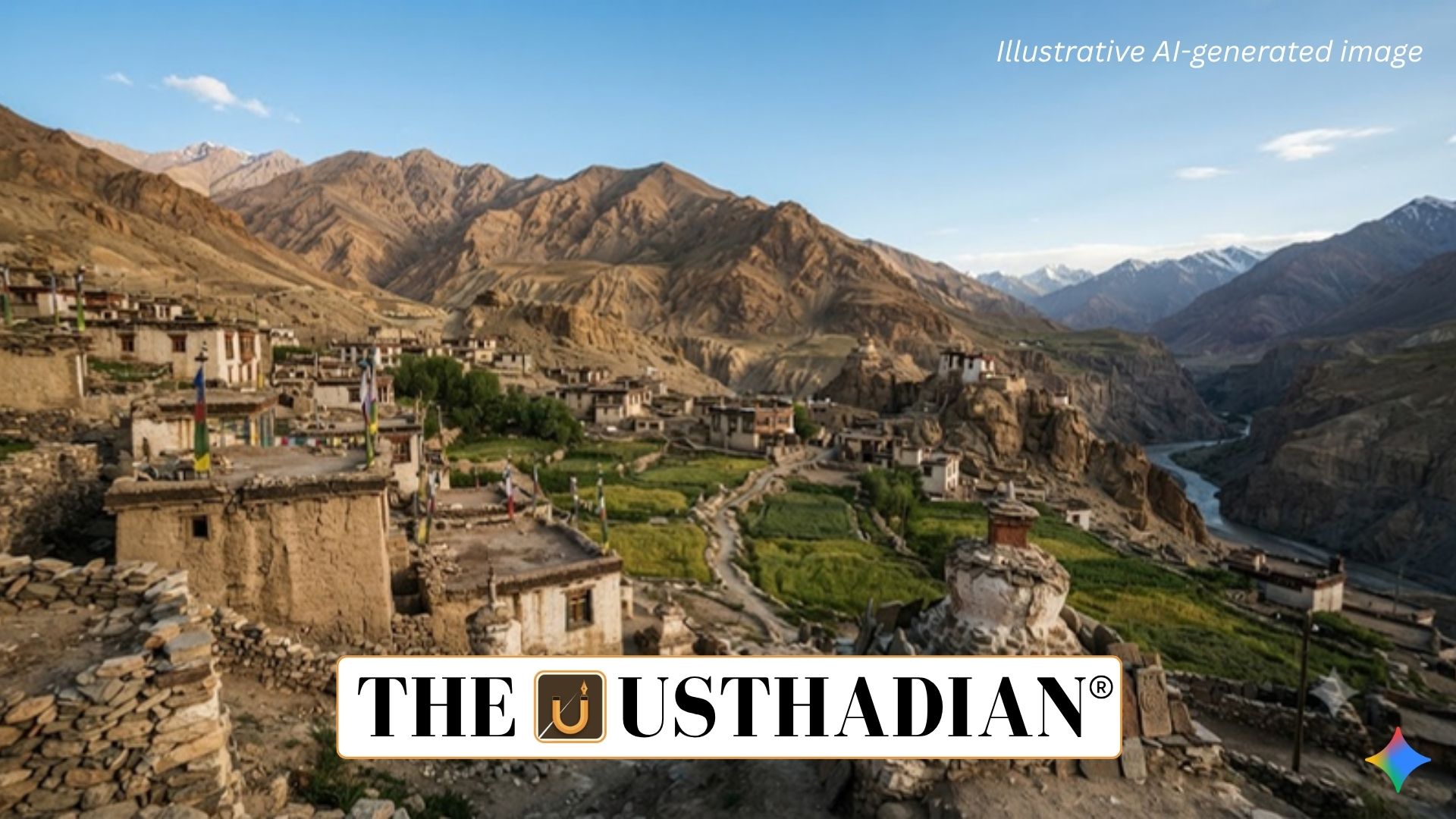
Kumik Gets Heritage Village Recognition
Kumik Highlights the Living Heritage of Zanskar: Kumik village in Zanskar has become Ladakh’s first Heritage Village, marking an important recognition of its cultural and traditional significance. The declaration was made on 15 September 2026 by Lieutenant Governor of Ladakh Vinai Kumar Saxena during the Ladakh Zanskar Festival.
Kumik represents a form of living heritage, where traditional architecture, religious practices, agriculture, local customs and community knowledge continue to form an interconnected cultural system.
Static GK fact: Zanskar is a high-altitude region of Ladakh known for its mountainous landscape, Buddhist monasteries and distinctive Tibetan cultural traditions.
Cultural Importance of Kumik
The heritage value of Kumik extends beyond its traditional houses. Its agricultural practices, sacred structures, community customs and Buddhist literary materials together provide evidence of the region’s cultural continuity.
The village is particularly significant because its traditions are connected with the wider Tibetan Buddhist heritage of the Himalayan region. Community-based farming and collective activities have historically played an important role in sustaining village life.
Importance of Kanjur Manuscripts
Among Kumik’s important cultural features are its Kanjur manuscripts, also known as Kangyur. Kanjur refers to the Tibetan Buddhist canonical collection traditionally regarded as containing the teachings of the Buddha.
These texts include works dealing with Buddhist philosophy, monastic discipline and tantric traditions. Many Buddhist texts were translated into Tibetan from Indian and other languages, making Himalayan manuscript collections valuable for understanding the transmission and preservation of Buddhist knowledge.
Static GK Tip: Kangyur and Tengyur are two major divisions of Tibetan Buddhist literature, with the former primarily associated with Buddha’s teachings and the latter with commentarial works.
Water Scarcity Threatens Community Life
Kumik’s heritage recognition comes against the backdrop of serious water scarcity. Earlier reports have documented declining water availability affecting irrigation and agricultural activity in the settlement.
Past studies and reports have also linked reduced glacier-fed water supplies with migration from the original settlement. Some residents moved towards Lower Kumik, where water availability was comparatively better, although winter shortages remained a challenge.
Previous reports should not, however, be treated as a current population estimate for Kumik.
Why Living Heritage Matters
A heritage village is not simply a collection of old buildings. Living heritage includes traditional knowledge, agricultural practices, religious activities, craftsmanship and social relationships transmitted across generations.
At Kumik, communal farming, harvesting, construction activities and religious practices form part of this cultural continuity. If environmental pressures force residents to leave, maintaining both physical structures and intangible traditions can become increasingly difficult.
Heritage Recognition and Its Limits
The Heritage Village designation formally acknowledges Kumik’s cultural importance and can strengthen awareness of its architecture, Buddhist literature, agriculture and customs.
However, the declaration itself does not automatically establish a specific conservation budget, implementation timetable or water-security programme. Long-term preservation therefore depends on combining cultural conservation with sustainable livelihoods and reliable water management.
Significance for Ladakh
Kumik demonstrates the close relationship between culture, environment and community survival in high-altitude Himalayan settlements. Protecting its heritage requires preserving not only buildings and manuscripts but also the ecological and social conditions that allow traditional life to continue.
Static Usthadian Current Affairs Table
Kumik Highlights the Living Heritage of Zanskar:
| Fact | Detail |
| Heritage village | Kumik |
| Location | Zanskar, Ladakh |
| Heritage status | Ladakh’s first Heritage Village |
| Declaration date | 15 September 2026 |
| Declared by | Lieutenant Governor Vinai Kumar Saxena |
| Associated event | Ladakh Zanskar Festival |
| Major manuscript tradition | Kanjur or Kangyur |
| Cultural elements | Architecture, Buddhism, agriculture and customs |
| Major challenge | Water scarcity |
| Related social impact | Migration and settlement change |
| Heritage concept | Living heritage |