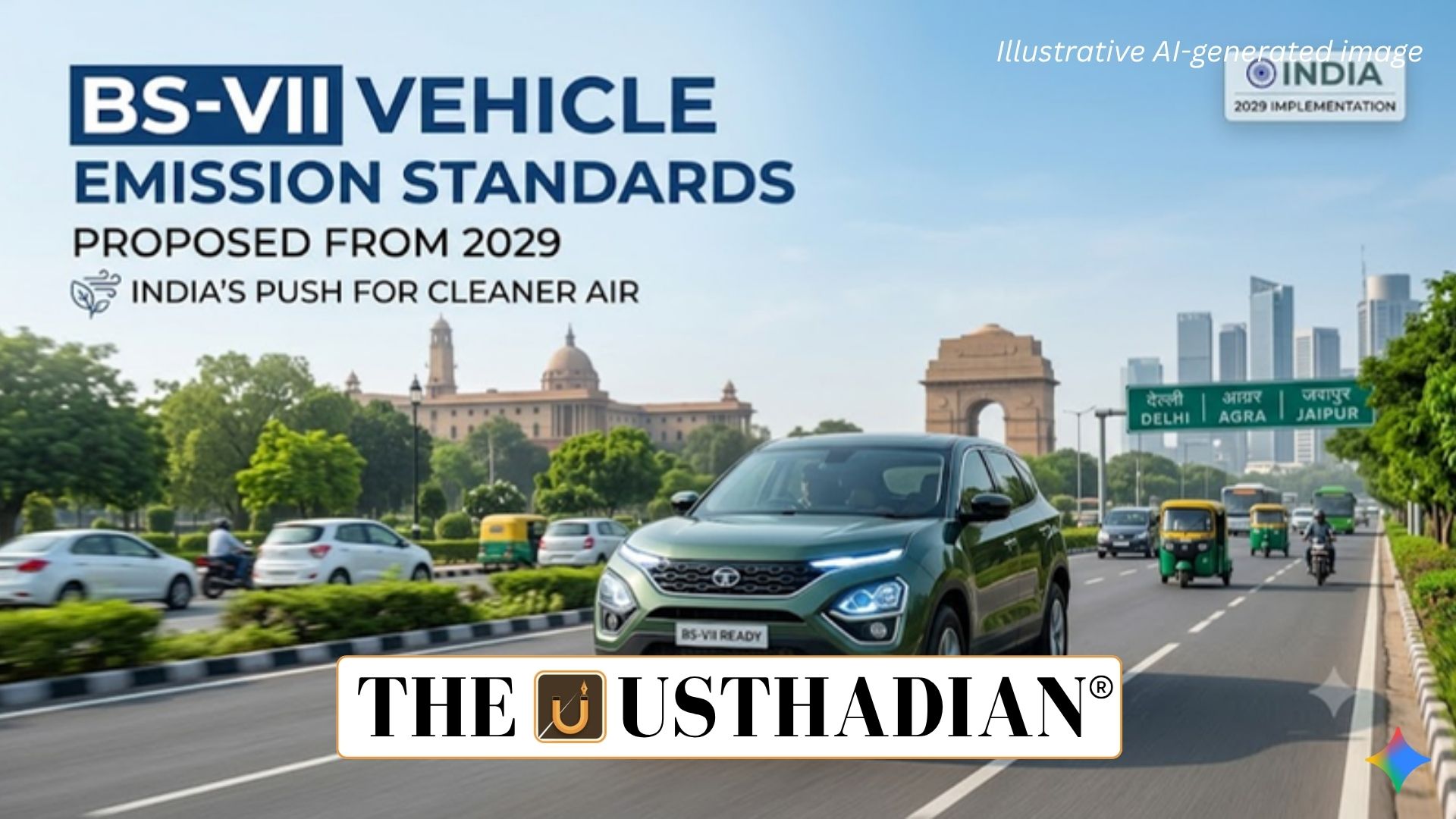
Proposed Introduction of BS-VII Standards
India Proposes BS-VII Vehicle Emission Standards from 2029: The Ministry of Road Transport and Highways (MoRTH) reportedly issued a draft notification on 12 October 2026, proposing stricter Bharat Stage VII (BS-VII) emission standards for vehicles. The proposed rollout would begin on 1 April 2029 and continue in three phases until 2035.
The initiative aims to reduce harmful pollutants released by motor vehicles, improve air quality and encourage cleaner automotive technologies. Since the proposal remains at the draft stage, the final emission limits and implementation requirements are subject to government decisions.
Proposed Implementation Timeline
The draft proposes a phased introduction to give vehicle manufacturers time to develop and adapt technologies to meet the new requirements.
| Phase | Proposed date |
| Phase 1 | 1 April 2029 |
| Phase 2 | 1 April 2031 |
| Phase 3 | 1 April 2035 |
According to the supplied report, new cars and SUVs are among the vehicles targeted for the initial rollout. The final rules will clarify the categories of vehicles covered and the specific compliance requirements.
What Are Bharat Stage Emission Standards?
Bharat Stage (BS) emission standards are regulatory limits established by the Government of India to control pollutants released by motor vehicles. They prescribe permissible emission levels for different vehicle categories.
Major pollutants regulated under these standards include carbon monoxide (CO), nitrogen oxides (NOx), hydrocarbons (HC) and particulate matter (PM). Successive stages generally require improved engine performance, exhaust-treatment systems and emission-control technologies.
Static GK fact: India’s BS emission standards are broadly aligned with European emission norms, although the precise requirements are determined by Indian regulations.
Key Features of Proposed BS-VII
The proposed standards seek tighter controls on pollutants, particularly nitrogen oxides, hydrocarbons and particulate matter. These pollutants contribute to poor air quality and can affect human health.
A phased rollout could help manufacturers plan research, redesign vehicle systems and introduce improved emission-control technologies. However, the exact limits, testing procedures and compliance conditions will depend on the final notification.
The proposal is not, by itself, an announcement that existing vehicles must be scrapped. Their continued use will depend on the applicable laws and any future regulatory provisions.
Difference Between BS-VI and BS-VII
| Fact | Detail |
| BS-VI introduction | Implemented nationwide from April 2020 |
| BS-VI purpose | Controls vehicle emissions through prescribed limits |
| Proposed BS-VII purpose | Further tightening of emission controls |
| Proposed rollout | Three phases from 2029 to 2035 |
| Regulatory status | BS-VI is in force; BS-VII remains proposed in the supplied report |
Why Did India Skip BS-V?
India moved directly from BS-IV to BS-VI in April 2020, skipping BS-V as part of its effort to adopt stricter emission requirements more quickly. The transition to BS-VI also involved the nationwide introduction of 10 ppm sulphur fuel, supporting the use of advanced emission-control systems.
Static GK Tip: Sulphur in fuel can damage or reduce the effectiveness of certain vehicle exhaust-treatment systems. Low-sulphur fuel helps modern vehicles meet stringent emission limits.
Significance for Environment and Public Health
Stricter standards can encourage cleaner engines, advanced exhaust-treatment systems and improved vehicle testing. Their effectiveness will also depend on fuel quality, vehicle maintenance, public transport, enforcement and the adoption of low-emission mobility.
The proposed BS-VII framework could influence automotive research, manufacturing costs and future vehicle technology. Its actual impact will become clearer once the government finalises the rules.
Static Usthadian Current Affairs Table
India Proposes BS-VII Vehicle Emission Standards from 2029:
| Fact | Detail |
| Responsible ministry | Ministry of Road Transport and Highways |
| Proposed standard | Bharat Stage VII |
| Draft notification date | 12 October 2026, as reported |
| First proposed phase | 1 April 2029 |
| Second proposed phase | 1 April 2031 |
| Third proposed phase | 1 April 2035 |
| Current national standard | BS-VI |
| BS-VI nationwide implementation | April 2020 |
| Major pollutants | CO, NOx, HC and PM |
| Environmental objective | Reduce vehicle emissions and improve air quality |