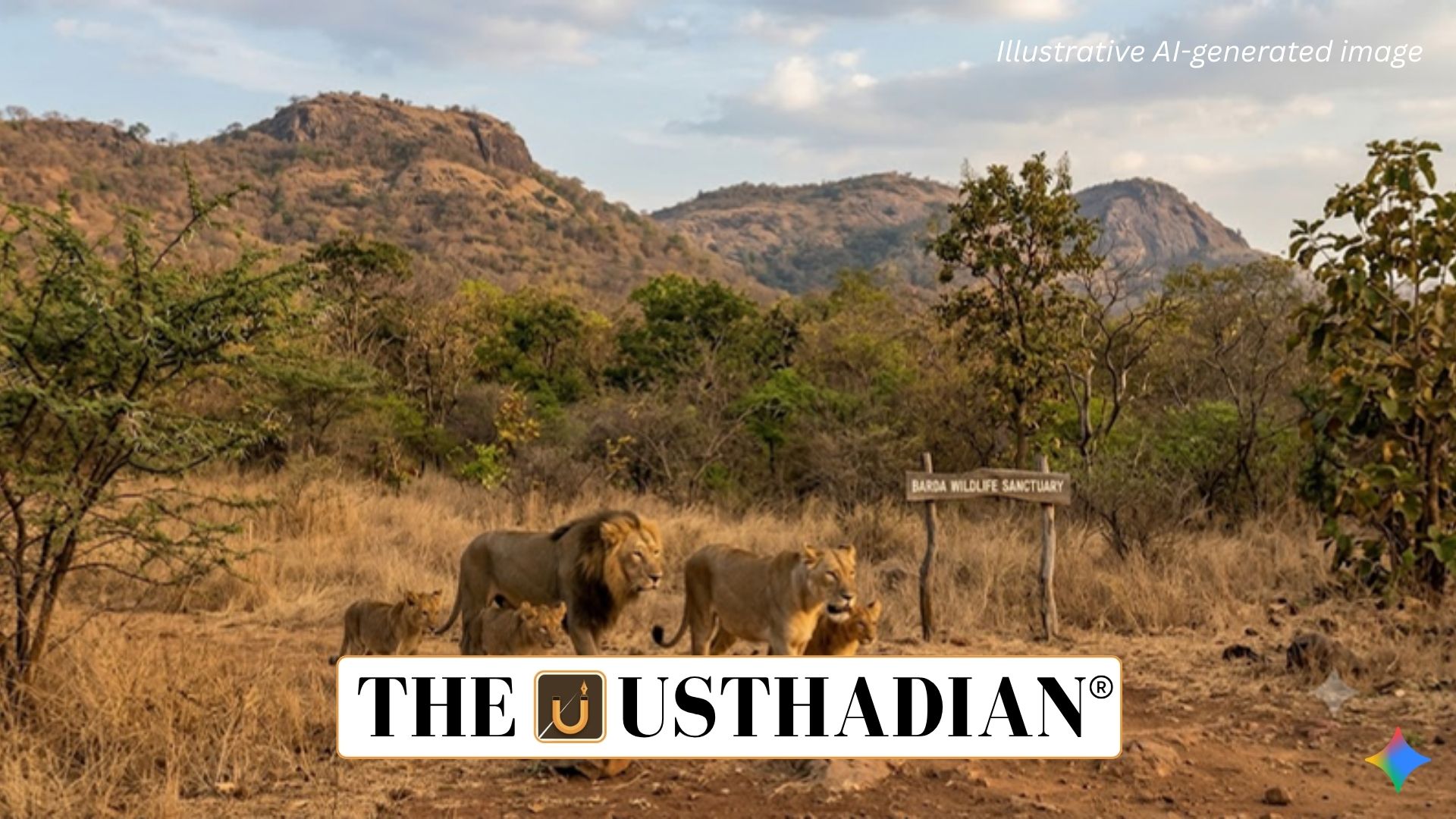
Asiatic Lions Return to Barda
Asiatic Lions Expand Their Habitat to Barda Wildlife Sanctuary: Asiatic lions have established a presence in Gujarat’s Barda Wildlife Sanctuary after a gap of approximately 144 years. According to the 2025 population estimate cited in the report, Barda is home to 17 lions, including six adults and 11 cubs. The sanctuary is being developed as a second habitat for India’s only wild population of Asiatic lions, which is primarily concentrated in the Gir landscape.
This expansion aims to reduce dependence on a single core habitat and strengthen the species’ long-term survival prospects. Scientific assessments have also examined Barda’s suitability for supporting a sustainable lion population.
Location and Key Features of Barda Sanctuary
Barda Wildlife Sanctuary is situated in the Saurashtra region of Gujarat, covering parts of Porbandar and Devbhumi Dwarka districts. It occupies approximately 192.31 square kilometres and lies around 15 km from Porbandar town. The sanctuary was declared in 1979.
Static GK fact: Saurashtra is a peninsula in western Gujarat, bordered by the Arabian Sea and the Gulf of Khambhat and the Gulf of Kutch.
Reintroduction and Conservation Measures
The Gir–Barda conservation initiative dates back to 1979, with the objective of establishing an additional habitat for Asiatic lions. According to the supplied report, the recent expansion began when a male lion naturally dispersed from the Gir landscape to Barda in January 2023. The Gujarat Forest Department subsequently introduced five female lions.
Barda’s vegetation and environmental conditions share similarities with those of Gir. Conservation measures have also included strengthening the prey base by relocating spotted deer and sambar from protected areas in the Gir landscape.
Static GK Tip: The Gir Forest region in Gujarat is the principal natural stronghold of the Asiatic lion. Maintaining additional suitable habitats can reduce the risks associated with concentrating a species in one geographical area.
Flora and Fauna
Barda supports a variety of wildlife, including leopards, hyenas, jackals and deer. Its vegetation includes babul, dhav, rayan, ber, jamun and bamboo. The sanctuary also contains medicinal plants such as guggal.
The ecological value of Barda extends beyond its lion population. Protecting vegetation, maintaining prey availability and preserving the wider ecosystem are essential for long-term conservation.
Challenges and Significance
The success of Barda as a second habitat depends on effective habitat protection, adequate prey, scientific monitoring and measures to prevent human–lion conflict. Coordination between forest authorities and nearby communities will also be important as the lion population develops.
Establishing a viable second habitat could improve the resilience of Asiatic lion conservation in India. However, long-term monitoring is necessary to determine whether Barda can sustain a stable breeding population.
Static Usthadian Current Affairs Table
Asiatic Lions Expand Their Habitat to Barda Wildlife Sanctuary:
| Fact | Detail |
| Species | Asiatic lion (Panthera leo persica) |
| Sanctuary | Barda Wildlife Sanctuary |
| State | Gujarat |
| Region | Saurashtra |
| Districts | Porbandar and Devbhumi Dwarka |
| Approximate area | 192.31 sq. km |
| Sanctuary declaration | 1979 |
| Reported lion population | 17 in the 2025 estimate |
| Principal habitat | Gir Forest landscape |
| Major conservation needs | Habitat protection, prey availability and conflict prevention |