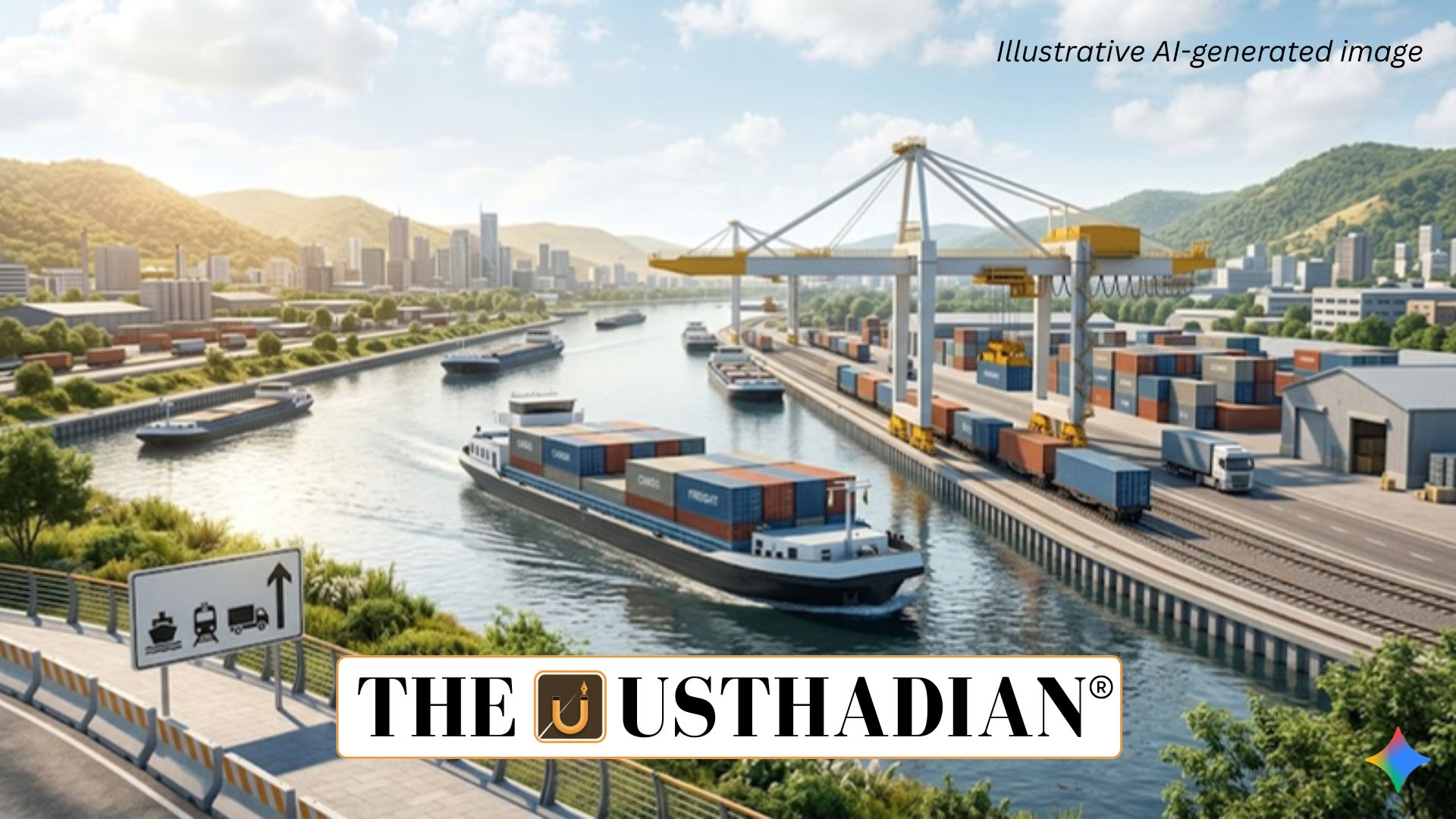
Growing Importance of Inland Waterways
India Expands Inland Water Transport Network: India is rapidly expanding its Inland Water Transport (IWT) sector to improve logistics, reduce transportation costs, and promote green mobility. Inland waterways include rivers, canals, lagoons, lakes, and estuaries that support navigation within the country. These waterways are considered navigable when vessels carrying at least 50 tonnes can operate under normal conditions.
The government considers waterways as an important pillar for economic growth and regional connectivity. Compared to road and rail transport, waterways consume less fuel and create lower carbon emissions. This makes them suitable for sustainable development goals.
Static GK fact: India has around 14,500 km of navigable waterways, including rivers and canals.
National Waterways Expansion
The National Waterways Act, 2016 declared 111 waterways as National Waterways with a total length of 20,187 km. These waterways are managed by the Inland Waterways Authority of India (IWAI), which was established under the IWAI Act, 1985.
As of March 2026, around 32 National Waterways are operational. The Union Budget 2026-27 announced plans to operationalise 20 additional waterways within the next five years. This step aims to strengthen cargo movement across multiple states and improve trade efficiency.
The government is also encouraging private investment and public-private partnerships in waterway infrastructure. New terminals, jetties, and navigation systems are being developed along major routes.
Static GK Tip: The headquarters of IWAI is located in Noida, Uttar Pradesh.
Rising Cargo Transportation
Cargo transportation through inland waterways has shown steady growth in recent years. During FY 2024-25, cargo movement reached 145.84 million metric tonnes (MMT). India now aims to increase the share of inland waterways in total freight transport from 2% to 5% by 2030.
Under the Maritime Amrit Kaal Vision, India targets cargo movement of more than 200 MMT by 2030 and nearly 500 MMT by 2047. The long-term objective is to create a cost-effective and environment-friendly logistics ecosystem.
Waterways are especially useful for transporting coal, cement, fertilizers, food grains, and construction materials. Heavy cargo movement through rivers can reduce pressure on highways and rail corridors.
Major Government Initiatives
The government has launched several schemes to modernise inland water transport. The Jal Marg Vikas Project on National Waterway-1 between Varanasi and Haldia is one of the largest river transport projects in India. It aims to improve navigation capacity and develop multimodal terminals.
The Harit Nauka Inland Vessels Green Transition Guidelines target a 30% reduction in carbon intensity in passenger transport by 2030. This initiative promotes cleaner fuel usage and eco-friendly vessel technologies.
The Coastal Cargo Promotion Scheme, announced in the Union Budget 2026-27, aims to increase the combined share of coastal shipping and inland waterways from 6% to 12% by 2047. Other initiatives include the Jalvahak Cargo Promotion Scheme, 2024, which supports cargo transportation through waterways.
Static GK fact: National Waterway-1 stretches along the Ganga River from Prayagraj to Haldia.
Static Usthadian Current Affairs Table
India Expands Inland Water Transport Network:
| Topic | Detail |
| National Waterways Act | Enacted in 2016 |
| Total National Waterways | 111 |
| Total Length of NWs | 20,187 km |
| Operational Waterways | 32 as of March 2026 |
| IWAI Establishment | Inland Waterways Authority of India Act, 1985 |
| Cargo Movement FY 2024-25 | 145.84 MMT |
| Target Modal Share by 2030 | 5% |
| Maritime Amrit Kaal Vision | 500 MMT cargo target by 2047 |
| Major Project | Jal Marg Vikas Project |
| Important Waterway | National Waterway-1 on Ganga River |