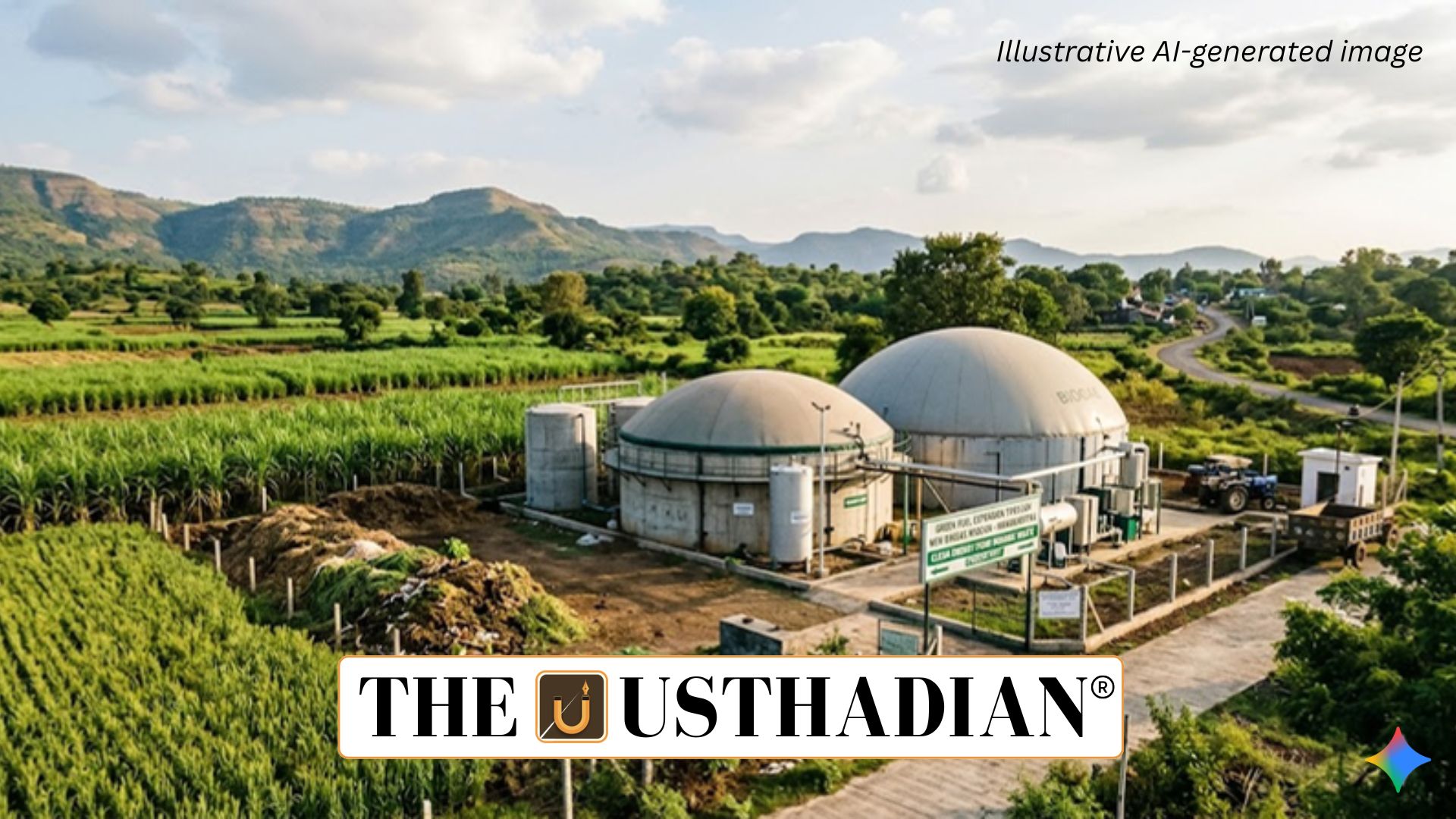
Maharashtra Launches Major Renewable Energy Initiative
Maharashtra Pushes Green Fuel Expansion Through New Biogas Mission: The Maharashtra government has approved the Compressed Biogas (CBG) Policy 2026 to strengthen renewable fuel production and scientific waste management across the state. The policy was cleared by the state cabinet in April 2026 and officially released in May 2026.
The state has allocated ₹500 crore for implementing the policy during the financial year 2026-27. The initiative aims to establish CBG plants in every district using municipal waste and agricultural residue.
Static GK fact: Maharashtra is India’s third-largest state by area and Mumbai is its capital city.
Focus on Waste-to-Energy Systems
The policy mainly targets the conversion of waste into clean energy through advanced biogas technology. Compressed Biogas is produced through anaerobic digestion where organic waste decomposes in the absence of oxygen.
The state generates nearly 24,500 metric tonnes of municipal solid waste daily. In addition, Maharashtra produces more than 20 million metric tonnes of agricultural residue annually.
The government plans to process this waste into renewable fuel instead of allowing it to accumulate in landfills or be openly burned.
Static GK Tip: Anaerobic digestion also produces organic manure known as digestate, useful in agriculture.
Key Features of the CBG Policy
Under the new framework, every district in Maharashtra will have dedicated CBG projects. Waste segregation at the source has been made compulsory to improve processing efficiency.
Each project must process at least 200 tonnes of organic waste per day. The policy also promotes the separation of biodegradable and non-biodegradable waste at the municipal level.
The government has chosen the Public-Private Partnership (PPP) and hybrid annuity model for faster project execution and investment mobilisation.
Financial Assistance for Developers
The policy offers major incentives to attract private investment into green energy infrastructure. Developers can receive Viability Gap Funding up to ₹75 lakh per tonne capacity.
The maximum financial support has been fixed at ₹15 crore per project. Additional benefits include 2.5% SGST refund after production begins and priority access to electricity and water supply.
The state has also imposed strict operational timelines. Land allotment may be cancelled if projects fail to become operational within two years.
Static GK fact: SGST stands for State Goods and Services Tax collected by state governments under India’s GST framework.
Link With National Green Energy Schemes
The Maharashtra CBG Policy aligns with several major national programmes including SATAT, GOBARdhan, and the Swachh Bharat Mission. These schemes support sustainable waste management and renewable energy generation.
The policy also supports India’s larger climate commitments including the Net-Zero 2070 target announced during the COP26 Summit in Glasgow.
CBG is increasingly being promoted as an alternative transport and industrial fuel because it produces lower carbon emissions compared to fossil fuels.
Environmental and Economic Importance
The policy is expected to reduce urban waste pressure while creating new opportunities in renewable energy and rural employment. Better utilisation of agricultural residue may also help reduce stubble burning and air pollution.
Experts believe the policy could attract significant private investment into Maharashtra’s clean energy sector. It also strengthens India’s transition towards a circular economy model based on waste recycling and sustainable fuel production.
Static Usthadian Current Affairs Table
Maharashtra Pushes Green Fuel Expansion Through New Biogas Mission:
| Topic | Detail |
| Policy Name | Compressed Biogas Policy 2026 |
| State | Maharashtra |
| Financial Allocation | ₹500 crore |
| Main Objective | Waste-to-energy and renewable fuel generation |
| Daily Municipal Waste | Around 24,500 metric tonnes |
| Agricultural Residue | More than 20 million metric tonnes annually |
| Minimum Waste Processing Capacity | 200 tonnes per day |
| Implementation Model | PPP and hybrid annuity model |
| National Schemes Linked | SATAT, GOBARdhan, Swachh Bharat Mission |
| Climate Goal Supported | India’s Net-Zero 2070 target |