Major Approval and Announcement
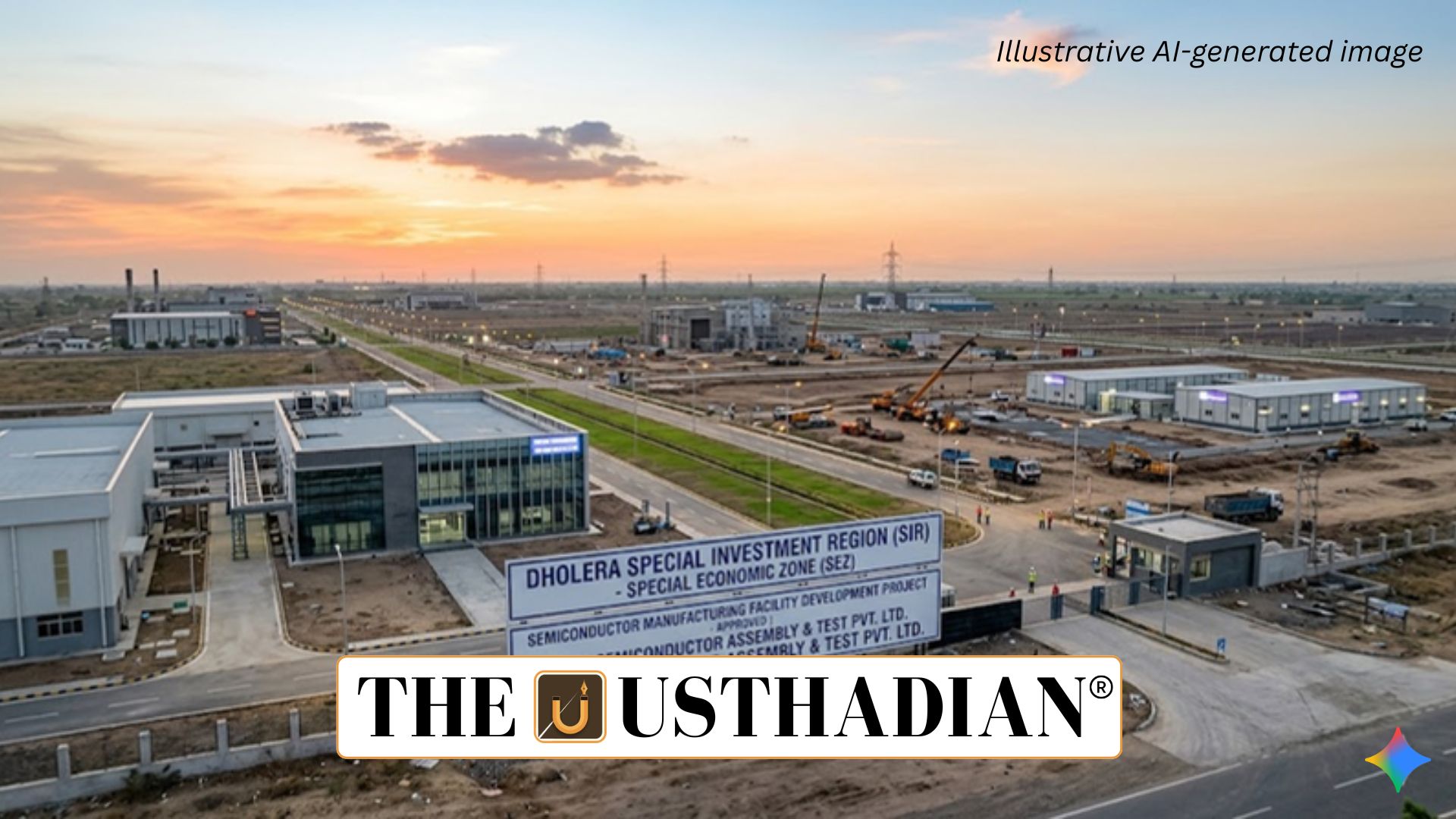
Tata Semiconductor SEZ Approval in Dholera: India has taken a decisive step toward semiconductor self-reliance with the approval of a Special Economic Zone (SEZ) for Tata Semiconductor Manufacturing Pvt Ltd in Dholera, Gujarat. The approval was granted by the Board of Approval under the Department of Commerce and officially notified on April 9, 2026.
This SEZ marks a significant milestone as it supports the establishment of India’s first commercial chip fabrication unit, positioning the country in the global semiconductor value chain.
Scale of Investment
The project involves a massive investment of ₹91,000 crore, making it one of the largest industrial investments in India’s semiconductor sector. The initiative aims to strengthen domestic chip production and reduce dependency on imports.
It is expected to generate thousands of jobs and accelerate India’s ambition of becoming a global electronics manufacturing hub.
Static GK fact: Semiconductor fabrication plants are among the most capital-intensive industries, often requiring investments exceeding billions of dollars.
Dholera as a Strategic Location
The SEZ will be developed over 66.16 hectares in Dholera Special Investment Region (SIR). Dholera is planned as a smart industrial city with advanced infrastructure and connectivity to major cities like Ahmedabad, Surat, Vadodara, and Gandhinagar.
Its strategic location, availability of land, and planned infrastructure make it an ideal destination for high-tech manufacturing projects.
Static GK Tip: Dholera SIR is part of the Delhi-Mumbai Industrial Corridor, one of India’s largest infrastructure projects.
Role of Special Economic Zones
A Special Economic Zone (SEZ) is a designated area where business and trade laws differ from the rest of the country. These zones provide benefits such as tax incentives, duty-free imports, and simplified regulations.
SEZs aim to create a business-friendly environment that promotes investment, exports, and industrial growth. The Tata semiconductor SEZ is expected to function as a comprehensive technology hub, covering electronics, IT, and semiconductor manufacturing.
Evolution of SEZs in India
India’s SEZ journey dates back to 1965 with the establishment of Asia’s first Export Processing Zone (EPZ) at Kandla. The formal SEZ Policy was introduced in 2000, followed by the SEZ Act of 2005, which came into force in 2006.
As of March 2024, India has over 280 operational SEZs, playing a crucial role in boosting exports and industrial growth.
Expanding Semiconductor Ecosystem
Apart from Tata’s project, several other semiconductor-related SEZs have been approved across India. These include investments by firms like Micron Semiconductor Technology India, along with domestic players such as CG Semi and Kaynes Semicon.
This growing ecosystem reflects India’s commitment to building a robust semiconductor industry covering design, manufacturing, and testing.
Static GK fact: India is one of the largest consumers of semiconductors but has historically depended on imports for over 80% of its needs.
Strategic Significance
The Tata Semiconductor SEZ aligns with national initiatives such as India Semiconductor Mission, Make in India, and Atmanirbhar Bharat. It strengthens supply chain resilience and enhances technological capabilities.
By establishing a domestic chip fabrication unit, India moves closer to reducing external vulnerabilities and securing its position in the global technology landscape.
Static Usthadian Current Affairs Table
Tata Semiconductor SEZ Approval in Dholera:
| Topic | Detail |
| Project Name | Tata Semiconductor Manufacturing SEZ |
| Location | Dholera, Gujarat |
| Approval Date | April 9, 2026 |
| Investment | ₹91,000 crore |
| Key Authority | Board of Approval under Department of Commerce |
| Area | 66.16 hectares |
| Objective | Establish India’s first chip fabrication unit |
| SEZ Benefits | Tax incentives, duty-free imports, simplified regulations |
| Supporting Region | Dholera Special Investment Region |
| Strategic Impact | Boost domestic production and reduce import dependence |