Government Policy Update
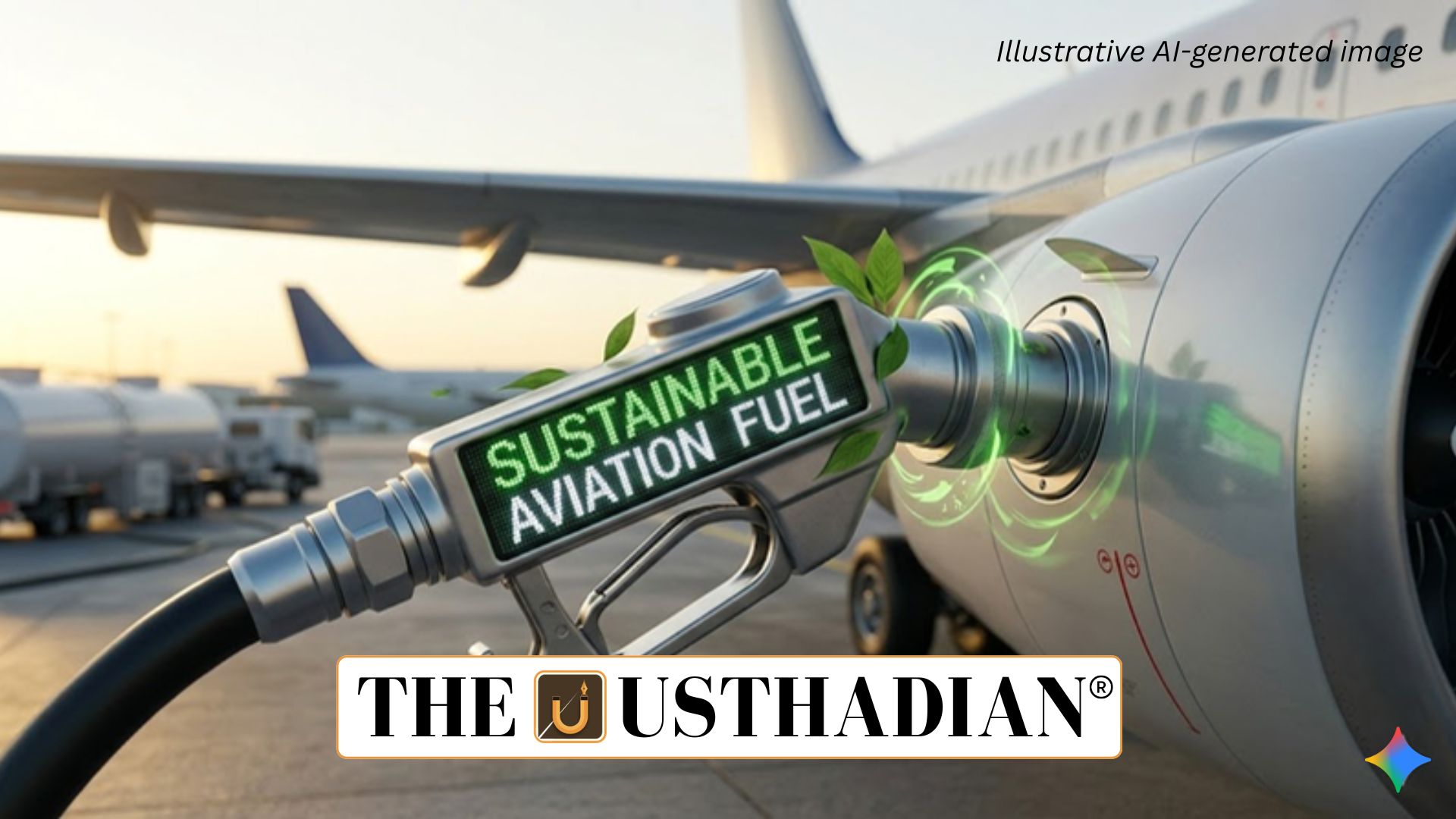
Sustainable Aviation Fuel Push in India: The Government of India has permitted the blending of ethanol and synthetic hydrocarbons into Aviation Turbine Fuel (ATF). This move marks a significant step towards reducing carbon emissions in the aviation sector.
ATF, commonly known as jet fuel, is traditionally derived from crude oil refining, making it a major contributor to greenhouse gas emissions.
Static GK fact: India is the third-largest aviation market in the world in terms of domestic passenger traffic.
What is Sustainable Aviation Fuel
Sustainable Aviation Fuel (SAF) is an alternative liquid fuel designed to replace or blend with conventional jet fuel. It is produced from diverse feedstocks such as waste oils, agricultural residues, municipal waste, and non-food crops.
Unlike fossil fuels, SAF is considered more environmentally friendly due to its lower lifecycle emissions. It can be directly used in existing aircraft engines without major modifications.
Static GK Tip: SAF is also called biojet fuel and is part of the broader category of biofuels.
Blending Levels and Targets
SAF can be blended with conventional ATF in varying proportions, typically ranging from 10% to 50%, depending on the production method and feedstock quality.
India has set phased targets for SAF blending in international flights:
- 1% blending by 2027
- 2% blending by 2028
- 5% blending by 2030
However, no targets have been fixed for domestic aviation fuel usage yet.
Role of CORSIA Framework
India’s SAF targets align with the global Carbon Offsetting and Reduction Scheme for International Aviation (CORSIA). This initiative is led by the International Civil Aviation Organization (ICAO).
CORSIA aims to stabilize CO2 emissions from international aviation at 2020 levels through offsetting and cleaner fuels. SAF plays a key role in achieving these emission reduction goals.
Static GK fact: ICAO is a specialized agency of the United Nations, established in 1944 under the Chicago Convention.
Environmental and Economic Significance
The adoption of SAF can reduce aviation-related CO2 emissions by up to 80% over its lifecycle. This makes it a crucial tool in combating climate change.
Additionally, SAF production can boost rural economy, create jobs, and reduce dependence on imported crude oil. It also supports India’s commitment to achieving net-zero emissions by 2070.
Static GK Tip: The aviation sector contributes around 2–3% of global CO2 emissions.
Challenges Ahead
Despite its benefits, SAF faces challenges such as high production costs, limited availability of feedstock, and lack of infrastructure. Scaling up production remains a major hurdle.
Policy support, investment in technology, and international cooperation will be essential for widespread adoption.
Static Usthadian Current Affairs Table
Sustainable Aviation Fuel Push in India:
| Topic | Detail |
| Fuel Type | Sustainable Aviation Fuel (SAF) |
| Traditional Fuel | Aviation Turbine Fuel (ATF) from crude oil |
| Feedstock Sources | Waste oils, fats, municipal waste, non-food crops |
| Emission Reduction | Up to 80% lifecycle CO2 reduction |
| Blending Targets | 1% (2027), 2% (2028), 5% (2030) |
| Global Framework | CORSIA |
| Governing Body | International Civil Aviation Organization |
| Domestic Policy | No SAF blending targets yet |