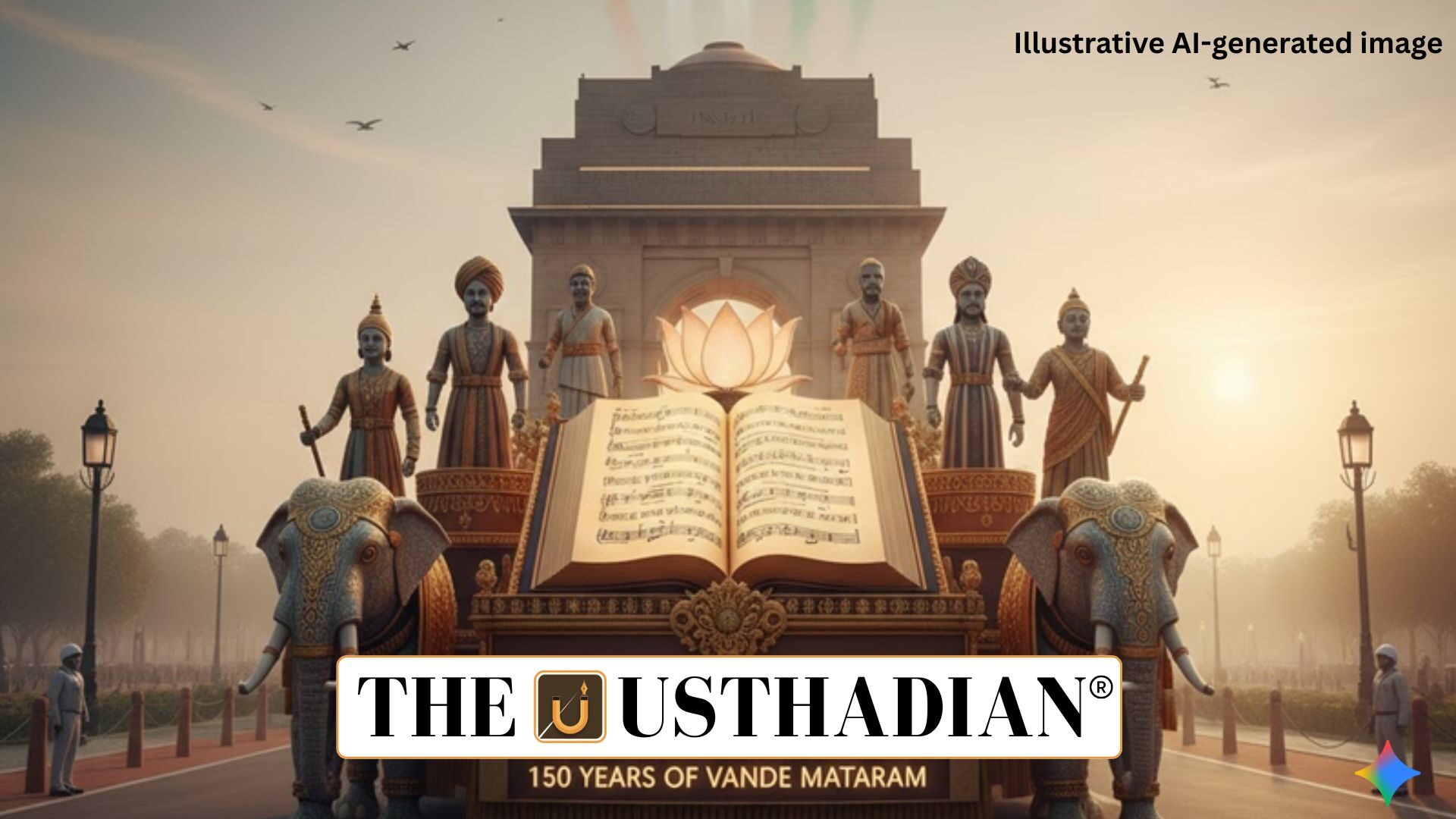
A historic national celebration
Republic Day Parade 2026 and 150 Years of Vande Mataram: The 77th Republic Day Parade at Kartavya Path in New Delhi became a landmark national event. It commemorated 150 years of ‘Vande Mataram’, making the iconic song the central theme of the celebrations.
The parade blended art, history, patriotism, and military strength into a unified national narrative. It symbolised India’s journey from colonial struggle to sovereign confidence.
Static GK fact: Republic Day is celebrated on 26 January to mark the adoption of the Indian Constitution in 1950.
Vande Mataram as the core theme
The sesquicentenary of Vande Mataram dominated the cultural identity of the parade. Rare artistic representations were displayed along Kartavya Path.
Historic artwork by Tejendra Kumar Mitra depicting the opening stanzas of the song formed the visual centrepiece. Invitation cards carried a special commemorative logo with the silhouette of Bankim Chandra Chatterjee.
The theme showed how a literary composition transformed into a symbol of national unity, sacrifice, and resistance.
Static GK fact: The original meaning of ‘Vande Mataram’ is “I bow to thee, Mother”, symbolising the motherland.
Historical journey of the national song
Vande Mataram holds a unique place in India’s freedom history. It was written in 1875 by Bankim Chandra Chatterjee.
It was first published in the journal Bangadarshan and later included in the novel Anandamath (1882). The song was first sung publicly by Rabindranath Tagore at the 1896 Indian National Congress session in Calcutta.
It was formally adopted as India’s National Song in 1950 by the Constituent Assembly. Over time, it became a rallying cry for the freedom movement.
Static GK Tip: India has a National Song (Vande Mataram) and a National Anthem (Jana Gana Mana), both holding equal constitutional respect.
Cultural and military grandeur
The parade reflected India’s heritage and defence strength together. A total of 30 tableaux participated in the celebrations.
These included 17 from States and Union Territories and 13 from Ministries and Services. The major themes were “Swatantrata ka Mantra: Vande Mataram” and “Samriddhi ka Mantra: Aatmanirbhar Bharat.”
The tableaux portrayed India’s transformation from colonial subjugation to self-reliant national development.
Nationwide performances and unity
Celebrations extended beyond New Delhi. Military bands and Central Armed Police Forces bands performed across Indian cities from 19 to 26 January.
All performances revolved around the theme ‘Vande Mataram’, reinforcing unity through music, discipline, and cultural expression. The events strengthened the emotional connection between citizens and national identity.
Global presence and diplomatic significance
The parade reflected India’s rising global stature. Ursula von der Leyen, President of the European Commission, and Antonio Costa, President of the European Council, attended as Chief Guests.
Their presence highlighted India’s growing role in global diplomacy, strategic partnerships, and international leadership.
Static GK fact: Republic Day Chief Guests symbolise India’s foreign policy priorities and diplomatic relationships.
Static Usthadian Current Affairs Table
Republic Day Parade 2026 and 150 Years of Vande Mataram:
| Topic | Detail |
| Event | 77th Republic Day Parade |
| Year | 2026 |
| Location | Kartavya Path, New Delhi |
| Central Theme | 150 years of Vande Mataram |
| Author of Vande Mataram | Bankim Chandra Chatterjee |
| Year Written | 1875 |
| First Public Singing | 1896 Congress session, Calcutta |
| National Song Status | Adopted in 1950 |
| Number of Tableaux | 30 total |
| National Theme | Aatmanirbhar Bharat |