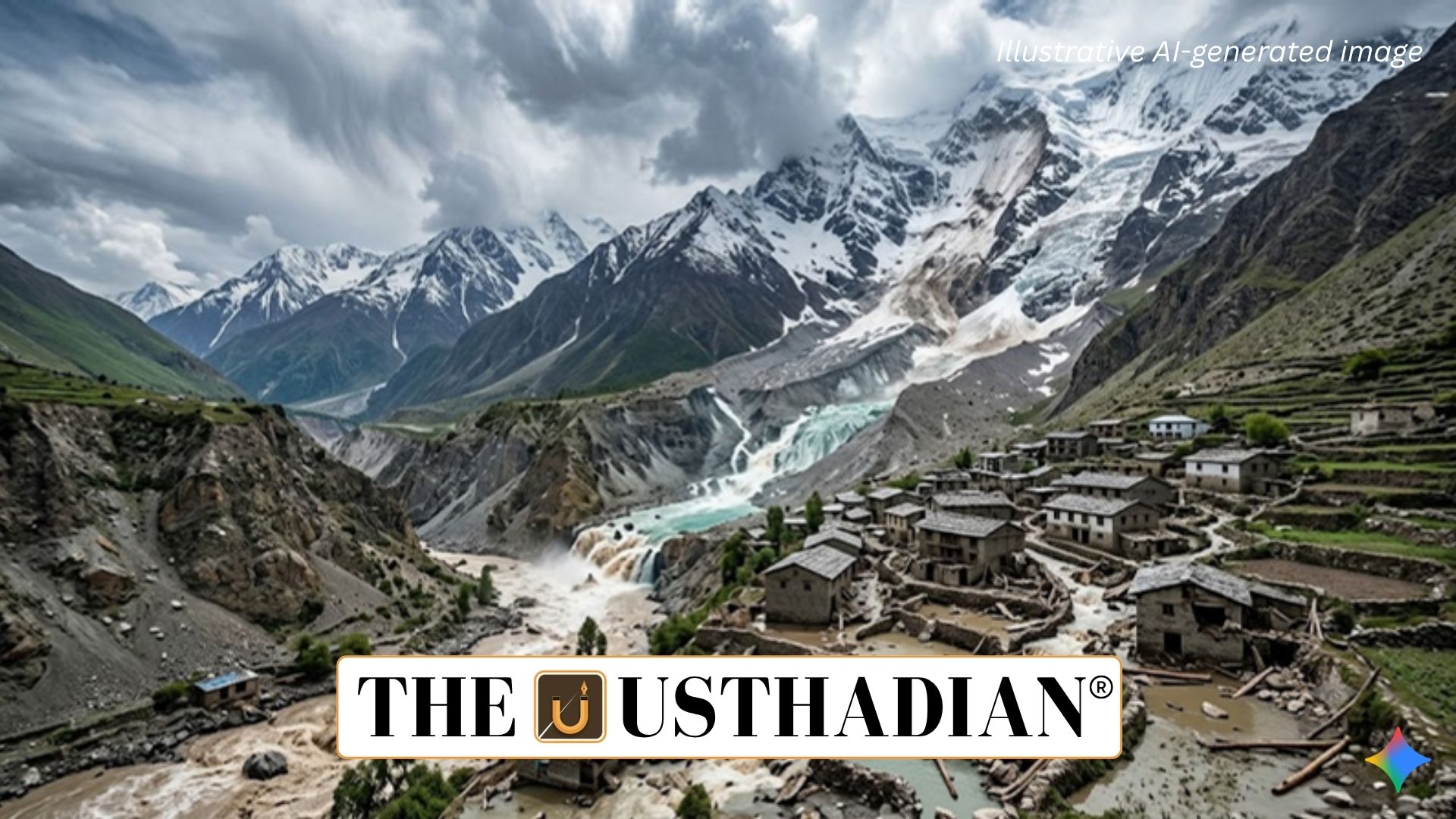
Flash Floods Strike Rasuwa
Nepal Faces Severe Flash Floods After Mountain Avalanche: A major flash-flood event struck Rasuwa district of Nepal on August 26, 2026, after an ice-and-rock avalanche triggered a sudden surge in the local river system. The disaster affected villages, roads and hydropower infrastructure in the mountainous region bordering Tibet.
The Bhotekoshi River rose rapidly, creating dangerous downstream flooding and disrupting transportation and other essential infrastructure.
Avalanche Linked to Sudden River Surge
The immediate trigger was reported to be an ice and rock avalanche in a glacier region. The avalanche sent a large volume of water and debris downstream through the Lhende Khola, a tributary of the Bhotekoshi River.
Disaster-risk experts noted that the Lhende Khola had experienced similar flooding events linked to ice-rock avalanches within a relatively short period. Such incidents demonstrate the rapidly developing nature of hazards in high-altitude Himalayan environments.
Static GK fact: The Bhotekoshi River is part of the river system of Nepal and is associated with the upper Sunkoshi basin. The Himalayan river network is important for hydropower generation and supports communities across mountainous and downstream regions.
Casualties and Missing Persons
The flash floods caused significant human and infrastructural losses. Reports indicated that at least eight people were confirmed dead, while around 384 people were reported missing, including approximately 291 foreign tourists.
Tourists from countries including India, the United States, the United Kingdom and Malaysia were among those reported missing. Authorities also issued warnings to people living near the Bhotekoshi, Trishuli and Narayani rivers because of the possibility of further flooding.
Why the Himalayas Face Rising Risks
The incident highlights the vulnerability of the Himalayan region to floods, landslides, avalanches and other mountain hazards. The combination of steep terrain, unstable slopes, intense rainfall and rapidly changing glacier conditions can make such disasters particularly difficult to predict.
Climate change is adding another layer of risk through accelerating glacier loss and rising temperatures. Changes in glacier and snow conditions can increase the possibility of sudden water releases, slope instability and related hazards.
Static GK Tip: The Hindu Kush Himalaya (HKH) region extends across eight countries and contains major mountain systems and river basins that support millions of people in Asia.
Need for Better Early Warning Systems
The disaster has renewed attention on the importance of early warning systems in Himalayan areas. Monitoring glaciers, unstable slopes, rivers and potential blockages can help authorities identify dangerous conditions before they develop into major floods.
Better communication networks, evacuation planning and community-level disaster preparedness are equally important for reducing casualties in remote mountain regions.
India Extends Support to Nepal
Following the disaster, Prime Minister Narendra Modi expressed condolences and spoke with Nepal Prime Minister Balendra Shah. India conveyed its solidarity with Nepal and offered all possible humanitarian assistance.
The response reflects the close humanitarian and regional cooperation between India and Nepal, particularly during natural disasters affecting communities along the Himalayan region.
Static Usthadian Current Affairs Table
Nepal Faces Severe Flash Floods After Mountain Avalanche:
| Fact | Detail |
| Country Affected | Nepal |
| Disaster Date | August 26, 2026 |
| Affected District | Rasuwa |
| Main River | Bhotekoshi River |
| Immediate Trigger | Ice and rock avalanche |
| Tributary Involved | Lhende Khola |
| Confirmed Deaths | At least 8 |
| Reported Missing | Around 384 |
| Missing Foreign Tourists | Around 291 |
| Other Rivers Under Warning | Trishuli and Narayani |
| Major Risk Factors | Glacier changes, landslides, floods and avalanches |
| Key Prevention Measure | Early warning and glacier monitoring |
| India’s Response | Humanitarian assistance offered |
| Indian Prime Minister | Narendra Modi |
| Nepal Prime Minister | Balendra Shah |