Context of the Address
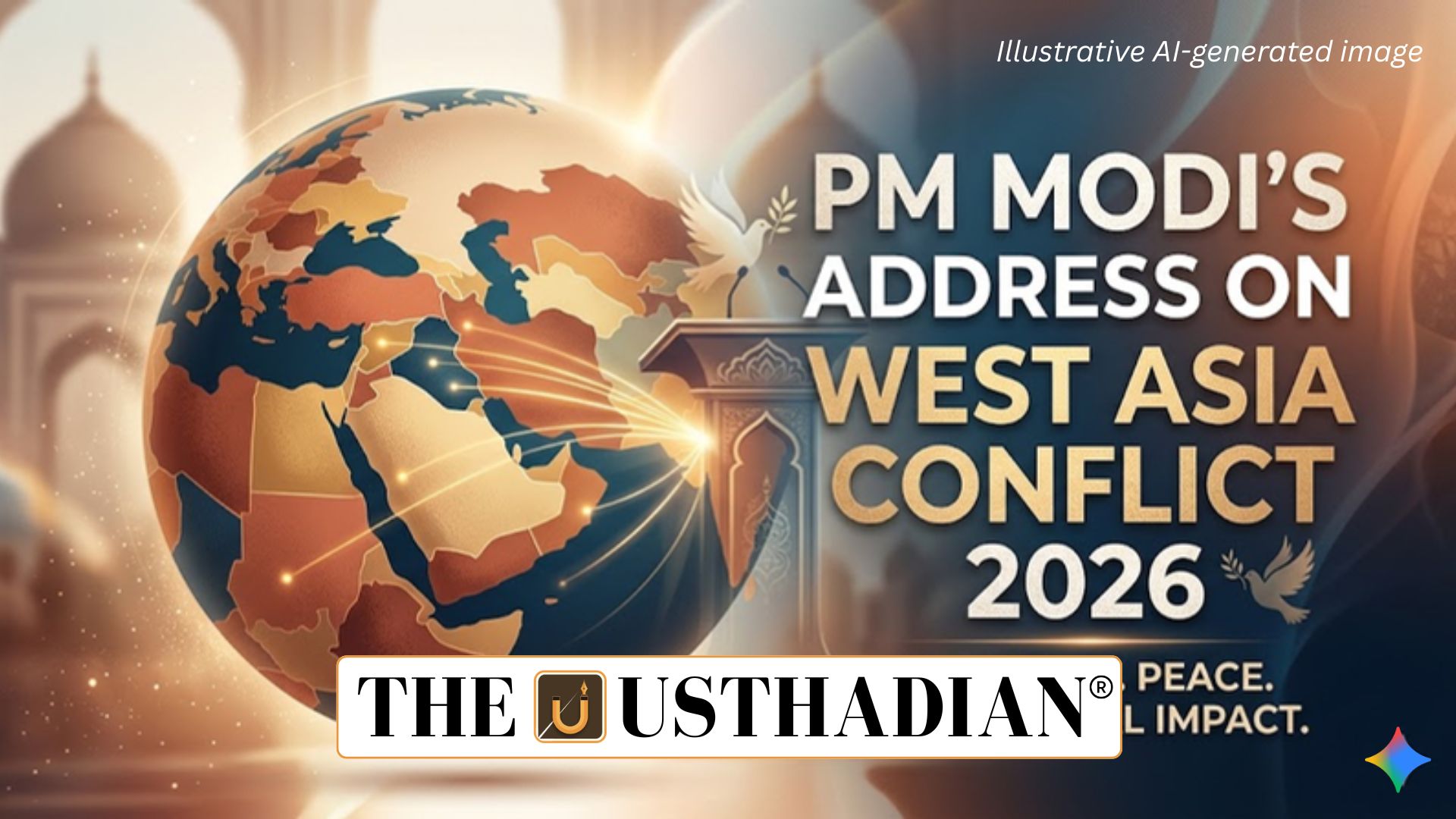
PM Modi Address on West Asia Conflict 2026: Prime Minister Narendra Modi addressed the Lok Sabha on March 23, 2026, regarding the ongoing West Asia conflict. He described the situation as “serious and concerning” with global consequences.
The conflict has continued for over three weeks, impacting global trade, energy flows, and economic stability. India’s response reflects a balanced and cautious foreign policy approach.
Static GK fact: The Indian Parliament consists of Lok Sabha and Rajya Sabha, with Lok Sabha as the lower house.
Global Impact of the Conflict
The Prime Minister highlighted that the crisis is not limited to one region but affects the global economy and supply chains. Disruptions in key maritime routes are raising concerns worldwide.
The Strait of Hormuz was identified as a critical chokepoint for global oil transport. Any obstruction in this region can severely affect energy-importing countries like India.
Static GK fact: Around 20% of global oil trade passes through the Strait of Hormuz.
India’s Energy Security Concerns
India imports nearly 60% of its LPG requirements, making it vulnerable to external shocks. The government is actively ensuring stable fuel supply and price control.
Efforts are being made to diversify energy imports from 27 to 41 countries. This reduces dependence on a single region and enhances energy resilience.
Static GK Tip: India is the third-largest energy consumer in the world after China and the USA.
Strategic Preparedness Measures
India currently maintains a Strategic Petroleum Reserve (SPR) of about 53 lakh metric tonnes. These reserves act as a buffer during global supply disruptions.
The government is also promoting ethanol blending (around 20%), renewable energy expansion, and electric mobility. These steps aim to reduce long-term dependence on fossil fuels.
Static GK fact: India’s major SPR facilities are located at Visakhapatnam, Mangaluru, and Padur.
Safety of Indian Diaspora
The Prime Minister emphasized that nearly 1 crore Indians reside in Gulf countries. Their safety remains a top priority for the government.
Indian missions are providing round-the-clock assistance, advisories, and evacuation support. Over 3.75 lakh Indians have already been brought back safely.
Static GK Tip: The Ministry of External Affairs (MEA) handles evacuation operations like Operation Ganga.
Economic and Trade Implications
West Asia is crucial for India’s imports of oil, gas, and fertilizers. Any disruption affects agriculture, industry, and inflation levels.
The government has assured continued subsidy support for fertilizers and protection of common citizens from price shocks. Domestic production is also being strengthened.
Static GK fact: India is one of the largest importers of crude oil globally.
India’s Diplomatic Approach
India has adopted a neutral and strategic stance, avoiding direct alignment. The focus remains on dialogue and peaceful resolution.
The Prime Minister confirmed engagement with nations like Iran, UAE, Saudi Arabia, Qatar, Oman, Kuwait, and Bahrain. This reflects India’s role as a responsible global actor.
Static GK Tip: India follows the principle of Non-Alignment, focusing on strategic autonomy in global politics.
Static Usthadian Current Affairs Table
PM Modi Address on West Asia Conflict 2026:
| Topic | Detail |
| Event | PM Modi Address on West Asia Conflict |
| Date | March 23, 2026 |
| Key Concern | Energy security and global trade disruption |
| Critical Route | Strait of Hormuz |
| LPG Import Dependency | Around 60% |
| Indian Diaspora | Nearly 1 crore in Gulf countries |
| SPR Capacity | 53 lakh metric tonnes |
| Energy Strategy | Diversification and renewables |
| Diplomatic Stand | Neutral and dialogue-based |
| Global Impact | Supply chain and economic disruptions |