PLFS Revamp and Its Objectives
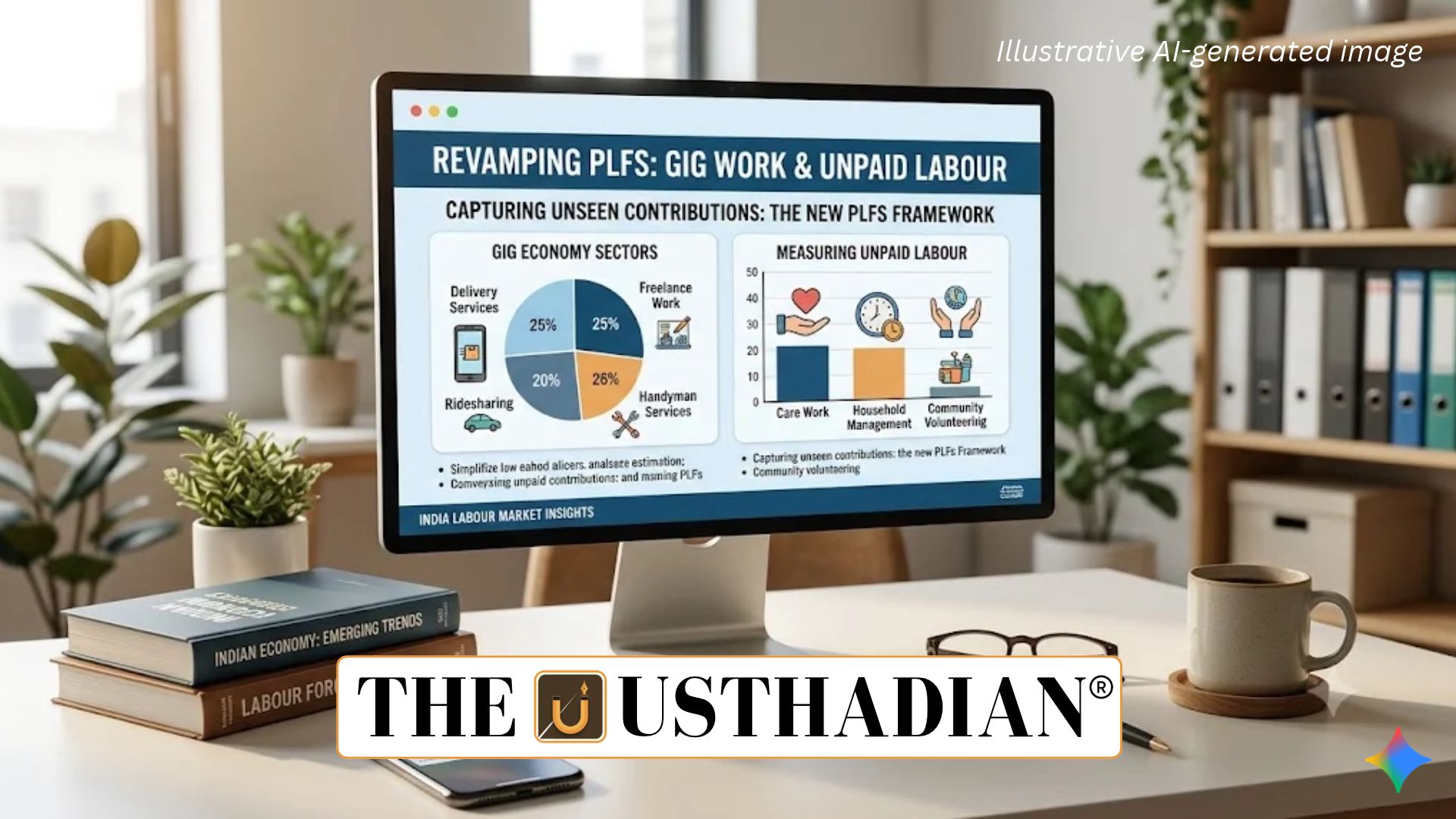
PLFS Revamp to Capture Gig Work and Unpaid Labour in India: The Ministry of Statistics and Programme Implementation (MoSPI) is revamping the Periodic Labour Force Survey (PLFS) to improve the measurement of emerging employment patterns and unpaid economic activities. According to the supplied report, the revised survey design is scheduled for implementation from January 2027.
The reform aims to improve the statistical coverage of digital platform workers, unpaid household and caregiving activities, volunteer work and unpaid trainee work. It also seeks to update sampling arrangements to reflect changes in urbanisation and administrative boundaries.
Improving Coverage of Gig and Platform Workers
The revised PLFS will introduce a separate Second Stage Stratum (SSS) for households containing digital platform workers. An additional screening question will ask whether any household member worked through a digital platform during the preceding 365 days.
Platforms mentioned in the report include Ola, Uber, Zomato, Amazon and Urban Company. Identified workers will be asked about the goods or services they provide, whether they work for multiple platforms, their reasons for entering platform work and the challenges they face.
These challenges may include uncertain earnings, long working hours, adverse weather, accident risks and inadequate social security.
According to a NITI Aayog estimate cited in the supplied report, India’s gig workforce was projected to increase from 77 lakh in 2020–21 to 2.35 crore by 2029–30. Improved survey coverage can help policymakers develop more appropriate employment and social-protection measures.
Static GK fact: Gig work generally involves short-term, task-based or assignment-based work rather than a conventional long-term employment arrangement. Platform work is a form of work organised or facilitated through digital platforms.
Measuring Unpaid Work
The revised survey will collect information on own-use production, unpaid domestic work, caregiving, volunteer activities and unpaid trainee work.
Activities covered may include cooking, cleaning, collecting water, washing clothes, caring for children and looking after elderly family members. The survey will also distinguish between activities intended for household consumption and those undertaken to produce goods or services for sale.
According to the supplied report, these questions will be asked of people aged 15 years and above during their first survey visit in both rural and urban areas.
Measuring unpaid activities can provide a more comprehensive picture of how people contribute to households and communities, even when their work does not generate direct monetary income.
Women’s Labour Force Participation and Time Poverty
The reform has particular significance for understanding women’s participation in paid employment. The Time Use Survey 2024, conducted by MoSPI, highlighted substantial gender differences in unpaid domestic and caregiving responsibilities.
The supplied report states that females aged above six spent an average of more than 4.5 hours daily on such activities, compared with approximately 37 minutes for males.
The revised PLFS will also ask whether individuals sought paid work or work for profit during the preceding 30 days, whether they currently want such work and why they did not seek employment.
These questions can help identify whether family responsibilities and household constraints limit access to paid work.
Static GK Tip: Time poverty refers to having insufficient discretionary time because of competing responsibilities, including unpaid domestic and care work. It can restrict opportunities for education, skill development and paid employment.
Updating the Sampling Framework
The revamped survey will use an updated sampling frame to account for new urban settlements, changing urbanisation patterns and changes in districts and other administrative units.
The Urban Frame Survey will inform the updated urban sampling frame, while the existing Census 2011-based rural frame will undergo follow-up updating, according to the supplied report.
Improved sampling and stratification are intended to strengthen the representation of relevant population groups and reduce operational difficulties during data collection.
Significance of the Reform
The PLFS revamp aims to provide a broader understanding of India’s changing labour market. Better data on gig workers can support employment and social-security policy, while improved measurement of unpaid work can strengthen gender-sensitive labour-market analysis.
The reform also recognises that conventional employment indicators do not fully capture all productive activities. Reliable labour statistics are essential for assessing workforce participation, designing welfare programmes and understanding the changing nature of work.
Static Usthadian Current Affairs Table
PLFS Revamp to Capture Gig Work and Unpaid Labour in India:
| Fact | Detail |
| Survey | Periodic Labour Force Survey |
| Nodal ministry | Ministry of Statistics and Programme Implementation |
| Scheduled implementation | January 2027 |
| Key reform | Separate sampling stratum for households with platform workers |
| Screening period | Previous 365 days |
| Platforms mentioned | Ola, Uber, Zomato, Amazon and Urban Company |
| Gig workforce estimate | 77 lakh in 2020–21 |
| Projected gig workforce | 2.35 crore by 2029–30 |
| Unpaid activities covered | Domestic work, caregiving, own-use production, volunteering and unpaid training |
| Reported age group for new questions | 15 years and above |
| Related survey | Time Use Survey 2024 |
| Major policy relevance | Gig-worker visibility, gender analysis and social-security planning |