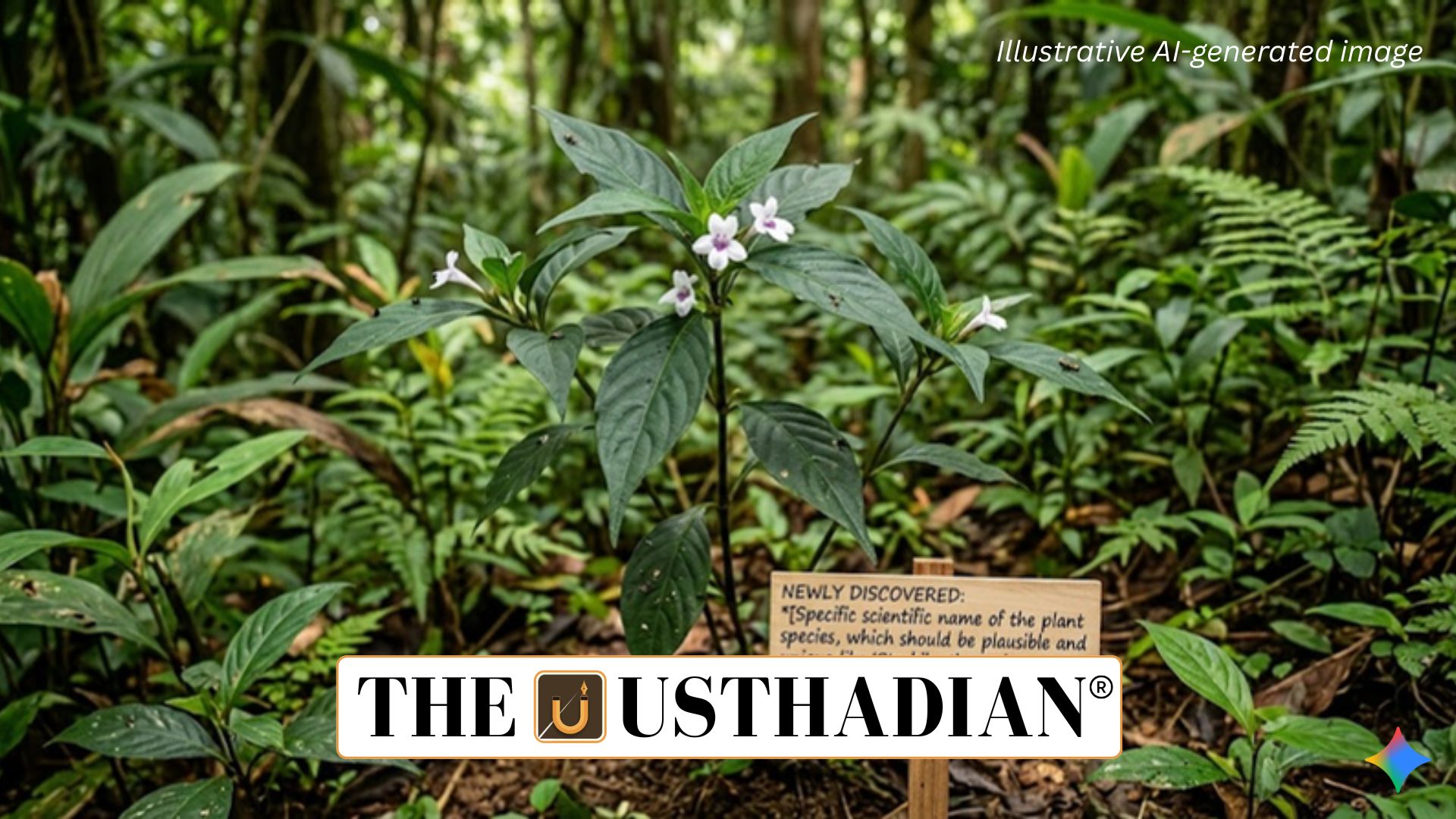
Discovery In Manas National Park
New Plant Species Discovered In Assam Named After Zubeen Garg: Scientists have identified a new plant species named Osbeckia zubeengargiana in the grasslands of Manas National Park in Assam. The discovery was made by botanists from Gauhati University during extensive botanical surveys conducted between 2021 and 2025.
The plant belongs to the Melastomataceae family, a group of flowering plants widely distributed across tropical regions. Researchers confirmed that the species possesses several unique structural characteristics that distinguish it from other plants within the Osbeckia genus.
The discovery occurred in the grassland ecosystems of Baksa district, which forms part of the protected landscape of Manas National Park. Field researchers noticed a tall flowering shrub that appeared similar to known Osbeckia species, but further scientific analysis revealed distinct botanical traits.
Static GK fact: Manas National Park was declared a UNESCO World Heritage Site in 1985 due to its exceptional biodiversity and ecological importance.
Botanical Survey And Research Team
The discovery was made through systematic field exploration by a team of botanists including Barnali Das and Namita Nath from Gauhati University. The research team also included Prasobh Pulpra from NSS College, Kerala.
During field surveys, scientists collected plant samples and conducted detailed taxonomic comparisons with existing species. After morphological examination and scientific documentation, the plant was confirmed as a completely new species within the genus Osbeckia.
Botanical surveys play a crucial role in documenting unknown species and understanding biodiversity patterns. Such discoveries highlight the scientific significance of the Eastern Himalayan biodiversity hotspot, where many plant and animal species remain unexplored.
Naming The Species After Zubeen Garg
The newly discovered species Osbeckia zubeengargiana was named in honour of Assamese music icon Zubeen Garg. The naming serves as recognition of his cultural influence and contributions to the identity of Assam.
Naming species after prominent personalities is a long-standing tradition in biological sciences. Scientists often use such naming practices to acknowledge individuals who have significantly influenced society, culture, or scientific progress.
Static GK Tip: The scientific naming system used in biology follows binomial nomenclature, introduced by Carl Linnaeus, where each species is assigned a two-part Latin name.
Unique Botanical Features
Researchers observed several distinctive botanical features that differentiate Osbeckia zubeengargiana from other species in the same genus.
The plant grows as a perennial shrub, reaching heights between 2.5 and 3.5 metres under natural conditions. It produces clusters of bright pink flowers, making it visually prominent in grassland ecosystems.
Each flower measures approximately 2.5 to 3 centimetres in length, forming attractive clusters. The flowering period typically occurs between mid-September and January, which also assists botanists in identifying the species during field surveys.
These distinctive traits confirmed the plant as a new member of the Melastomataceae family.
Conservation Status And Biodiversity Significance
Although researchers observed a significant population of the plant inside Manas National Park, its distribution outside the protected area remains unclear. Due to limited ecological data, the species has been placed under the “Data Deficient” category of the IUCN Red List.
This classification indicates that further research is required to determine the plant’s conservation status, population size, and geographic distribution.
The discovery highlights the ecological importance of Manas National Park, which supports diverse habitats such as tropical forests, alluvial grasslands, and river ecosystems. These environments provide shelter to numerous rare and endangered species.
Static GK fact: Manas National Park lies along the India–Bhutan border and is also part of the Manas Tiger Reserve, one of India’s important protected areas.
The identification of Osbeckia zubeengargiana demonstrates that India’s northeastern region still holds vast unexplored biodiversity and remains a significant area for scientific research and conservation.
Static Usthadian Current Affairs Table
New Plant Species Discovered In Assam Named After Zubeen Garg:
| Topic | Detail |
| New plant species | Osbeckia zubeengargiana |
| Location of discovery | Manas National Park, Assam |
| Discovering institution | Gauhati University |
| Botanical family | Melastomataceae |
| Habitat | Grassland ecosystems |
| Flower characteristics | Bright pink clusters, 2.5–3 cm length |
| Flowering season | Mid-September to January |
| Height of plant | Around 2.5–3.5 metres |
| Conservation category | IUCN Data Deficient |
| Biodiversity region | Eastern Himalayan biodiversity hotspot |