Background of colonial repression
Jallianwala Bagh Massacre Remembrance in India: The Jallianwala Bagh Massacre is observed every year on April 13 to honour victims of one of the most tragic events in India’s history. The incident occurred in 1919 at Amritsar, during a time of rising nationalist sentiment.
The British government had passed the Rowlatt Act (1919), allowing detention without trial. This triggered widespread protests led by Mahatma Gandhi through the Satyagraha movement, especially in Punjab.
Static GK fact: The Rowlatt Act was officially called the Anarchical and Revolutionary Crimes Act, 1919.
Events of April 13 1919
On the day of Baisakhi, thousands of unarmed civilians gathered at Jallianwala Bagh for a peaceful meeting. The crowd included men, women, and children, unaware of the impending danger.
British officer Reginald Dyer entered the area with troops and ordered firing without warning. Around 1,650 rounds were fired within minutes, targeting trapped civilians.
The site had limited exits, causing panic and heavy casualties. Official British records reported around 291 deaths, while Indian estimates suggested over 500 deaths and 1,000 injuries.
Static GK Tip: Jallianwala Bagh is located near the Golden Temple in Amritsar, Punjab.
Immediate aftermath
Following the massacre, martial law was imposed across Punjab. Civil liberties were severely restricted, and people faced arrests and harsh punishments.
The incident shocked the entire nation. Rabindranath Tagore renounced his knighthood in protest, highlighting global outrage against British actions.
The brutality marked a shift in public perception, exposing the harsh realities of colonial rule.
Hunter Commission findings
The British government appointed the Hunter Commission to investigate the incident. Although it criticised Dyer’s actions, it failed to deliver strict punishment.
Dyer was forced to resign but was not criminally prosecuted. This led to widespread dissatisfaction among Indians, who saw it as a failure of justice.
Static GK fact: The Hunter Commission was officially known as the Disorders Inquiry Committee (1919).
Udham Singh and delayed justice
The memory of the massacre remained strong for decades. In 1940, revolutionary Udham Singh assassinated Michael O’Dwyer in London, holding him responsible for the tragedy.
This act symbolised resistance against colonial oppression and became a powerful moment in India’s freedom struggle.
Impact on freedom movement
The massacre became a major turning point in India’s independence movement. It destroyed faith in British governance and united Indians across regions.
It strengthened anti-colonial sentiments and transformed the struggle into a mass national movement. Many future leaders drew inspiration from this tragic event.
Memorial and remembrance
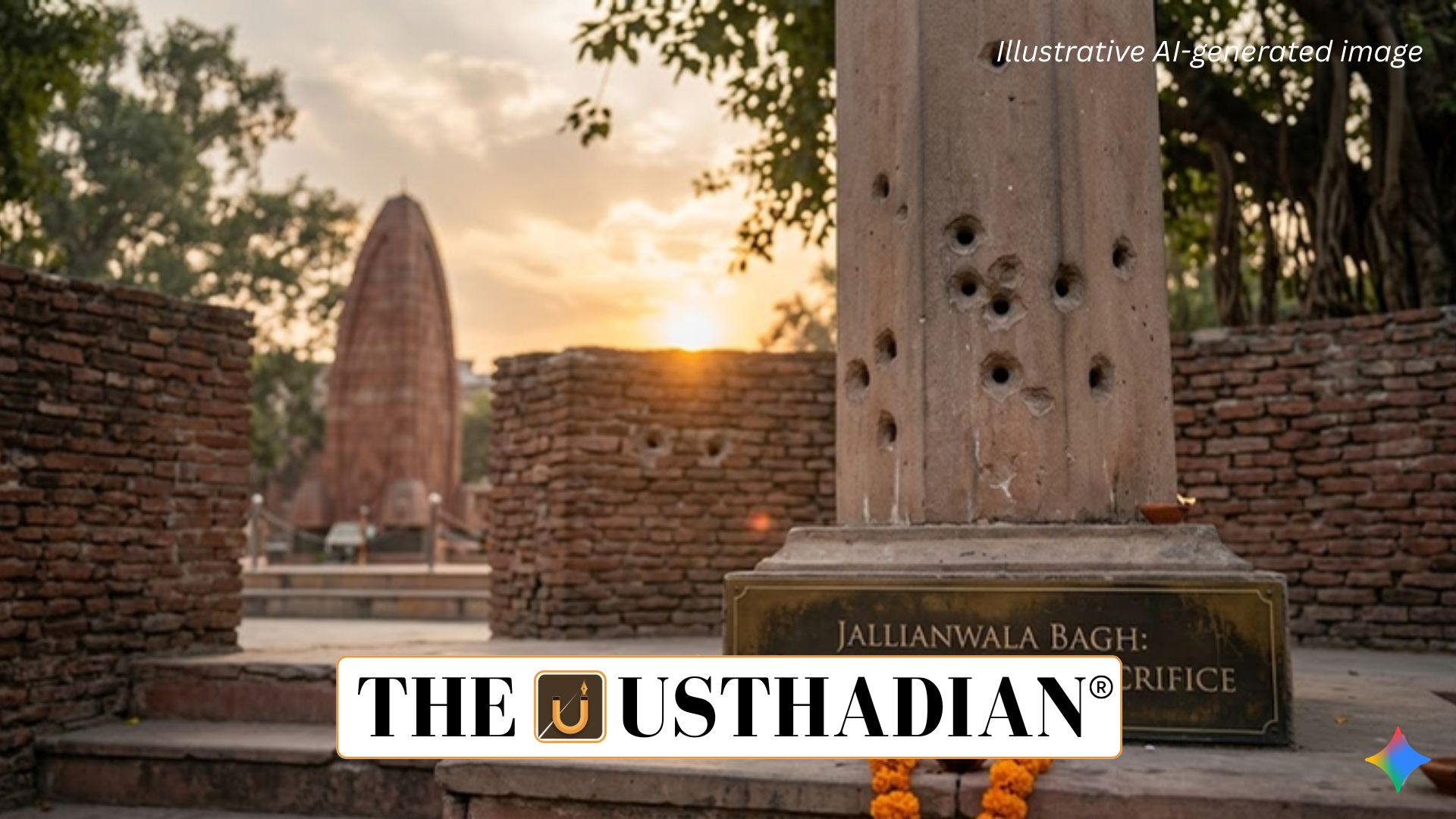
Today, the Jallianwala Bagh National Memorial, established under the 1951 Act, stands as a tribute to the victims. It preserves bullet marks, the Martyrs’ Well, and historical galleries.
The memorial continues to remind citizens of the sacrifices made for independence and the cost of freedom.
Static Usthadian Current Affairs Table
Jallianwala Bagh Massacre Remembrance in India:
| Topic | Detail |
| Event Date | April 13, 1919 |
| Location | Jallianwala Bagh, Amritsar |
| Key Law | Rowlatt Act, 1919 |
| Officer Responsible | Reginald Dyer |
| Estimated Casualties | 500+ deaths, 1000+ injured (Indian estimates) |
| Investigation Body | Hunter Commission |
| Revenge Incident | Udham Singh assassinated Michael O’Dwyer in 1940 |
| Memorial Act | Jallianwala Bagh National Memorial Act, 1951 |