Latest Developments in the Indus Waters Dispute
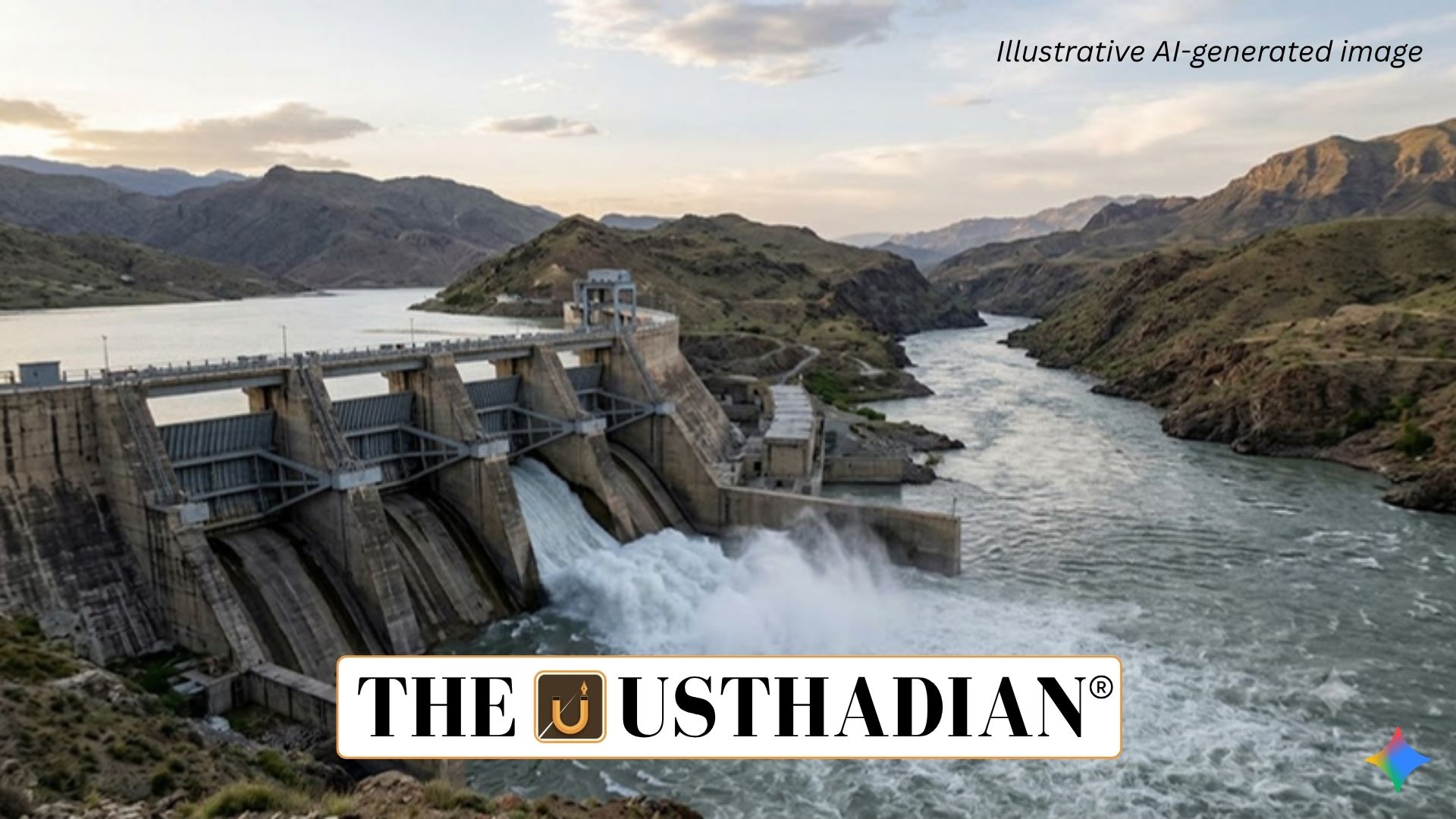
Indus Waters Treaty Faces a Prolonged India-Pakistan Standoff: The Permanent Court of Arbitration (PCA) has issued two further orders concerning the Indus Waters Treaty (IWT) dispute between India and Pakistan. The Court held that India’s decision to place the Treaty in “abeyance” was impermissible and directed India to halt construction at the Ratle Hydroelectric Project until the technical dispute is resolved.
India has rejected the legitimacy of the arbitration process and does not accept the authority of these rulings. The developments have therefore deepened an already prolonged stalemate over the future of the water-sharing framework.
What Did the PCA Rule?
The PCA held that India’s decision to place the IWT in abeyance was not permissible under the Treaty or international law and therefore considered the Treaty to remain in force.
It also directed India to stop construction-related activity at the Ratle Hydroelectric Project pending resolution of the technical dispute.
These are reportedly the fourth set of awards/orders issued by the Court in the dispute, with the decisions favouring Pakistan. The Court was constituted in September 2022 and had previously maintained that it possessed jurisdiction over the matters referred to it.
Static GK fact: The Permanent Court of Arbitration is headquartered at The Hague, Netherlands, and provides mechanisms for resolving international disputes.
Why Does India Reject the Arbitration Process?
India considers the arbitration mechanism to be illegally constituted. Its principal objection is that the process was initiated despite the existence of a separate neutral expert mechanism dealing with the same technical questions.
India argues that the Treaty does not permit two parallel dispute-resolution processes for the same matter. It therefore declined to appoint its two arbitrators, while the arbitration process continued with appointments made through the mechanism specified for constituting the Court.
India has consequently rejected the authority and conclusions of the arbitration process and maintains that its decision to place the Treaty in abeyance remains operative.
Do the PCA Orders Have Enforcement Power?
The PCA does not possess a conventional enforcement mechanism capable of physically compelling India to alter its actions.
Consequently, India’s continued rejection of the process limits the practical effect of the rulings. For Pakistan, however, the orders remain useful as diplomatic and legal arguments that can be raised at international forums.
Pakistan can use the rulings to strengthen its position internationally and reinforce its domestic narrative concerning India’s approach to the Treaty.
Pakistan’s Limited Options
Pakistan could seek to internationalise the dispute further through the United Nations Security Council, particularly by presenting water security as an issue affecting regional peace and security.
Another possibility would be seeking support for referring the dispute to the International Court of Justice (ICJ) through appropriate UN mechanisms.
However, such approaches face significant diplomatic and procedural hurdles. India’s international relationships and diplomatic influence make a successful escalation through the UN system difficult.
Pakistan’s more realistic option may therefore be sustained diplomatic and narrative pressure, portraying India as violating its treaty obligations.
India’s Strategic Response
India’s primary focus is on accelerating infrastructure development on the three western rivers — Indus, Jhelum and Chenab — over which the Treaty gives India specified rights.
India is pursuing eight infrastructure projects worth around ₹50,000 crore in Jammu and Kashmir to increase utilisation of its permitted water resources.
One proposed project involving the diversion of Chenab waters towards the Beas raises additional questions because the IWT places restrictions on inter-basin water transfers.
India also withdrew from the neutral expert process that it had previously requested. This move was intended to avoid creating the impression that India continued to operate within the Treaty framework while maintaining its abeyance position.
Hydrological Data Sharing Continues
Despite the wider dispute, India continues to share hydrological information with Pakistan.
However, such information is reportedly being transmitted through the Indian High Commission in Islamabad, rather than through the traditional Permanent Indus Commission mechanism.
India has also connected its decision to place the Treaty in abeyance with Pakistan’s alleged continued support for cross-border terrorism.
At the same time, India has proposed renegotiating the Treaty bilaterally, without third-party involvement such as the World Bank. Pakistan is unlikely to accept such a framework if it reduces the role of international mechanisms.
Can Water-Sharing Continue Without a Treaty?
The present deadlock suggests that a formal resolution may remain difficult in the near term. Nevertheless, the physical flow of rivers is likely to continue even without an operational treaty framework.
Placing the IWT in abeyance does not mean that India can simply stop the rivers from flowing into Pakistan. Pakistan continues to receive substantial water from the Indus river system, and this will remain the case even as India develops additional projects within its permitted rights.
India already shares transboundary rivers with several neighbouring countries, including China, Bhutan, Nepal, Bangladesh and Myanmar, through varying institutional and cooperative arrangements.
Pakistan’s Water Stress and Water Management
The dispute also highlights Pakistan’s broader water-management challenges. Water stress is influenced not only by upstream flows but also by inefficient irrigation, inadequate storage capacity and water-management practices.
Greater uncertainty surrounding future water availability could encourage Pakistan to improve water conservation, storage infrastructure and irrigation efficiency.
Thus, the dispute is not merely a question of India-Pakistan diplomacy. It also raises wider issues involving climate resilience, water security, infrastructure and transboundary river management.
Road Ahead
The Indus Waters Treaty dispute has reached a practical stalemate. While the arbitration rulings strengthen Pakistan’s position on paper, India’s rejection of the arbitration process and its focus on developing projects on the western rivers point towards a fundamentally different interpretation of the Treaty’s future.
A comprehensive renegotiation appears difficult, while international escalation faces substantial obstacles. In such circumstances, informal and practical water-sharing arrangements may continue even if the formal treaty framework remains under prolonged stress.
Static GK Tip: The Indus Waters Treaty was signed in 1960 between India and Pakistan with the World Bank’s assistance. It allocates the eastern rivers—Ravi, Beas and Sutlej—primarily to India, while Pakistan has the principal use of the western rivers—Indus, Jhelum and Chenab, subject to specified Indian rights.
Static Usthadian Current Affairs Table
Indus Waters Treaty Faces a Prolonged India-Pakistan Standoff:
| Fact | Detail |
| Treaty | Indus Waters Treaty (IWT) |
| Signed | 1960 |
| Parties | India and Pakistan |
| World Bank Role | Assisted in facilitating the Treaty |
| Eastern Rivers | Ravi, Beas and Sutlej |
| Western Rivers | Indus, Jhelum and Chenab |
| India’s Western-River Rights | Specified uses subject to Treaty conditions |
| Latest Dispute | India’s decision to place the Treaty in abeyance |
| Arbitration Body | Permanent Court of Arbitration |
| PCA Location | The Hague, Netherlands |
| PCA Constitution | September 2022 |
| India’s Position | Rejects the legitimacy of the arbitration process |
| Pakistan’s Position | Uses the rulings to support its treaty-related claims |
| Ratle Project | Hydroelectric project in Jammu and Kashmir |
| India’s Infrastructure Push | Eight projects worth around ₹50,000 crore |
| Neutral Expert | Separate dispute-resolution mechanism under the IWT |
| Permanent Indus Commission | Traditional bilateral mechanism for water cooperation |
| India’s Negotiation Proposal | Bilateral renegotiation without third-party involvement |
| Major Challenge | Treaty deadlock and competing interpretations |
| Broader Issue | Water security, infrastructure and transboundary river management |