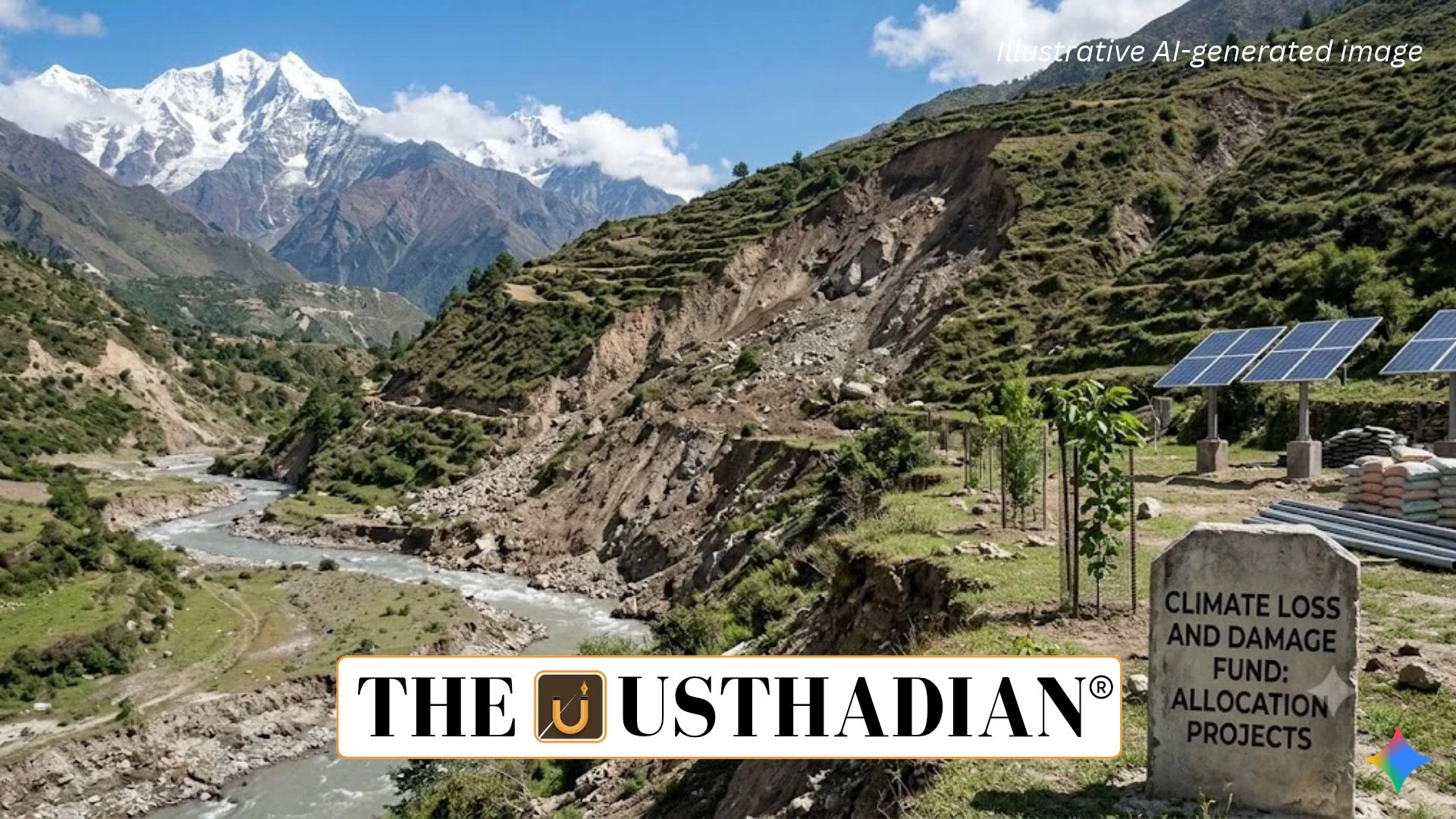
Nepal Receives Climate Disaster Funding
Nepal’s First Climate Loss and Damage Fund Allocation: The United Nations climate framework’s Fund for Responding to Loss and Damage (FRLD) approved $21.6 million (approximately ₹205 crore) for Nepal following devastating floods in August 2026, according to the supplied report. This marked the fund’s first country-specific allocation, representing a significant step towards providing financial support to developing countries affected by climate-related disasters.
Nepal had requested $20 million, while its estimated recovery and reconstruction requirements stood at approximately $4.75 billion. The approved amount is therefore small compared with the overall damage and rebuilding needs.
Disaster Behind Nepal’s Funding Request
On 26 August 2026, an ice-and-rock avalanche reportedly triggered flooding across the Bhotekoshi–Trishuli–Narayani river system in Nepal. Experts linked the disaster to risks intensified by human-induced climate change, according to the supplied report.
The estimated economic losses were at least $2.69 billion, while recovery and reconstruction needs reached approximately $4.71–4.75 billion. The disaster highlighted the vulnerability of mountainous countries to extreme events, including floods, landslides and hazards associated with glacial environments.
What Is the Loss and Damage Fund
The Fund for Responding to Loss and Damage supports developing countries facing the economic and non-economic consequences of climate change. It operates under the financial arrangements of the United Nations Framework Convention on Climate Change (UNFCCC).
The fund was agreed upon at COP27 in 2022, while its Governing Instrument was adopted at COP28 in 2023. Its purpose is to help vulnerable countries address climate impacts that cannot be adequately managed through mitigation and adaptation alone.
Static GK fact: The Paris Agreement was adopted in 2015 under the UNFCCC. It provides the international framework for limiting global warming and strengthening climate action.
Significance of Nepal’s Allocation
According to the supplied report, the allocation was approved at an extraordinary virtual meeting of the fund’s Board on 22 October 2026. The Board also approved a pilot mechanism allowing Nepal to submit its request outside the normal application window.
The decision could provide a model for responding to urgent climate emergencies. However, the mechanism does not automatically guarantee rapid payment, as formal documentation and further approval remain necessary.
Of the approved $21.6 million, approximately $1.6 million was earmarked for oversight fees for implementing organisations. Nepal’s formal request was scheduled for review at the fund’s tenth meeting in Manila in December 2026, according to the report.
Funding Constraints and Global Climate Finance
As of March 2026, 27 countries had pledged $822.06 million to the fund, including $629.70 million in grant contributions. The report also cited a start-up allocation of $342 million, with at least half reserved for least developed countries and small island developing states.
Demand substantially exceeds available resources. The fund’s first funding call reportedly received 176 requests from 119 countries, seeking approximately $2.8 billion. Decisions on these requests were deferred to December 2026.
The wider climate finance gap remains a major concern. Developed countries had committed to mobilising $100 billion annually for climate action during 2020–2025, while developing countries estimated their climate finance needs at $1.3 trillion per year in 2024. A newer commitment of $300 billion annually by 2035 falls short of that estimated requirement.
Challenges in Effective Disbursement
The fund faces concerns regarding limited contributions, lengthy approval procedures and uncertainty over when pledged money will become available. Its multi-stage funding process and the World Bank’s role as interim trustee have also raised questions about whether assistance can reach disaster-affected communities quickly enough.
For Nepal, the approved allocation represents less than 0.5% of its estimated reconstruction needs. Effective implementation will require faster disbursement, transparent monitoring and funding that protects vulnerable communities while supporting long-term resilience.
Static Usthadian Current Affairs Table
Nepal’s First Climate Loss and Damage Fund Allocation:
| Fact | Detail |
| Fund | Fund for Responding to Loss and Damage |
| Established politically | COP27, 2022 |
| Governing Instrument adopted | COP28, 2023 |
| Nepal allocation | $21.6 million |
| Disaster date | 26 August 2026 |
| Estimated reconstruction needs | $4.71–4.75 billion |
| First funding call | 176 requests from 119 countries |
| Reported pledges by March 2026 | $822.06 million from 27 countries |
| Key international framework | UNFCCC and Paris Agreement |
| Major challenge | Inadequate funding and delayed disbursement |