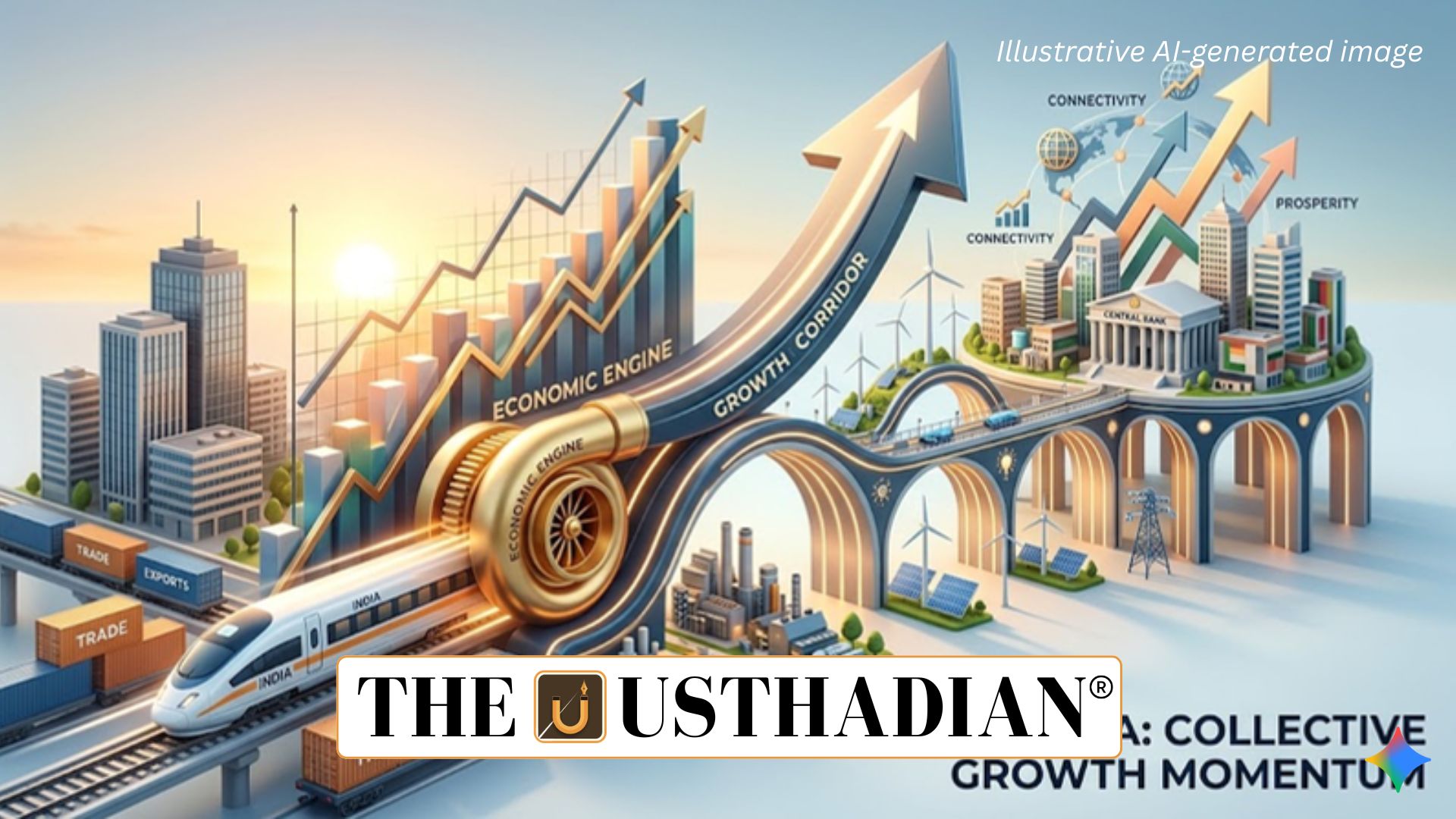
India anchors regional economic expansion
India Drives South Asia Growth Momentum: According to the World Bank’s South Asia Economic Update (April 2026), India is expected to remain the primary engine of growth in the region. While many neighboring economies face slowdowns, India’s strong domestic fundamentals continue to support steady expansion.
India’s economic size and stability make it the largest contributor to South Asia’s GDP growth. This dominant position ensures that even when regional growth weakens, India acts as a stabilizing force.
Static GK fact: South Asia includes countries like India, Pakistan, Bangladesh, Sri Lanka, Nepal, Bhutan, and Maldives.
Growth outlook shows resilience
India’s economy grew from 7.1% in FY25 to 7.6% in FY26, reflecting strong economic momentum. The FY27 growth projection stands at 6.6%, revised upward from earlier estimates.
This consistent growth places India among the fastest-growing major economies globally. Even as global uncertainties persist, India’s performance remains relatively insulated due to its large domestic market.
Static GK Tip: India is currently the 5th largest economy in the world by nominal GDP.
Consumption and exports drive growth
Private consumption remains a key pillar supporting India’s economy. Lower inflation and GST rationalisation measures have increased purchasing power, boosting demand across sectors.
Additionally, export resilience has helped counter external challenges. Strong performance in services and goods exports ensures that economic momentum continues despite global slowdowns.
Static GK fact: The Goods and Services Tax (GST) was introduced in India in 2017 as a unified indirect tax system.
External risks from geopolitical tensions
The report highlights risks arising from West Asia conflicts, which may disrupt global energy markets. Rising crude oil prices can increase import costs and trigger inflation in energy-dependent economies like India.
Such disruptions could impact South Asia’s overall growth, which is projected to decline to 6.3% in 2026 from 7% in 2025. Energy security remains a key concern for the region.
Static GK Tip: India imports nearly 85% of its crude oil requirements, making it vulnerable to global price fluctuations.
Inflation concerns and future outlook
The World Bank cautions that strong domestic demand could lead to short-term inflationary pressures. While tax reforms may support consumption, external uncertainties continue to pose risks.
Growth projections for FY27 range between 5.9% and 6.7%, indicating variability due to global conditions. Maintaining macroeconomic stability will be crucial for sustaining long-term growth.
Static GK fact: Inflation in India is measured using indices like the Consumer Price Index (CPI).
Conclusion
India’s economic resilience positions it as the backbone of South Asia’s growth. With strong consumption, stable exports, and supportive policies, the country continues to drive regional progress despite global uncertainties.
Static Usthadian Current Affairs Table
India Drives South Asia Growth Momentum:
| Topic | Detail |
| Report Name | South Asia Economic Update |
| Released By | World Bank |
| India FY26 Growth | 7.6% |
| India FY27 Projection | 6.6% |
| Regional Growth 2026 | 6.3% |
| Key Driver | Private consumption |
| Major Risk | West Asia conflict |
| Tax Reform | GST introduced in 2017 |