Digital transformation in agriculture
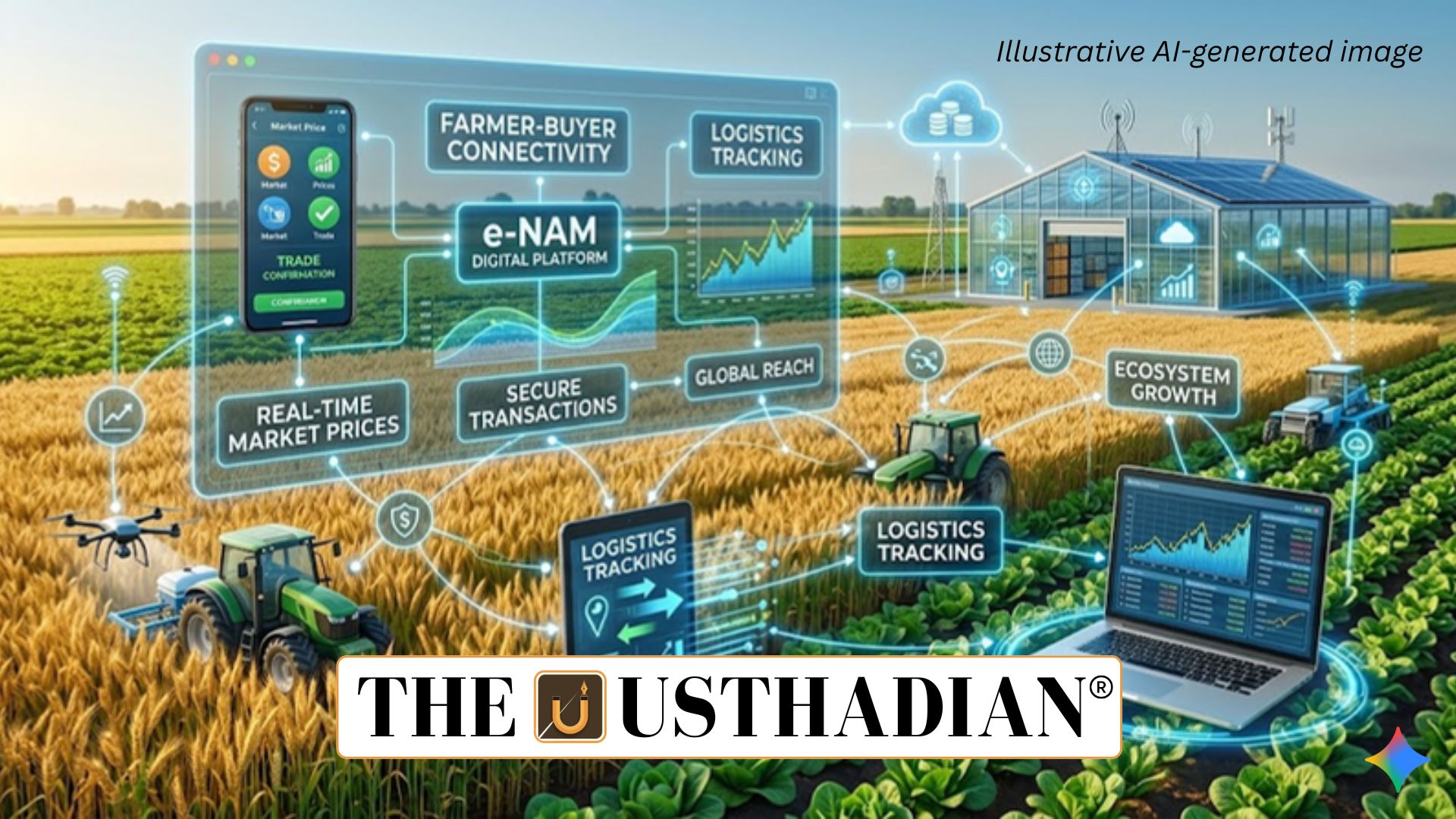
e-NAM Strengthens Digital Agricultural Trade Ecosystem: The National Agriculture Market (e-NAM) marks a decade of transforming agricultural trade since its launch in April 2016. It is a pan-India electronic trading platform designed to integrate existing mandis and create a unified national market.
By digitizing agricultural transactions, e-NAM has reduced inefficiencies and improved transparency. It enables farmers to access better price discovery beyond local mandis.
Static GK fact: Agriculture contributes around 18% to India’s GDP and employs nearly half of the workforce.
Overcoming APMC limitations
Traditional Agricultural Produce Market Committee (APMC) mandis often restricted farmers to local buyers, limiting competition. e-NAM addressed this by enabling inter-state trading and wider market access.
This reform supports the concept of One Nation One Market, ensuring that farmers are not confined to geographical boundaries. It also reduces the role of intermediaries.
Static GK Tip: APMC Acts are regulated by state governments, leading to variations in agricultural marketing across India.
Key features of e-NAM
e-NAM operates through a multi-layered digital architecture, including a web portal and mobile application. It also integrates AI-enabled quality assessment systems for better grading of produce.
The platform is implemented by the Small Farmers Agribusiness Consortium (SFAC) under the Ministry of Agriculture and Farmers’ Welfare. It offers a 12-language interface, live price dashboards, and single-window services.
Integration with the Electronic Negotiable Warehouse Receipt (e-NWR) system allows farmers to store produce in WDRA-accredited warehouses and sell digitally without physical movement of goods.
Static GK fact: The Warehousing Development and Regulatory Authority (WDRA) regulates warehouses under the Warehousing (Development and Regulation) Act, 2007.
Achievements over a decade
e-NAM has significantly expanded its reach and impact over ten years. The number of connected mandis increased from 1,389 in 2024 to 1,656 by March 2026.
The platform facilitated trading of 13.25 crore metric tonnes of commodities, generating a trade value of ₹4.84 lakh crore. This highlights its growing importance in agricultural marketing.
Additionally, it has onboarded over 1.80 crore farmers, 2.73 lakh traders, and 4,724 Farmer-Producer Organizations (FPOs), enhancing inclusivity.
Static GK Tip: FPOs are collective organizations of farmers aimed at improving bargaining power and income.
Future prospects
The future of e-NAM lies in deeper integration with digital technologies and expanding participation. Initiatives like the Platform of Platforms (PoP) aim to connect multiple agricultural services under one system.
Continued policy support and infrastructure development will be crucial. Strengthening logistics, storage, and digital literacy will further enhance its effectiveness.
India’s push towards digital agriculture through e-NAM is a significant step in improving farmer incomes and ensuring efficient agricultural markets.
Static Usthadian Current Affairs Table
e-NAM Strengthens Digital Agricultural Trade Ecosystem:
| Topic | Detail |
| Launch Year | 2016 |
| Platform Name | National Agriculture Market (e-NAM) |
| Implementing Agency | Small Farmers Agribusiness Consortium |
| Key Concept | One Nation One Market |
| Legal Framework | Warehousing Act 2007 |
| Mandis Connected | 1,656 (March 2026) |
| Trade Volume | 13.25 crore metric tonnes |
| Trade Value | ₹4.84 lakh crore |
| Key Beneficiaries | Farmers, traders, FPOs |