New Apex Body for Port Security
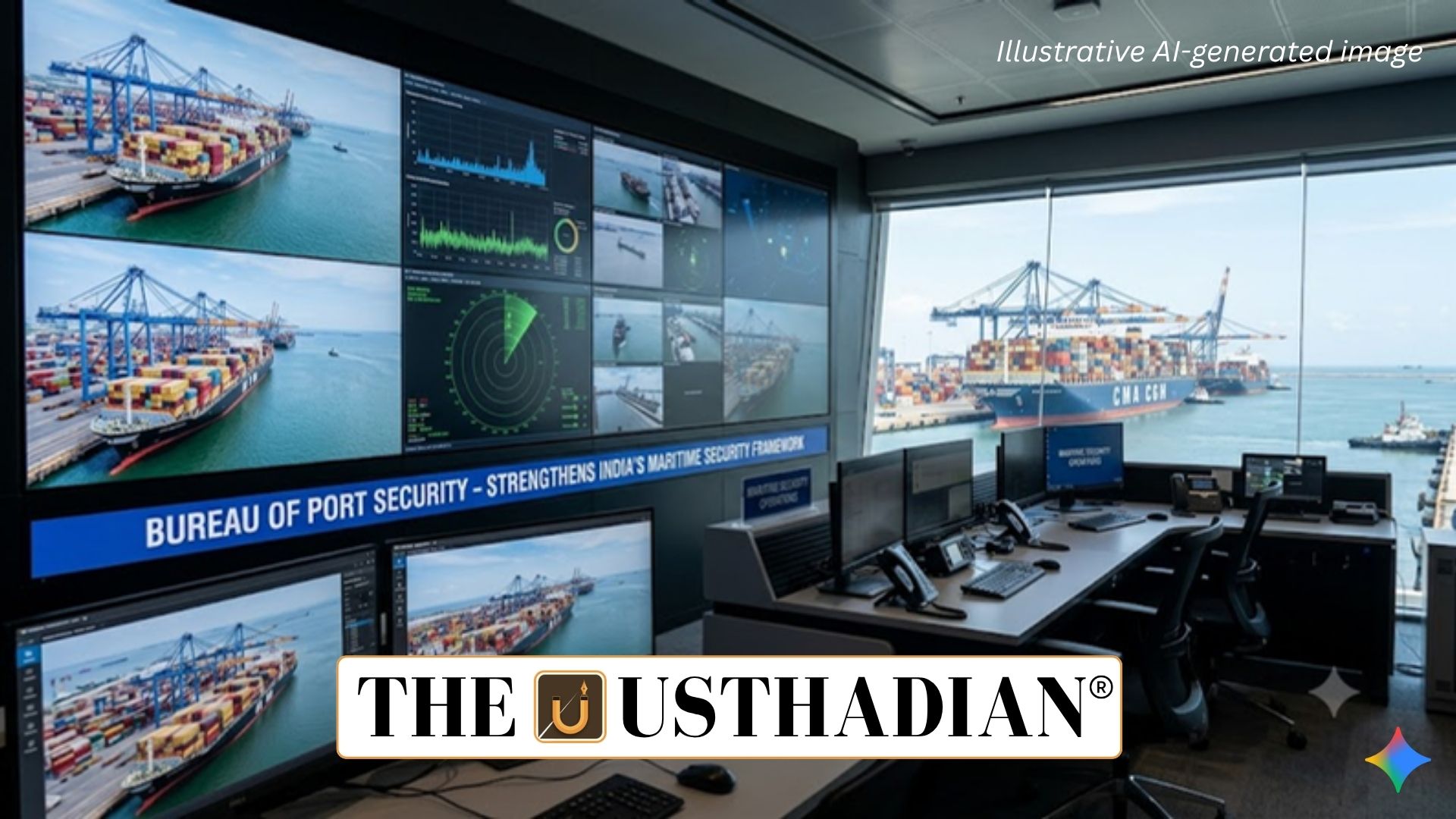
Bureau of Port Security Strengthens India’s Maritime Security Framework: The Government of India has established the Bureau of Port Security (BoPS) under the Ministry of Ports, Shipping and Waterways to strengthen security across the country’s ports, ships, and maritime infrastructure. The bureau will function as the apex regulatory authority for maritime security and will address emerging challenges, including cyber threats and digital vulnerabilities.
Initially, BoPS will operate under the Directorate General of Maritime Administration (DGMA), formerly known as the Directorate General of Shipping, during its transition phase.
Static GK fact: India has a coastline of about 7,516 km and operates 13 major ports, including one under construction at Vadhavan.
Objectives of the Bureau
The creation of BoPS comes in response to the rapid expansion of India’s maritime trade, modern port infrastructure, and increasing dependence on digital technologies. The bureau aims to establish uniform security standards and improve coordination among agencies responsible for maritime safety.
Its key objectives include enhancing port security, strengthening ship security, ensuring compliance with international regulations, improving emergency preparedness, and protecting critical maritime infrastructure from cyberattacks.
Major Functions of BoPS
The Bureau of Port Security will regulate and monitor security measures across ports and ships throughout the country. It will formulate national security standards, conduct inspections, perform security audits, and oversee compliance with maritime regulations.
The bureau will also collect, analyse, and disseminate security-related intelligence to improve threat assessment and support timely responses to security risks.
Static GK Tip: The International Ship and Port Facility Security (ISPS) Code was adopted by the International Maritime Organization (IMO) to strengthen global maritime security.
Dedicated Focus on Cyber Security
As ports increasingly rely on digital platforms for cargo handling, logistics, and vessel management, cyber security has become a critical priority. BoPS will establish a dedicated cyber security division to safeguard port information technology systems and operational technology infrastructure.
The bureau will work to prevent ransomware attacks, improve cyber resilience, secure maritime communication networks, and ensure uninterrupted port operations.
CISF to Enhance Port Protection
The Central Industrial Security Force (CISF) has been designated as the Recognised Security Organisation (RSO) for Indian port facilities. It will conduct security assessments, prepare Port Facility Security Plans, identify vulnerabilities, and recommend measures to strengthen security.
In addition, CISF will train personnel from licensed Private Security Agencies (PSAs) operating at ports, promoting uniform standards and professional security management.
Static GK fact: CISF was established in 1969 and functions under the Ministry of Home Affairs to protect critical infrastructure across India.
Transition Under DGMA
During the initial one-year transition period, the Directorate General of Maritime Administration (DGMA) will oversee the functioning of BoPS. The DGMA will develop operational procedures, build institutional capacity, and facilitate the bureau’s smooth implementation.
Following the transition, BoPS will be headed by an Indian Police Service (IPS) officer of Pay Level 15, ensuring specialised leadership in maritime security administration.
Importance for India’s Maritime Sector
The establishment of BoPS marks a significant step in strengthening India’s maritime security architecture. By integrating physical security, cyber resilience, intelligence sharing, and regulatory oversight, the bureau will enhance the safety of ports, support international trade, and protect national economic interests.
Static Usthadian Current Affairs Table
Bureau of Port Security Strengthens India’s Maritime Security Framework:
| Fact | Detail |
| Organisation | Bureau of Port Security (BoPS) |
| Ministry | Ministry of Ports, Shipping and Waterways |
| Purpose | Regulate and strengthen maritime and port security |
| Transition Authority | Directorate General of Maritime Administration (DGMA) |
| Former Name of DGMA | Directorate General of Shipping |
| Recognised Security Organisation | Central Industrial Security Force (CISF) |
| Major Focus Areas | Port security, ship security, cyber security, compliance |
| International Security Standard | International Ship and Port Facility Security (ISPS) Code |
| Future Leadership | IPS officer (Pay Level 15) |