Location and Historical Significance
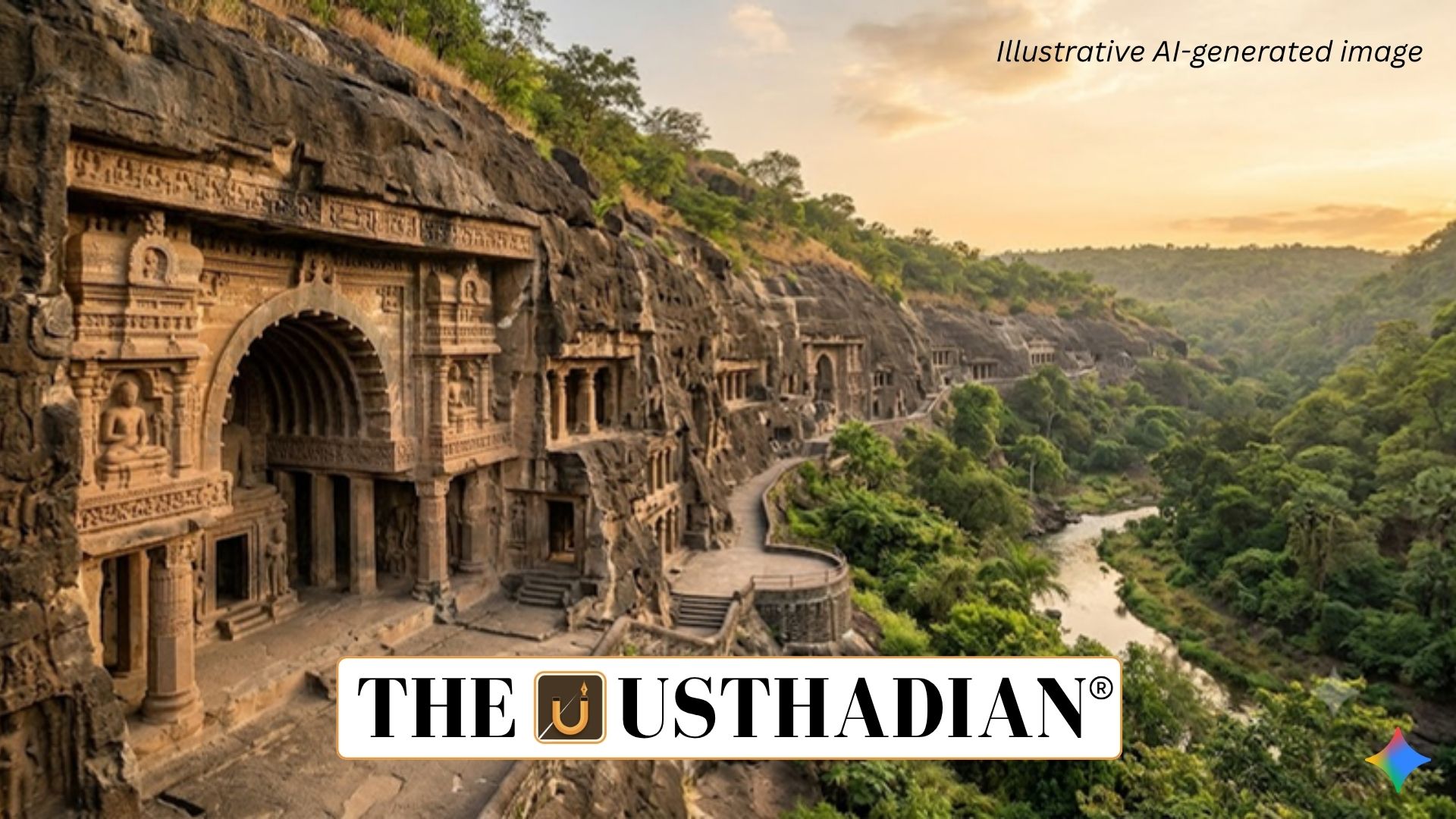
Ajanta Caves and the Legacy of Ancient Buddhist Art: The Ajanta Caves are situated in a horseshoe-shaped gorge along the Waghora River in Maharashtra, in the Deccan region of India. The complex contains 30 rock-cut caves, including unfinished excavations, monasteries and Buddhist prayer halls.
Renowned for their murals, sculptures and architectural features, the caves provide valuable evidence of ancient Indian religious beliefs, artistic traditions and social life. UNESCO designated Ajanta a World Heritage Site in 1983 because of its exceptional artistic and cultural significance.
Two Phases of Development
The caves developed during two major phases separated by several centuries.
The first phase, dating mainly to the 2nd–1st centuries BCE, is associated with the Satavahana period. Early Buddhist art often represented the Buddha through symbols such as stupas rather than depicting him in human form.
The second phase, mainly during the 5th–6th centuries CE, flourished under the Vakataka dynasty and associated patrons. This phase featured elaborate sculptures, ornate pillars, richly decorated façades and extensive paintings. Images of the Buddha in human form became prominent in the artistic traditions associated with Mahayana Buddhism.
Static GK fact: The Satavahanas were an important ancient Indian dynasty associated with the Deccan, while the Vakatakas later supported significant cultural and artistic activity in the region.
Rock-Cut Architecture
Ajanta is a major example of rock-cut architecture, in which buildings and decorative features are excavated directly from existing rock rather than constructed by assembling separate blocks.
Its caves are broadly divided into two architectural types. Chaityagrihas served as Buddhist prayer halls and generally contained a stupa. Viharas functioned as monastic residences, with central halls and cells for monks; some later examples included shrines containing Buddha images.
Carved pillars, entrances, façades and unfinished chambers reveal the craftsmanship and excavation techniques used by ancient artisans.
Paintings and Jataka Stories
Ajanta’s murals are among the finest surviving examples of ancient Indian painting. Their subjects include the Buddha, Bodhisattvas, Jataka tales, royal courts and scenes of everyday life.
Two celebrated Bodhisattva figures are Padmapani and Vajrapani. The paintings display sophisticated treatment of facial expressions, jewellery, clothing, posture and colour.
Jataka tales narrate stories of the Buddha’s previous births and communicate values such as compassion, generosity and self-sacrifice. The artworks also help historians study contemporary customs, musical instruments, dress and social relationships.
Static GK Tip: A Bodhisattva is a figure associated with the pursuit of Buddhahood and compassion for other beings in Buddhist traditions.
UNESCO World Heritage Recognition
Ajanta was inscribed on the UNESCO World Heritage List in 1983 under criteria (i), (ii), (iii) and (vi). These recognise outstanding artistic achievement, cultural influence, evidence of historical traditions and the site’s association with Buddhism.
The caves demonstrate how religious patronage, architecture, sculpture and painting developed together in ancient India. They remain an important resource for understanding Buddhist history and the evolution of Indian art.
Static Usthadian Current Affairs Table
Ajanta Caves and the Legacy of Ancient Buddhist Art:
| Fact | Detail |
| Location | Maharashtra, India |
| Nearby river | Waghora River |
| Number of caves | 30 |
| UNESCO inscription year | 1983 |
| Early phase | 2nd–1st centuries BCE |
| Later phase | Mainly 5th–6th centuries CE |
| Early-period dynasty | Satavahana |
| Later-period dynasty | Vakataka |
| Prayer hall | Chaityagriha |
| Monastic residence | Vihara |
| Famous Bodhisattva paintings | Padmapani and Vajrapani |
| UNESCO criteria | (i), (ii), (iii) and (vi) |