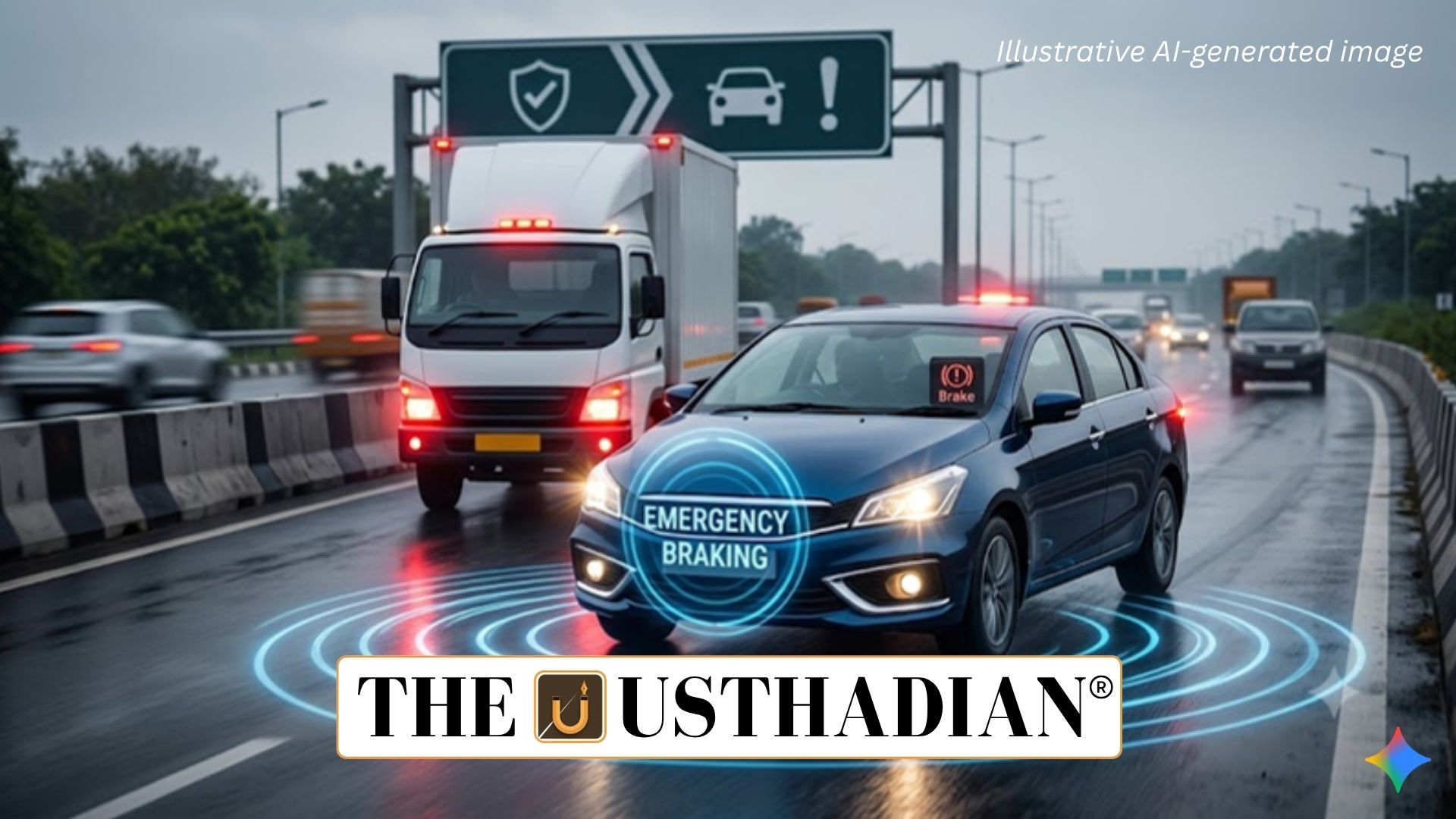
Proposed AEBS Mandate in India
India’s Proposed Emergency Braking Rules for Safer Cars: India is considering introducing Advanced Emergency Braking Systems (AEBS) as a mandatory safety feature in passenger cars. According to the supplied report, the proposed deadlines are October 2030 for new car models and October 2032 for existing models.
The proposal falls under the Ministry of Road Transport and Highways, headed by Union Minister Nitin Gadkari. These dates should be treated as proposed timelines, not an enforceable requirement, until the government issues an official notification.
Understanding Advanced Emergency Braking Systems
An Advanced Emergency Braking System (AEBS) uses technologies such as cameras, radar and other sensors to detect potential collisions. If the driver does not respond adequately to a developing hazard, the system can apply the brakes automatically to prevent a collision or reduce its severity.
For example, when a vehicle ahead stops suddenly, AEBS may intervene if the driver fails to brake in time. Its effectiveness depends on factors such as speed, visibility, sensor performance and the type of obstacle.
Static GK fact: AEBS is an active safety technology because it aims to prevent an accident or reduce its impact, rather than merely protecting occupants after a collision.
Advanced Driver Assistance Systems
Advanced Driver Assistance Systems (ADAS) comprise electronic features that help drivers detect hazards and respond more safely. Some provide warnings, while others can intervene through braking or steering.
Important ADAS features include:
- Automatic Emergency Braking (AEB): Applies the brakes when a collision is imminent and the driver does not respond sufficiently.
- Lane Departure Warning System (LDWS): Alerts the driver when the vehicle unintentionally leaves its lane.
- Emergency Lane Keeping System (ELKS): Helps prevent dangerous lane departures through corrective intervention.
- Blind Spot Information System (BSIS): Warns about vehicles or road users in blind spots.
- Driver Drowsiness and Attention Warning System (DDAWS): Alerts drivers to signs of reduced attention.
- Moving Off Information System (MOIS): Helps detect vulnerable road users near the front of a vehicle as it starts moving.
Static GK Tip: ADAS supports safer driving but does not replace driver attention, responsible behaviour or compliance with traffic rules.
Proposed Implementation Timeline
The reported proposal provides manufacturers with time to incorporate the technology into vehicle design and production.
| Fact | Detail |
| New passenger-car models | Proposed deadline: October 2030 |
| Existing passenger-car models | Proposed deadline: October 2032 |
| Responsible ministry | Ministry of Road Transport and Highways |
| Regulatory status | Proposal reported; official notification pending, according to the supplied report |
| Core technology | Advanced Emergency Braking System |
Commercial Vehicle Safety and Road Safety Goals
The supplied report also refers to AEBS requirements for certain medium and heavy commercial vehicles, with 1 October 2027 identified as an implementation date. The precise scope and applicability depend on the relevant government notification and vehicle category.
Taxis and other passenger transport vehicles may also benefit from technologies such as lane-keeping assistance and driver-fatigue alerts. Such systems can support road safety, particularly during long journeys, but adequate driver rest and alertness remain essential.
India’s proposed AEBS mandate reflects a wider effort to improve vehicle safety through technology. Successful implementation will depend on clear regulations, reliable testing, affordable systems and public awareness.
Static Usthadian Current Affairs Table
India’s Proposed Emergency Braking Rules for Safer Cars:
| Fact | Detail |
| AEBS full form | Advanced Emergency Braking System |
| ADAS full form | Advanced Driver Assistance Systems |
| Proposed deadline for new car models | October 2030 |
| Proposed deadline for existing car models | October 2032 |
| Responsible ministry | Ministry of Road Transport and Highways |
| Union minister named in the report | Nitin Gadkari |
| Reported commercial-vehicle date | 1 October 2027 |
| Main purpose of AEBS | Prevent collisions or reduce their severity |
| Key implementation requirement | Official notification and applicable safety standards |