AFSPA Extension in Northeast India
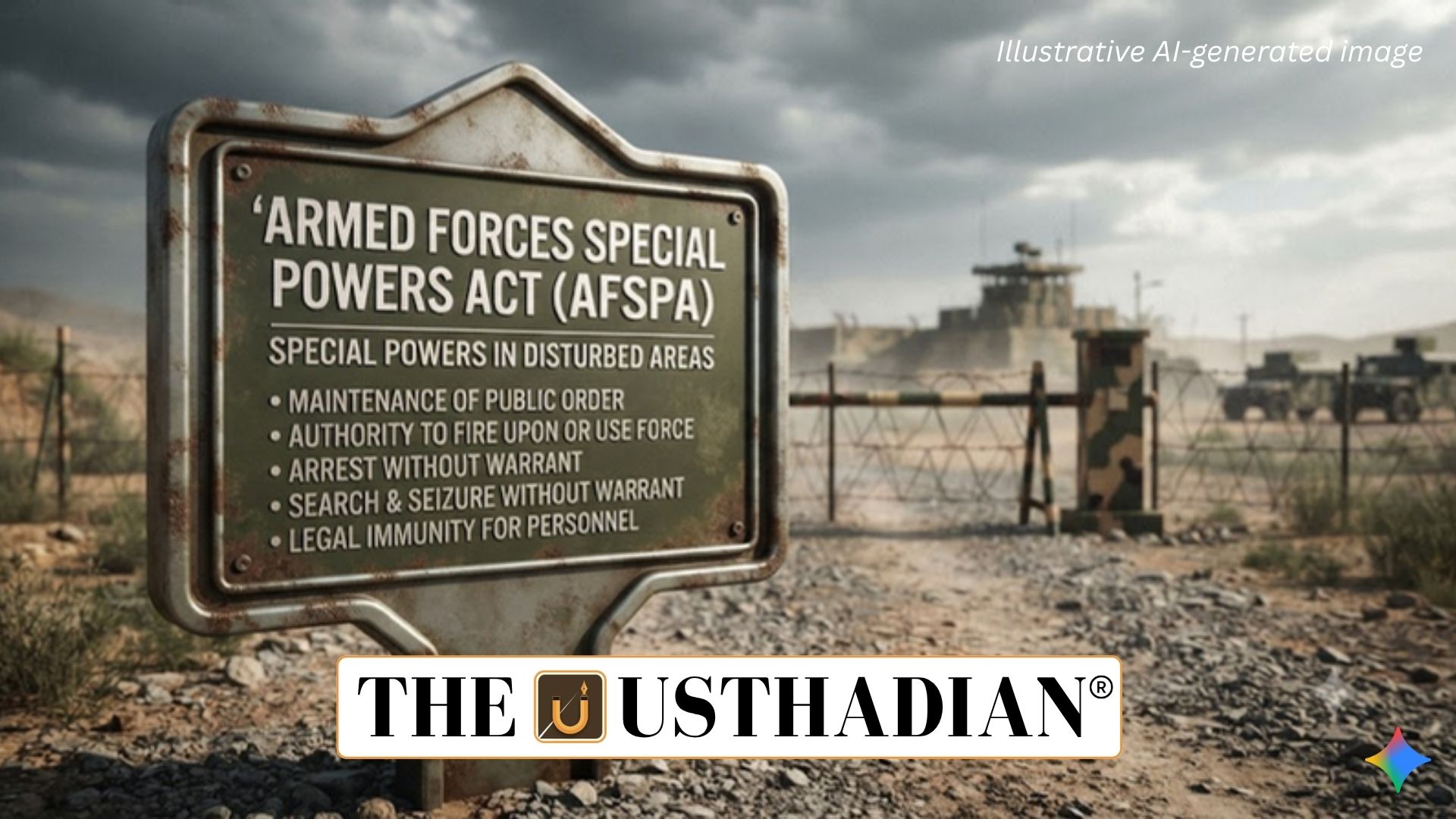
AFSPA and Its Special Powers in Disturbed Areas: The Union Ministry of Home Affairs has continued the Armed Forces (Special Powers) Act, 1958 (AFSPA) in specified areas of Manipur, Nagaland and Arunachal Pradesh from 1 October 2026 for another six months. The measure reflects the continuing use of the law in areas where authorities consider the security situation to require deployment of armed forces in aid of civil power.
In Manipur, AFSPA applies across the state except the jurisdictions of 13 police stations in five Valley districts. In Nagaland, it remains applicable in nine districts and specified areas under 21 police stations in five other districts. In Arunachal Pradesh, it covers Tirap, Changlang and Longding, along with specified police-station areas in Namsai district.
Legal Basis of AFSPA
The AFSPA, 1958 was enacted to confer special powers on armed forces operating in areas declared disturbed. The Act originally emerged in the context of insurgency in the Naga Hills and subsequently became applicable in other parts of the Northeast.
Under Section 3, the Governor of a state, the Administrator of a Union Territory or the Central Government can declare an area as a disturbed area when it considers the area to be in such a disturbed or dangerous condition that armed forces are necessary to aid civil power.
Static GK fact: AFSPA is Act No. 28 of 1958 and was enacted on 11 September 1958. Its administration falls under the Ministry of Home Affairs.
Special Powers Under Section 4
Once AFSPA operates in a disturbed area, Section 4 provides specified powers to authorised members of the armed forces.
These include the power, after necessary warning and subject to the statutory conditions, to use force against persons violating specified prohibitory laws or orders. The Act also permits arrest without warrant and search of premises without warrant in circumstances covered by the law.
These powers distinguish AFSPA from ordinary policing arrangements and explain why its continued application remains an important internal-security and civil-liberties issue.
Protection Under the Act
AFSPA also contains a legal safeguard for personnel acting under the Act. Section 6 requires prior Central Government sanction before prosecution or legal proceedings can be instituted against a person for anything done or purported to be done under AFSPA.
Static GK Tip: For examinations, remember the sequence Section 3 – disturbed area, Section 4 – special powers, Section 6 – protection relating to prosecution.
Changing Geographical Application
AFSPA has not remained uniformly applicable across the Northeast. Its geographical reach has expanded or contracted depending on security assessments and government notifications.
Tripura withdrew AFSPA in 2015, while it was removed from Meghalaya with effect from 1 April 2018. Assam has also had separate state-level disturbed-area notifications. Jammu and Kashmir is governed by a separate statute, the Armed Forces (Jammu and Kashmir) Special Powers Act, 1990.
Manipur and the 2023 Conflict
Manipur had witnessed substantial reductions in AFSPA coverage before the ethnic violence that began on 3 May 2023. The earlier rollback included withdrawal from several Valley areas, but the subsequent security situation led to renewed application in additional areas.
The changing coverage demonstrates that AFSPA operates through periodic disturbed-area notifications rather than as a permanently uniform measure across an entire region.
Security and Civil Liberties
AFSPA represents a legal framework designed to provide additional operational powers to armed forces in specified disturbed areas. At the same time, its provisions concerning force, arrest, search and legal protection have generated continuing public and institutional debate.
The central issue is the balance between internal security requirements, effective counter-insurgency operations, accountability and civil liberties.
Static Usthadian Current Affairs Table
AFSPA and Its Special Powers in Disturbed Areas:
| Fact | Detail |
| Full form | Armed Forces (Special Powers) Act |
| Year | 1958 |
| Act number | Act No. 28 of 1958 |
| Section 3 | Declaration of disturbed areas |
| Section 4 | Special powers of armed forces |
| Section 6 | Prior Central Government sanction for prosecution |
| Current Northeast application | Parts of Manipur, Nagaland and Arunachal Pradesh |
| Tripura | AFSPA withdrawn in 2015 |
| Meghalaya | AFSPA withdrawn from 1 April 2018 |
| J&K law | Armed Forces (Jammu and Kashmir) Special Powers Act, 1990 |