Centre Reduces Import Duty
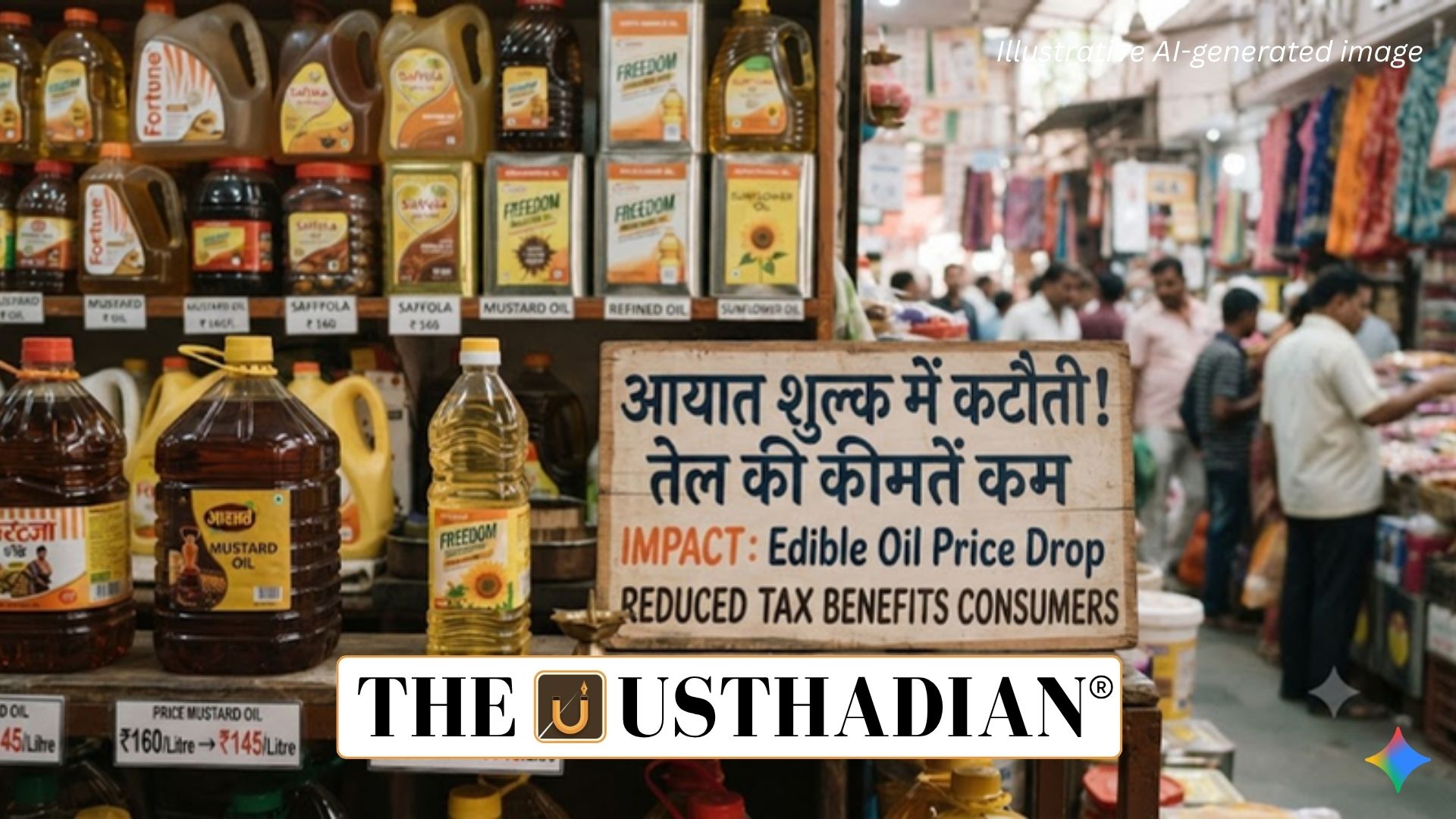
Edible Oil Duty Cut and Its Impact on India: The Union Government reduced the Basic Customs Duty (BCD) on major imported edible oils from 24 September 2026. The measure was announced amid rising international edible-oil prices and the need to contain domestic food-price pressures ahead of the festival season.
The government has also retained a 19.25 percentage-point duty differential between crude and refined edible oils. This differential is intended to maintain an economic incentive for domestic refineries to process crude edible oils within India.
Static GK fact: Basic Customs Duty is a tariff imposed on goods imported into India and forms part of the overall landed cost of imported products.
Why Import Duty Was Cut
International vegetable-oil prices have been increasing. The FAO Food Price Index vegetable oil sub-index averaged 196.9 points in August 2026, up 0.6% from July and its highest level since June 2022.
Higher prices of palm oil and soybean oil contributed significantly to the increase. Palm-oil prices were also influenced by strong global demand and concerns about production conditions in Southeast Asia, including possible weather-related disruptions.
Lowering BCD reduces the tax component of imported edible oils. This can bring down the landed cost for importers and potentially reduce pressure on domestic wholesale and retail prices.
Festival Season Supply
Edible-oil consumption generally increases during the festival period because of higher household demand as well as increased activity in the sweet, snack, restaurant and hospitality sectors.
The Indian Vegetable Oil Producers’ Association indicated that lower import duties could improve import economics and support market availability during this period of increased demand.
Static GK Tip: India is among the world’s major edible-oil consumers, while domestic production has historically been insufficient to meet total demand, making imports an important component of the edible-oil supply chain.
Impact on Consumers
The immediate policy objective is to make imported edible oils more affordable by reducing their landed cost. Greater import flexibility for sunflower and soybean oil may also provide alternatives when palm-oil prices remain elevated.
However, a reduction in BCD does not automatically mean an equivalent fall in retail prices. Final prices are influenced by international commodity prices, exchange rates, freight costs, domestic refining expenses, margins and supply-chain transmission.
Concerns of Oilseed Farmers
Domestic farmers have expressed concerns that cheaper imports could place downward pressure on prices received for locally produced oilseeds. Farmers cultivating soybean, sunflower, groundnut and oil palm are particularly relevant to this debate.
The All India Kisan Sabha has criticised the duty reduction, arguing that greater import dependence could weaken incentives for domestic oilseed production. This represents the organisation’s stated concern rather than the government’s rationale for the measure.
Balancing Consumers and Farmers
The policy highlights a key economic trade-off between short-term consumer price management and long-term domestic production incentives.
Lower import duties can support supply and moderate inflation when global prices are high. At the same time, sustained import competition could affect domestic oilseed prices and farmers’ production incentives.
India’s edible-oil strategy therefore requires a balance between consumer affordability, adequate supply, farmer incomes, domestic refining capacity and long-term edible-oil self-sufficiency.
Static Usthadian Current Affairs Table
Edible Oil Duty Cut and Its Impact on India:
| Fact | Detail |
| BCD reduction | Effective from 24 September 2026 |
| Main objective | Moderate edible-oil prices and food inflation |
| Festival impact | Supports availability during higher seasonal demand |
| Duty differential | 19.25 percentage points between crude and refined oils |
| FAO vegetable oil index | 196.9 points in August 2026 |
| Major global oils | Palm oil and soybean oil |
| Consumer benefit | Potentially lower landed and retail prices |
| Key farmer concern | Greater import competition for domestic oilseeds |
| Major oilseed crops | Soybean, sunflower, groundnut and oil palm |
| Long-term issue | Balancing consumer relief with edible-oil self-sufficiency |