Gujarat Restructures Forest Administration
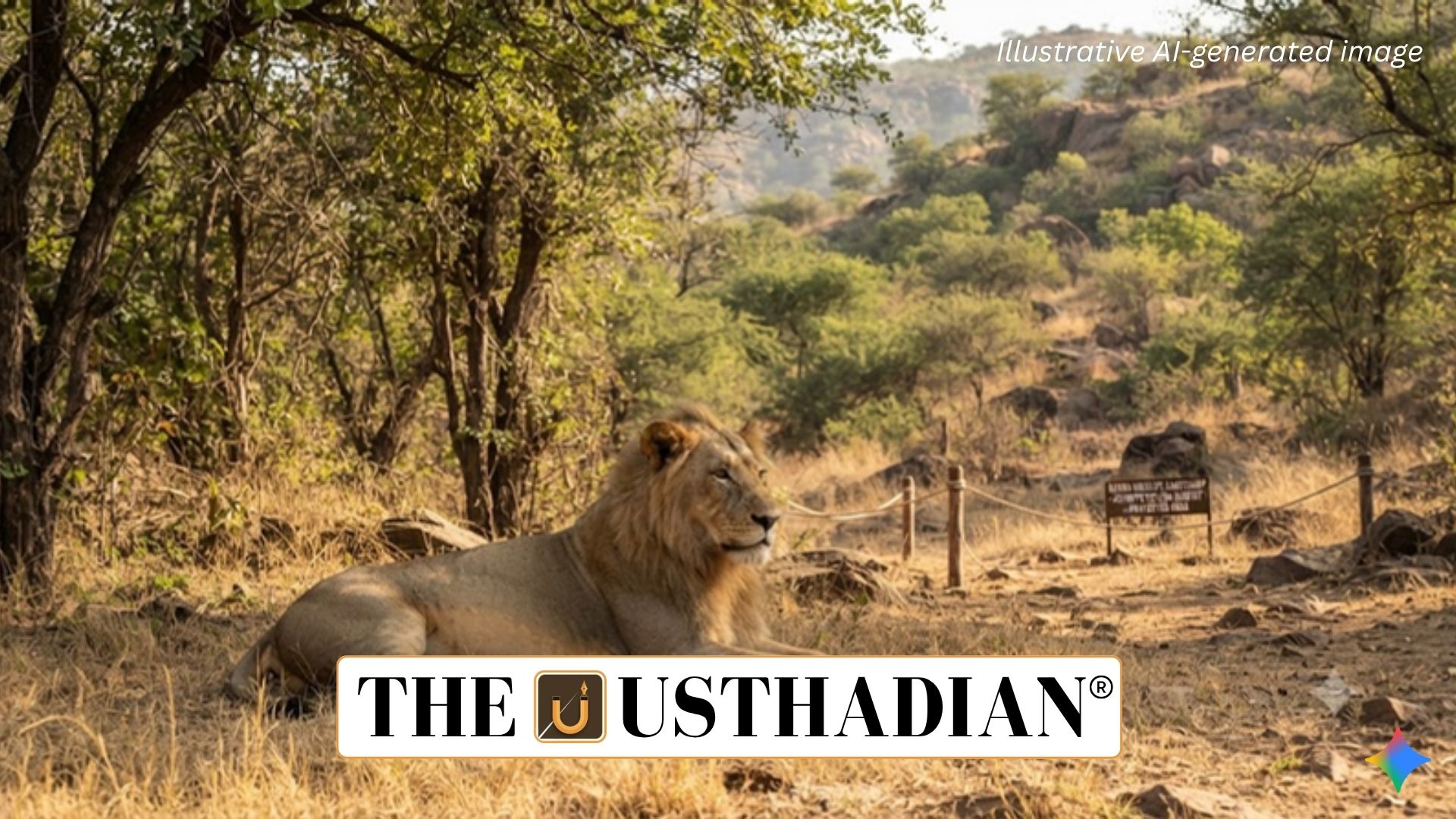
Barda Emerges as a Second Habitat for Asiatic Lions: The Gujarat Government has reorganised the Porbandar Forest Division to strengthen forest administration and support the development of Barda as an alternative habitat for Asiatic lions. The restructuring follows the natural return of lions to the Barda landscape after nearly 143 years.
The new administrative arrangement aims to improve patrolling, habitat management and implementation of wildlife-conservation programmes. It also introduces clearer area-wise responsibilities for forest officers and field personnel.
New Porbandar Forest Division Structure
Following the restructuring, the Porbandar Forest Division now has seven forest ranges under the Junagadh Wildlife Circle. Porbandar and Ranavav have been organised into separate beats to improve monitoring, conservation and field operations.
The Porbandar range covers around 6,840.84 hectares across 80 villages, while the Ranavav range covers approximately 13,051.25 hectares across 27 villages.
Around 305.94 hectares from the Bhatia range of the neighbouring Jamnagar Forest Division has also been incorporated into the Bhanwad range. The Kutiyana and Ranavan Social Forestry ranges have additionally been brought under the Porbandar division.
Two Assistant Conservators of Forests (ACFs) have been assigned responsibilities under the reorganised structure, supported by personnel and equipment for field-level management.
Barda as an Alternative Lion Habitat
The restructuring is closely connected with efforts to strengthen Barda as a second habitat for Asiatic lions. Historically, the species has been concentrated within the Gir landscape, making habitat diversification an important conservation consideration.
The natural reappearance of lions in Barda after more than a century has increased attention on the area’s ecological suitability. Establishing an additional habitat can help distribute the lion population across suitable landscapes and reduce excessive concentration in a single geographical area.
Static GK fact: The Asiatic lion is naturally found in India, with its wild population concentrated in Gujarat. The Gir landscape is globally recognised as the species’ principal natural habitat.
Asiatic Lion Population Reaches 891
The need for additional habitat has become more significant following the rise in Gujarat’s lion population. According to the 2026 Gujarat Lion Population Census, the state recorded 891 Asiatic lions, compared with 674 in 2020.
This represents an increase of 217 lions over five years. The population growth highlights the importance of expanding suitable habitat, improving prey availability and strengthening landscape-level wildlife management.
Static GK Tip: The Asiatic lion is classified as Endangered on the IUCN Red List. Its scientific name is Panthera leo persica.
Conservation Significance
Barda’s development as an additional lion habitat is part of a broader strategy of wildlife population management and habitat diversification. Effective forest administration, regular monitoring, prey-base management and protection from human-wildlife conflict will be important for sustaining the landscape.
The Porbandar restructuring therefore combines administrative reform with wildlife conservation, creating a dedicated framework for managing an expanding lion population and preparing Barda for a larger conservation role.
Static Usthadian Current Affairs Table
Barda Emerges as a Second Habitat for Asiatic Lions:
| Fact | Detail |
| State | Gujarat |
| Forest division reorganised | Porbandar Forest Division |
| Proposed alternative habitat | Barda landscape |
| Lion return to Barda | After about 143 years |
| 2026 lion population | 891 |
| 2020 lion population | 674 |
| Population increase | 217 lions |
| Forest ranges | Seven under Junagadh Wildlife Circle |
| Porbandar range | About 6,840.84 hectares and 80 villages |
| Ranavav range | About 13,051.25 hectares and 27 villages |
| Asiatic lion scientific name | Panthera leo persica |
| IUCN status | Endangered |