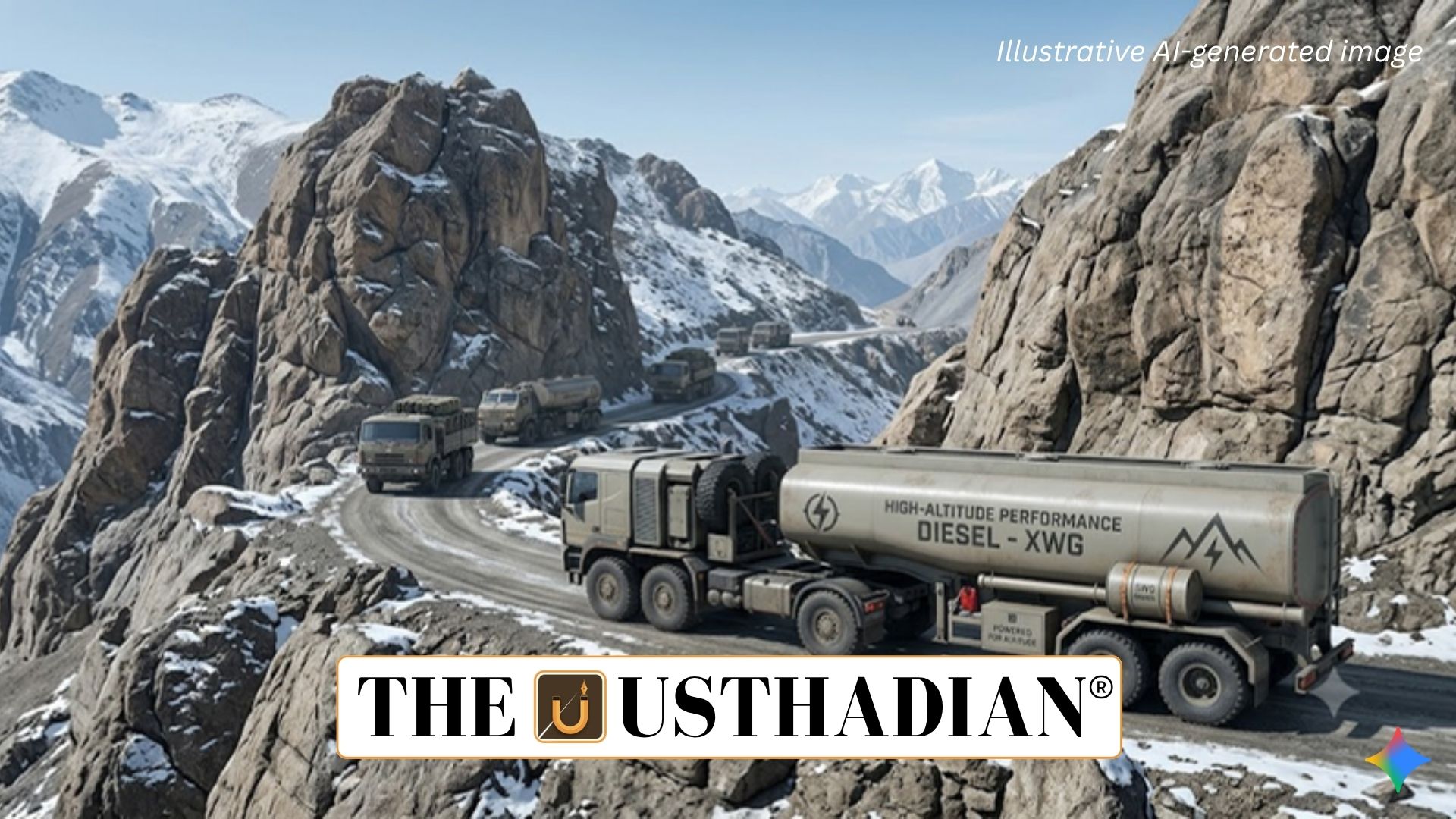
Indigenous Fuel for Extreme Weather Operations
XWG Diesel Strengthens India’s High-Altitude Military Mobility: The Indian Army has introduced Xtreme Weather Grade (XWG) Diesel, an indigenously developed fuel designed to ensure uninterrupted operation of military vehicles in extremely cold environments. The fuel remains effective at temperatures as low as –42°C, significantly improving operational readiness in high-altitude regions.
Developed in collaboration with Indian oil companies, XWG diesel represents another step toward Aatmanirbhar Bharat in defence logistics while reducing dependence on imported specialised fuels.
Static GK fact: Eastern Ladakh lies along the Line of Actual Control (LAC), India’s disputed border with China, where winter temperatures frequently fall below –30°C.
Why XWG Diesel Was Needed
Conventional diesel becomes thick and loses its flow characteristics during severe winters, causing clogged fuel filters, engine-starting problems, and reduced vehicle performance. Earlier, military units often had to keep vehicle engines running continuously to prevent fuel from freezing, leading to higher fuel consumption and increased engine wear.
The introduction of XWG diesel eliminates these challenges by maintaining fuel fluidity even under extreme climatic conditions. This enhances mobility, reduces maintenance requirements, and improves combat preparedness throughout the winter season.
Features of XWG Diesel
The newly introduced fuel complies with BS-VI emission standards and IS 1460:2025 specifications. It is specially formulated to perform reliably under harsh weather conditions without requiring any modification to existing military platforms.
Its major advantages include improved engine starting, uninterrupted fuel flow, reduced maintenance costs, enhanced operational efficiency, and greater reliability during prolonged deployments in snow-bound areas.
Static GK Tip: BS-VI (Bharat Stage VI) emission norms are India’s latest vehicle emission standards aimed at reducing harmful pollutants from automobiles.
Compatible With Existing Army Fleet
A major advantage of XWG diesel is its compatibility with the Army’s existing fleet. Since no engine modifications or re-certification are required, the fuel can be introduced immediately across various combat and logistics platforms.
Vehicles expected to use the fuel include T-90 and T-72 main battle tanks, BMP-2K infantry combat vehicles, K-9 Vajra self-propelled howitzers, and several transport and logistics vehicles operating in mountainous terrain.
This compatibility enables rapid deployment without additional expenditure on infrastructure or vehicle upgrades.
Boost to High-Altitude Readiness
The Indian Army has also strengthened its maintenance infrastructure by establishing two of the world’s highest armoured vehicle maintenance facilities at Nyoma and Daulat Beg Oldie (DBO), situated at nearly 14,500 feet above sea level.
These facilities, combined with the deployment of XWG diesel, significantly improve the operational availability of armoured formations deployed along the LAC and LoC, where extreme weather often poses logistical challenges.
Static GK fact: Daulat Beg Oldie (DBO) is one of the world’s highest military airstrips and is strategically located near the Karakoram Pass in Ladakh.
Benefits Beyond Defence
Although developed primarily for defence requirements, XWG diesel also has potential civilian applications in Himalayan regions experiencing severe winters. It can improve vehicle reliability, reduce engine failures caused by frozen fuel, and support emergency services operating in remote snow-bound areas.
The successful development of this indigenous fuel highlights India’s growing capability in defence innovation while supporting national energy security and self-reliance.
Static Usthadian Current Affairs Table
XWG Diesel Strengthens India’s High-Altitude Military Mobility:
| Fact | Detail |
| Fuel introduced | Xtreme Weather Grade (XWG) Diesel |
| Introduced by | Indian Army |
| Lowest operating temperature | –42°C |
| Emission standard | BS-VI |
| Fuel specification | IS 1460:2025 |
| Major deployment areas | Eastern Ladakh, LAC and LoC |
| Compatible platforms | T-90, T-72, BMP-2K, K-9 Vajra and logistics vehicles |
| Key maintenance hubs | Nyoma and Daulat Beg Oldie |
| Strategic benefit | Improved combat readiness and winter mobility |
| Civilian relevance | Reliable vehicle operation in Himalayan cold regions |