Discovery of Unique Inscriptions
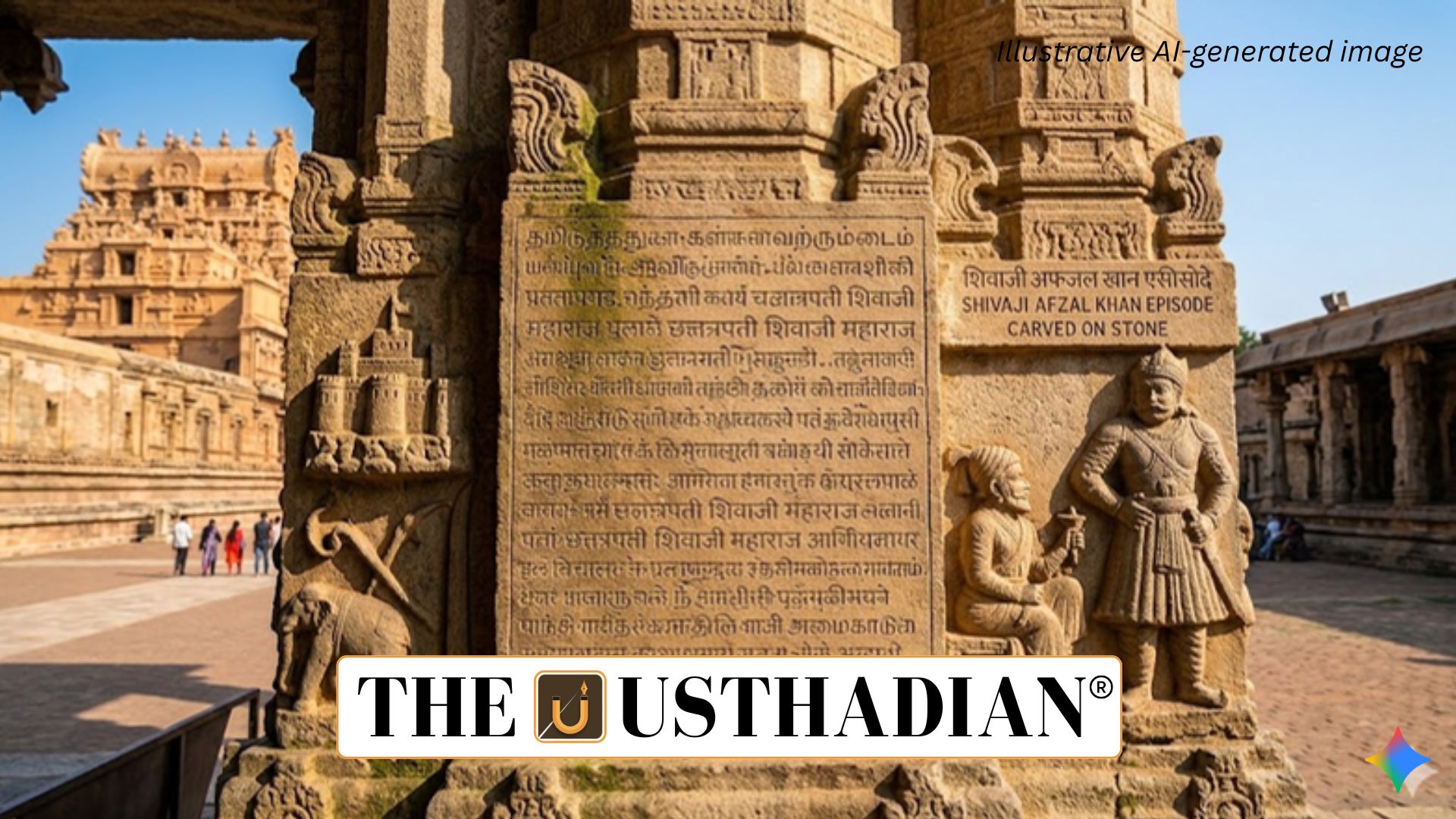
Thanjavur Temple Inscriptions on Shivaji Afzal Khan Episode: The Brihadeeswarar Temple in Thanjavur contains rare inscriptions narrating the famous encounter between Shivaji Maharaj and Afzal Khan. These inscriptions are engraved on the south-west walls near the Vinayagar shrine.
They are written in Marathi, which reflects the influence of the Maratha rule in Tamil Nadu. This highlights cultural integration between northern and southern India during that period.
Static GK fact: Brihadeeswarar Temple was built by Rajaraja Chola I in the 11th century and is a UNESCO World Heritage Site.
Link to Serfoji II Period
These inscriptions belong to the reign of Serfoji II, a prominent ruler of the Bhonsale dynasty in Thanjavur. He was known for promoting education, arts, and maintaining detailed historical records.
The inscriptions not only preserve local history but also document broader Maratha political narratives. This shows how regional temples were used as mediums for recording history.
Static GK Tip: The Bhonsale dynasty ruled Thanjavur after the decline of the Nayaks in the 17th century.
Description of Shivaji Afzal Khan Encounter
The inscriptions vividly narrate the historic meeting at Jawali (Pratapgad region) in Maharashtra, where Shivaji killed Afzal Khan. According to the account, Shivaji used tiger-claws (wagh nakh) to defend himself during the encounter.
This episode is one of the most famous events in Maratha history and symbolizes Shivaji’s strategic brilliance and courage. The temple inscriptions serve as an important historical source preserving this narrative.
References to Other Historical Events
The inscriptions also mention that Serfoji II supported the British during their conflict with the Marudu brothers of Tamil Nadu. This indicates the complex political alliances during the colonial period.
Additionally, references are made to Friedrich Christian Schwartz, a Danish missionary who played a key role in Thanjavur’s administration and education system. His association with Serfoji II reflects early European influence in South India.
Static GK fact: The Marudu brothers were freedom fighters who led resistance against British rule in Tamil Nadu in the late 18th century.
Historical Significance
These inscriptions are significant as they connect Maratha history with Tamil heritage, offering insights into political, cultural, and military events. They also demonstrate how temples functioned as repositories of historical documentation.
The presence of Marathi inscriptions in Tamil Nadu highlights the administrative and cultural reach of the Marathas in the region.
Static Usthadian Current Affairs Table
Thanjavur Temple Inscriptions on Shivaji Afzal Khan Episode:
| Topic | Detail |
| Location | Brihadeeswarar Temple, Thanjavur |
| Language | Marathi |
| Period | Reign of Serfoji II |
| Dynasty | Bhonsale dynasty |
| Key Event | Shivaji Afzal Khan encounter |
| Weapon Mentioned | Tiger-claws (wagh nakh) |
| Additional Reference | Support to British against Marudu brothers |
| Foreign Figure | Friedrich Christian Schwartz |
| Cultural Aspect | Maratha influence in Tamil Nadu |
| Importance | Historical documentation through inscriptions |