Court intervention and directions
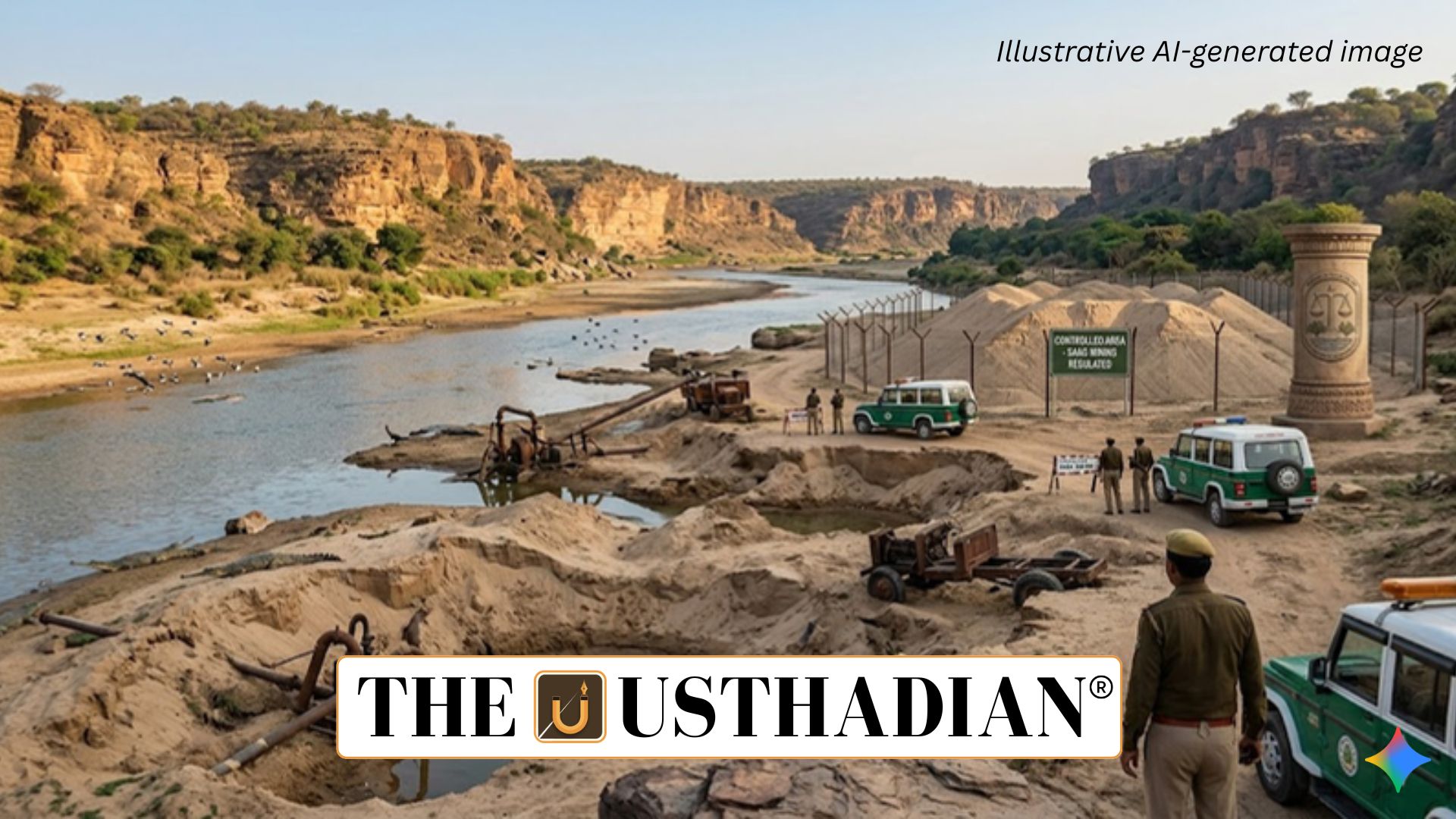
Supreme Court Action on Illegal Sand Mining in Chambal Sanctuary: The Supreme Court of India has warned of strict action against illegal sand mining in the National Chambal Gharial Sanctuary. The order reflects growing judicial concern over environmental degradation and biodiversity threats.
The Court directed the States of Madhya Pradesh, Rajasthan, and Uttar Pradesh to install CCTV cameras on all mining routes. It also mandated GPS tracking devices for vehicles and machinery involved in sand extraction to ensure transparency and accountability.
Static GK fact: The Supreme Court of India is the highest judicial authority under Article 124 of the Constitution.
Reasons behind illegal sand mining
India’s rapid urban growth has made sand the second most consumed natural resource after water. The booming construction sector heavily depends on sand for concrete production.
River sand is preferred over alternatives like M-sand (manufactured sand) due to its superior binding properties. Weak enforcement, coupled with decentralized regulation under the Mines and Minerals (Development and Regulation) Act, 1957, enables illegal operations.
The presence of a strong sand mafia network and monitoring challenges in remote riverine areas further aggravate the issue.
Static GK Tip: Sand is categorized as a minor mineral under the MMDR Act, placing regulation largely under State Governments.
Environmental and economic impacts
Unregulated sand mining severely alters river morphology, leading to erosion, bank collapse, and changes in natural river flow. This weakens flood control mechanisms and increases vulnerability to natural disasters.
It also degrades water quality by mobilizing pollutants such as heavy metals. Aquatic biodiversity suffers as fish breeding cycles and habitats are disrupted.
Infrastructure like bridges and pipelines becomes unstable due to riverbed degradation. Additionally, illegal mining causes major losses to the state exchequer through unpaid royalties and taxes.
Static GK fact: Rivers play a key role in maintaining ecological balance and groundwater recharge systems.
National Chambal Gharial Sanctuary
The National Chambal Gharial Sanctuary was established in 1979 to protect critically endangered species. It is located along the Chambal River near the tri-junction of three states.
The sanctuary is home to the gharial, a critically endangered crocodilian species. It also supports Ganges river dolphins, mugger crocodiles, and the red-crowned roofed turtle.
Static GK fact: The gharial is listed as Critically Endangered by the International Union for Conservation of Nature (IUCN).
Way forward
Strict enforcement of judicial directives is essential to curb illegal mining. Adoption of technology like drones, satellite monitoring, and digital tracking can strengthen surveillance.
Promoting alternatives such as M-sand and improving inter-state coordination can reduce pressure on river ecosystems. Long-term conservation requires balancing development needs with environmental sustainability.
Static GK Tip: Sustainable mining practices are part of India’s commitment to environmental protection under Article 48A of the Constitution.
Static Usthadian Current Affairs Table
Supreme Court Action on Illegal Sand Mining in Chambal Sanctuary:
| Topic | Detail |
| Court Action | Supreme Court warning on illegal sand mining |
| Key Location | National Chambal Gharial Sanctuary |
| States Involved | Madhya Pradesh, Rajasthan, Uttar Pradesh |
| Key Directive | CCTV installation and GPS tracking |
| Legal Framework | MMDR Act 1957 |
| Major Issue | Sand mafia and weak enforcement |
| Environmental Impact | River erosion and biodiversity loss |
| Key Species | Gharial, dolphin, turtle |