Scheme overview and objective
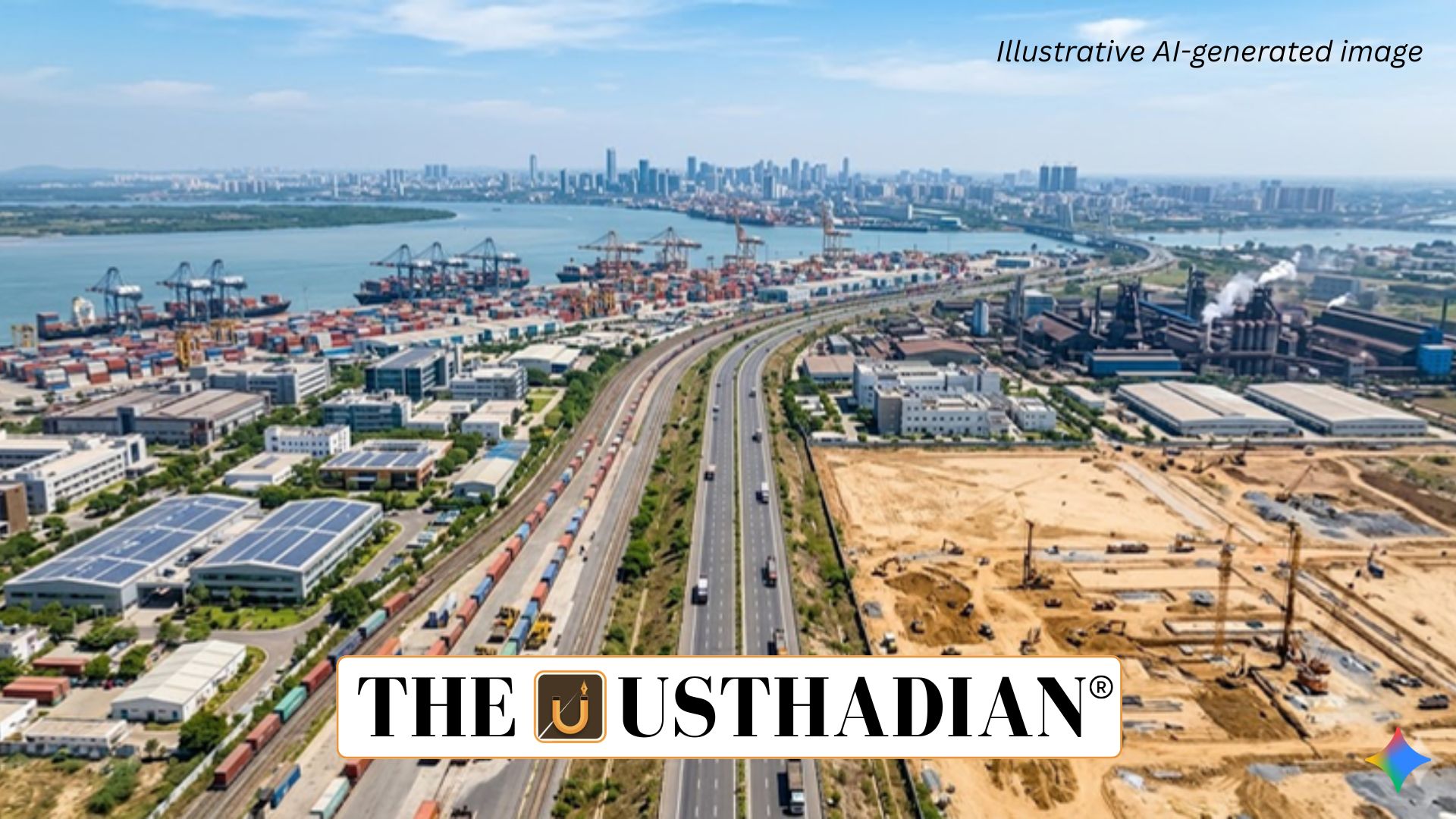
Bharat Audyogik Vikas Yojna Boosts Industrial Growth: The Government of India notified the Bharat Audyogik Vikas Yojna (BHAVYA) on 18 April 2026 to accelerate industrial development. It aims to establish 100 investment-ready industrial parks across the country.
These parks will follow a plug-and-play model, offering ready infrastructure such as roads, power, water, and approvals. This ensures industries can begin operations immediately without delays.
Static GK fact: The Ministry of Commerce & Industry oversees industrial policy through the Department for Promotion of Industry and Internal Trade (DPIIT).
Implementation structure
The scheme will be implemented through partnerships involving State Governments, Central Public Sector Undertakings (CPSUs), and private developers. A Special Purpose Vehicle (SPV) will be formed for each project.
This SPV will include NICDIT (National Industrial Corridor Development and Implementation Trust) and the respective state agency. It will be responsible for planning, construction, and long-term management of the industrial parks.
Static GK Tip: Industrial corridors like Delhi-Mumbai Industrial Corridor are key to India’s infrastructure-led growth strategy.
Financial provisions and duration
The scheme has an outlay of ₹33,660 crore and will run for six years (2026–27 to 2031–32). Financial assistance will be provided in equity mode to support infrastructure creation.
Funding includes up to ₹1 crore per acre for standard projects and ₹50 lakh per acre for private developer-led parks. Additional support of up to 25% of project cost is allocated for external connectivity.
Static GK fact: Infrastructure financing plays a crucial role in achieving India’s goal of becoming a $5 trillion economy.
Infrastructure components
The scheme focuses on three categories of infrastructure. Core infrastructure includes roads, utilities, drainage, and ICT systems.
Value-added infrastructure covers factory sheds, laboratories, and warehousing facilities. Social infrastructure includes worker housing and essential amenities, ensuring holistic industrial ecosystems.
Static GK Tip: Industrial clusters improve efficiency by reducing logistics costs and enhancing supply chain integration.
Economic and strategic significance
The BHAVYA scheme enhances ease of doing business by providing pre-approved land and single-window clearances. It reduces bureaucratic delays and promotes faster industrial setup.
It is expected to generate large-scale employment, both direct and indirect, across manufacturing and services. The cluster-based model encourages co-location of industries and suppliers.
The scheme also aligns with PM GatiShakti, ensuring multimodal connectivity and integrated infrastructure planning. Emphasis on green energy makes these parks sustainable and future-ready.
Static GK fact: India ranks among the top emerging manufacturing destinations globally due to policy reforms and demographic advantage.
Static Usthadian Current Affairs Table
Bharat Audyogik Vikas Yojna Boosts Industrial Growth:
| Topic | Detail |
| Scheme Name | Bharat Audyogik Vikas Yojna (BHAVYA) |
| Launch Date | 18 April 2026 |
| Nodal Ministry | Ministry of Commerce & Industry |
| Implementing Body | DPIIT and NICDIT |
| Duration | 2026–27 to 2031–32 |
| Financial Outlay | ₹33,660 crore |
| Key Feature | Plug-and-play industrial parks |
| Target | 100 industrial parks |
| Financial Support | ₹1 crore per acre (₹50 lakh for private) |
| Strategic Goal | Boost manufacturing and employment |