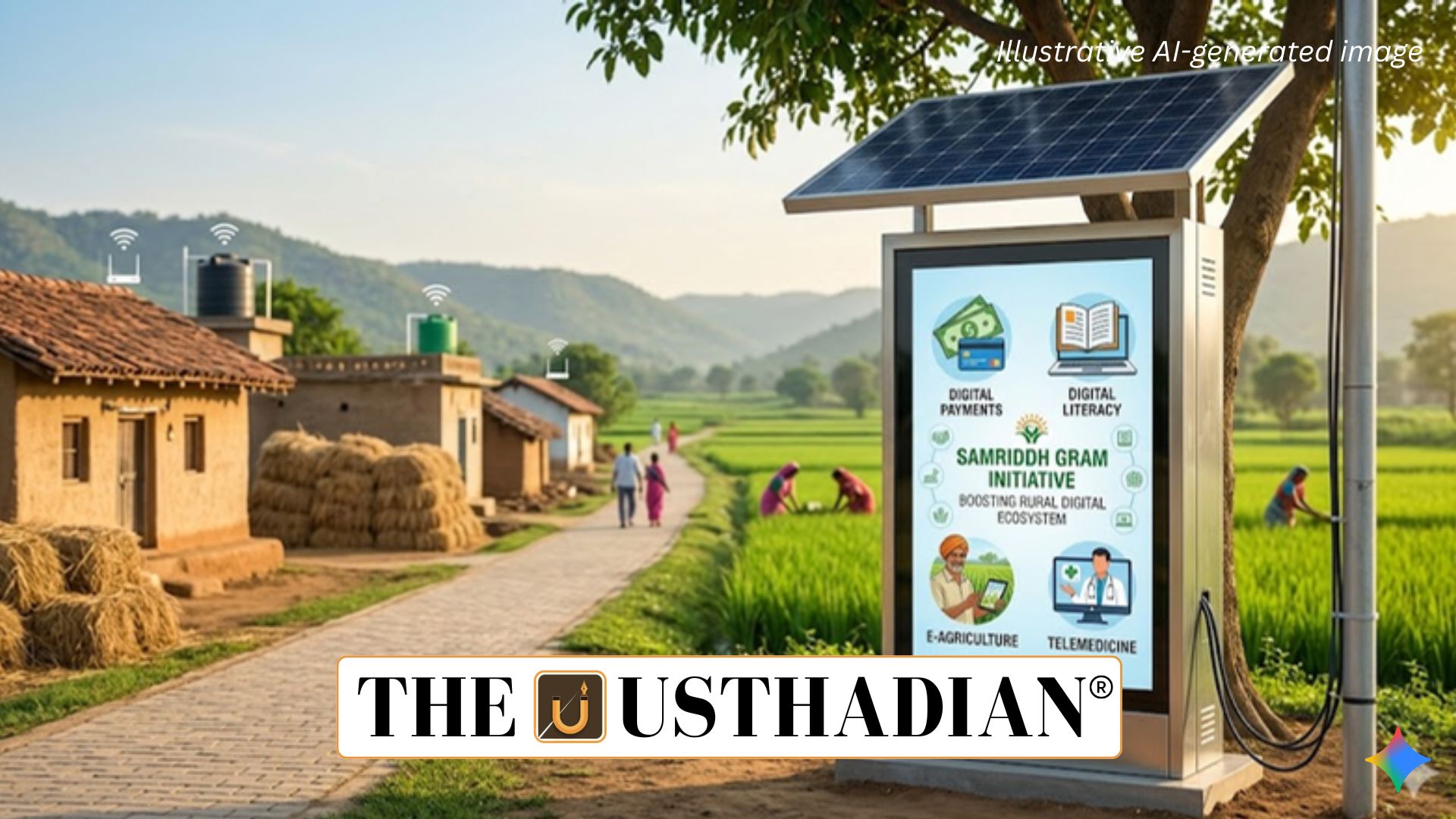
Samriddh Gram Initiative overview
Samriddh Gram Initiative Boosting Rural Digital Ecosystem: India’s Samriddh Gram Initiative, led by the Department of Telecommunications (DoT), has been nominated for the WSIS Prizes 2026 under the Enabling Environment category. This recognition reflects India’s expanding role in leveraging digital infrastructure for rural transformation.
The initiative is built on BharatNet, considered the world’s largest rural broadband connectivity project. It aims to provide integrated services to villages through a combination of technology and physical infrastructure.
Static GK fact: BharatNet aims to connect over 2.5 lakh Gram Panchayats across India with high-speed broadband.
Samriddhi Kendras as service hubs
A key feature of the initiative is the establishment of Samriddhi Kendras in rural areas. These centers function as one-stop service hubs, offering multiple essential services under one roof.
Villagers can access telemedicine, online education, e-governance services, banking, and e-commerce platforms through these Kendras. The presence of FTTH (Fiber-to-the-Home) connections and public Wi-Fi ensures seamless digital access even in remote regions.
This model significantly reduces the need for long-distance travel and improves efficiency in service delivery.
Phygital model bridging gaps
The initiative follows a phygital approach, blending physical infrastructure with digital technology. This model ensures that people not only have digital access but also receive human assistance at service points.
Such an approach is crucial in rural India, where digital literacy levels vary significantly. By combining trained personnel with digital tools, the initiative ensures inclusive access to services.
Static GK Tip: The term “phygital” is widely used in governance and business to denote the integration of physical and digital service delivery systems.
Impact on rural livelihoods
The early outcomes of the Samriddh Gram Initiative indicate significant improvements in rural areas. It has enhanced healthcare access through telemedicine and improved education via digital learning platforms.
Farmers benefit from technology-driven agricultural solutions, while digital banking services have increased financial inclusion. Overall, the initiative contributes to economic empowerment and livelihood generation.
BharatNet as digital backbone
The success of the initiative depends heavily on BharatNet’s robust infrastructure. It provides high-speed internet connectivity, enabling services like e-governance, online education, and telemedicine to function effectively.
This infrastructure plays a vital role in bridging the urban-rural digital divide and supports India’s broader Digital India mission.
Static GK fact: Digital India Programme was launched in 2015 to transform India into a digitally empowered society and knowledge economy.
WSIS Prizes significance
The World Summit on the Information Society (WSIS) Prizes recognize impactful ICT-based initiatives globally. India’s nomination under the Enabling Environment category highlights its commitment to building a supportive ecosystem for digital growth.
The final results will be announced at the WSIS Forum 2026 in Geneva, where global stakeholders evaluate innovative digital initiatives.
Static Usthadian Current Affairs Table
Samriddh Gram Initiative Boosting Rural Digital Ecosystem:
| Topic | Detail |
| Initiative | Samriddh Gram Initiative |
| Nodal Ministry | Department of Telecommunications |
| Global Recognition | WSIS Prizes 2026 nomination |
| Category | Enabling Environment |
| Digital Backbone | BharatNet project |
| Key Feature | Samriddhi Kendras |
| Technology Model | Phygital approach |
| Services Offered | Telemedicine, education, banking, e-governance |
| Target Area | Rural India |
| Related Programme | Digital India Mission |