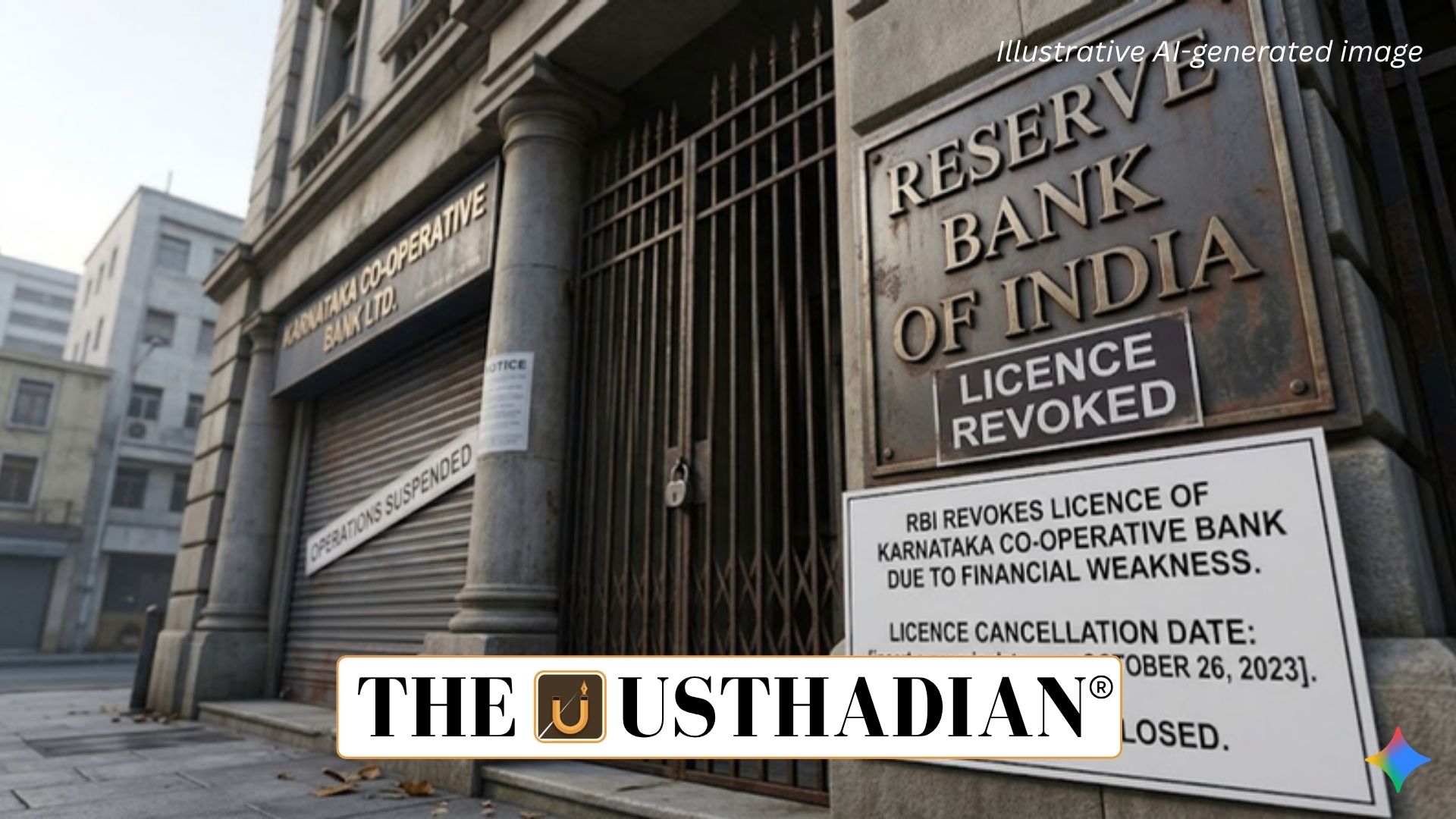
RBI Withdraws Banking Licence
RBI Revokes Licence of Karnataka Co-operative Bank Over Financial Weakness: The Reserve Bank of India (RBI) has cancelled the banking licence of Shree Mahalaxmi Urban Co-operative Credit Bank, a Karnataka-based Urban Co-operative Bank, citing its deteriorating financial position and inability to meet regulatory requirements. The decision was taken to safeguard the interests of depositors and maintain confidence in the banking system.
Following the licence cancellation, the RBI directed the Registrar of Co-operative Societies, Karnataka, to initiate the bank’s winding-up process and appoint a liquidator to oversee the closure.
Reasons Behind the Cancellation
According to the RBI, the bank no longer fulfilled the conditions required to continue banking operations under the Banking Regulation Act, 1949. The institution suffered from inadequate capital, weak earning capacity, and continued non-compliance with regulatory norms.
The central bank also concluded that the bank’s financial condition had deteriorated to a level where it would be unable to repay depositors in full through its own resources.
Static GK fact: The Reserve Bank of India (RBI) was established on 1 April 1935 under the Reserve Bank of India Act, 1934, and serves as India’s central banking institution.
What Happens After Licence Cancellation
With immediate effect, the bank is prohibited from carrying out banking activities. It can no longer accept fresh deposits, process normal banking transactions, or make repayments to customers.
The appointed liquidator will manage the bank’s remaining assets and liabilities during the liquidation process. This ensures an orderly settlement of claims while protecting the interests of eligible depositors.
Relief for Depositors
The RBI stated that approximately 97.9% of depositors are expected to receive the full value of their insured deposits through the Deposit Insurance and Credit Guarantee Corporation (DICGC).
The DICGC provides deposit insurance of up to ₹5 lakh per depositor per bank, covering savings accounts, current accounts, fixed deposits, and recurring deposits. This insurance significantly reduces the financial impact on small depositors when a bank is liquidated.
Static GK Tip: DICGC is a wholly owned subsidiary of the Reserve Bank of India and provides deposit insurance to customers of eligible banks across the country.
Role of Urban Co-operative Banks
Urban Co-operative Banks (UCBs) primarily cater to urban and semi-urban populations by offering banking services to individuals, small businesses, traders, and local communities. They play a significant role in promoting financial inclusion and supporting local economic activities.
However, many UCBs face challenges related to governance, capital adequacy, profitability, and risk management. Regular regulatory supervision by the RBI helps maintain the stability of the co-operative banking sector.
Importance of RBI’s Action
Timely regulatory intervention helps protect depositors and strengthens public confidence in India’s banking system. Cancelling the licence of financially weak banks prevents further deterioration and reduces systemic risks.
The decision also highlights the RBI’s commitment to maintaining prudential standards and ensuring that only financially sound institutions continue to operate in the banking sector.
Static GK fact: Deposit insurance in India was increased from ₹1 lakh to ₹5 lakh per depositor per bank in 2020, providing greater protection to bank customers.
Static Usthadian Current Affairs Table
RBI Revokes Licence of Karnataka Co-operative Bank Over Financial Weakness:
| Fact | Detail |
| Bank | Shree Mahalaxmi Urban Co-operative Credit Bank |
| State | Karnataka |
| Regulatory Authority | Reserve Bank of India (RBI) |
| Reason for Cancellation | Weak financial position and regulatory non-compliance |
| Governing Law | Banking Regulation Act, 1949 |
| Depositor Protection Agency | Deposit Insurance and Credit Guarantee Corporation (DICGC) |
| Deposit Insurance Limit | ₹5 lakh per depositor per bank |
| Depositors Covered | Approximately 97.9% |
| Next Step | Winding-up process and appointment of liquidator |
| Type of Bank | Urban Co-operative Bank |