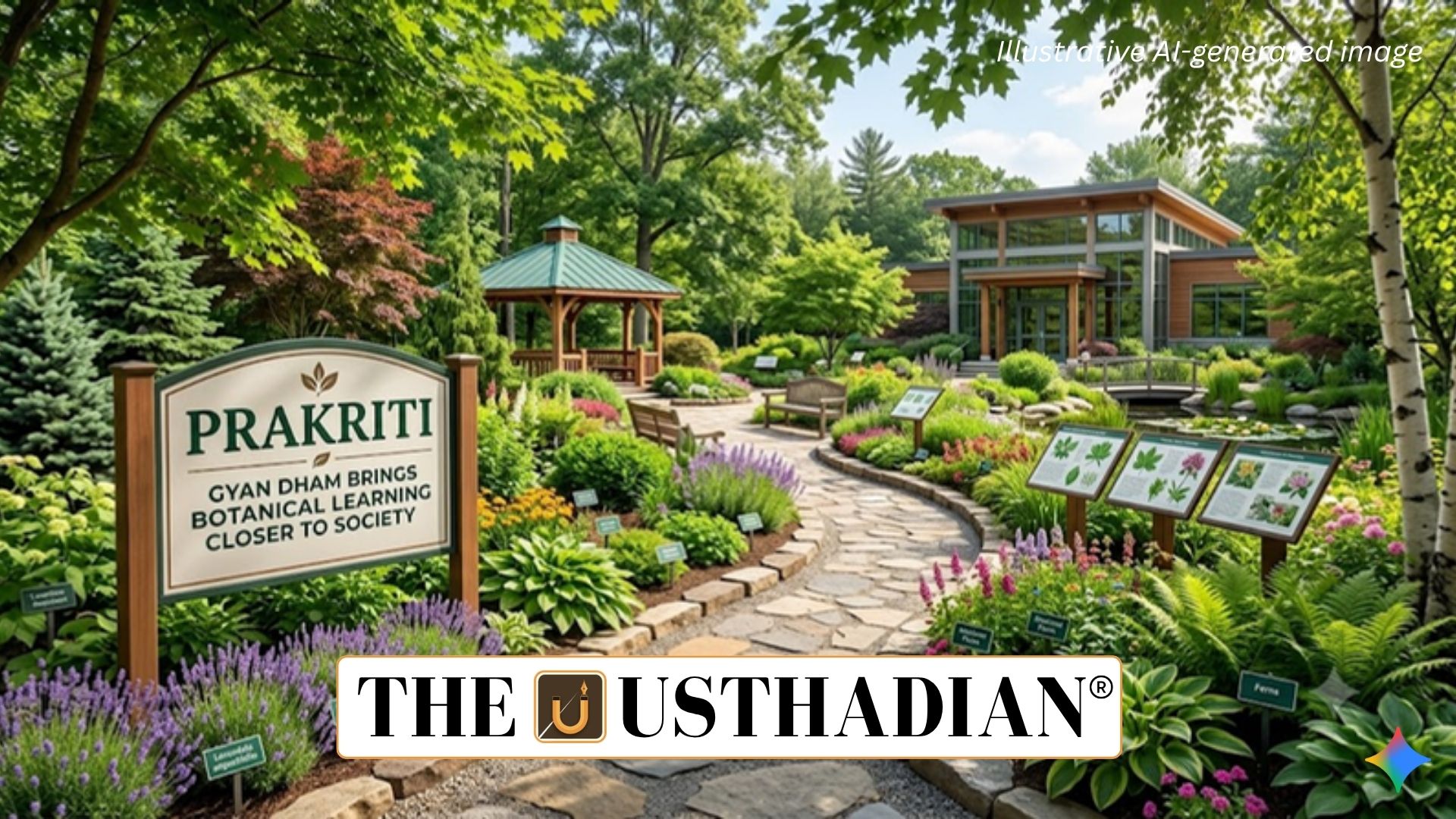
Prakriti Gyan Dham Inaugurated in Lucknow
Prakriti Gyan Dham Brings Botanical Learning Closer to Society: Prakriti Gyan Dham, the first eco-educational centre of the CSIR-National Botanical Research Institute (CSIR-NBRI), has been inaugurated at Banthra, Lucknow, Uttar Pradesh. The centre was inaugurated by Union Minister of State for Science and Technology Dr Jitendra Singh.
Located within the Maharishi Parashar Bioresource Center, the facility is designed as a living laboratory where students, teachers, scientists and nature enthusiasts can explore India’s botanical diversity through direct experience.
Static GK fact: CSIR-NBRI is headquartered in Lucknow, Uttar Pradesh, and is one of the constituent laboratories of the Council of Scientific and Industrial Research.
Linking Science With Society
Prakriti Gyan Dham aims to connect scientific research, biodiversity conservation and environmental education. Instead of depending only on conventional classroom teaching, the centre uses living plant collections, gardens, heritage trees, exhibitions and digital tools.
The initiative also highlights how botanical resources can contribute to ecological restoration, sustainable livelihoods and green development.
PAaVan Path
One of the important attractions is PAaVan Path, meaning Plants and Associated Vegetations for Appreciating Nature.
The heritage-oriented pathway allows visitors to observe different plant collections and vegetation types in an ecological setting. It is intended to improve awareness about plant diversity and the relationship between vegetation and ecosystems.
Indian Heritage Garden
The Indian Heritage Garden combines botanical conservation with India’s historical and cultural heritage. It contains trees associated with important places and events in Indian history.
Examples include the Bawan Imli Tamarind Tree of Fatehpur, associated with the martyrdom of 52 freedom fighters, the Mother Dussehri Mango Tree of Lucknow, and the Patalpuri Banyan Tree of Prayagraj.
The garden also includes descendants of trees linked with Mahatma Gandhi, including the mango tree associated with Bhitiharwa in Champaran.
Static GK Tip: Bhitiharwa Ashram in West Champaran, Bihar, is associated with Mahatma Gandhi’s early constructive work during the Champaran movement.
Technology Makes Botany Interactive
The centre incorporates QR-code digitalisation to make botanical learning more accessible. Visitors can scan codes placed near selected trees and exhibits to obtain additional information.
This combination of physical collections and digital information transforms botanical education into an interactive experience.
Bamboosteum Highlights Sustainable Resources
Another distinctive feature is Bamboosteum, which showcases 43 bamboo species and their uses. The display demonstrates bamboo’s potential in ecological rehabilitation, carbon management, sustainable products and livelihood generation.
The initiative therefore presents bamboo not merely as a plant resource but as an important component of sustainable development.
Importance of the Eco-Educational Centre
Prakriti Gyan Dham provides an opportunity for learners to understand ecosystems through observation and experience. It can help students connect scientific concepts with real-world biodiversity.
The centre also promotes conservation of India’s botanical and cultural heritage while demonstrating the economic potential of responsibly managed biological resources.
By bringing research institutions closer to society, the initiative strengthens public awareness about biodiversity and sustainable environmental practices.
Static Usthadian Current Affairs Table
Prakriti Gyan Dham Brings Botanical Learning Closer to Society:
| Fact | Detail |
| Centre | Prakriti Gyan Dham |
| Location | Banthra, Lucknow, Uttar Pradesh |
| Developed by | CSIR-National Botanical Research Institute |
| Significance | First eco-educational centre of CSIR-NBRI |
| Inaugurated by | Dr Jitendra Singh |
| Main objective | Biodiversity conservation and environmental education |
| Major attraction | PAaVan Path |
| Heritage feature | Indian Heritage Garden |
| Bamboo display | Bamboosteum with 43 bamboo species |
| Digital feature | QR-code enabled plant and exhibit information |