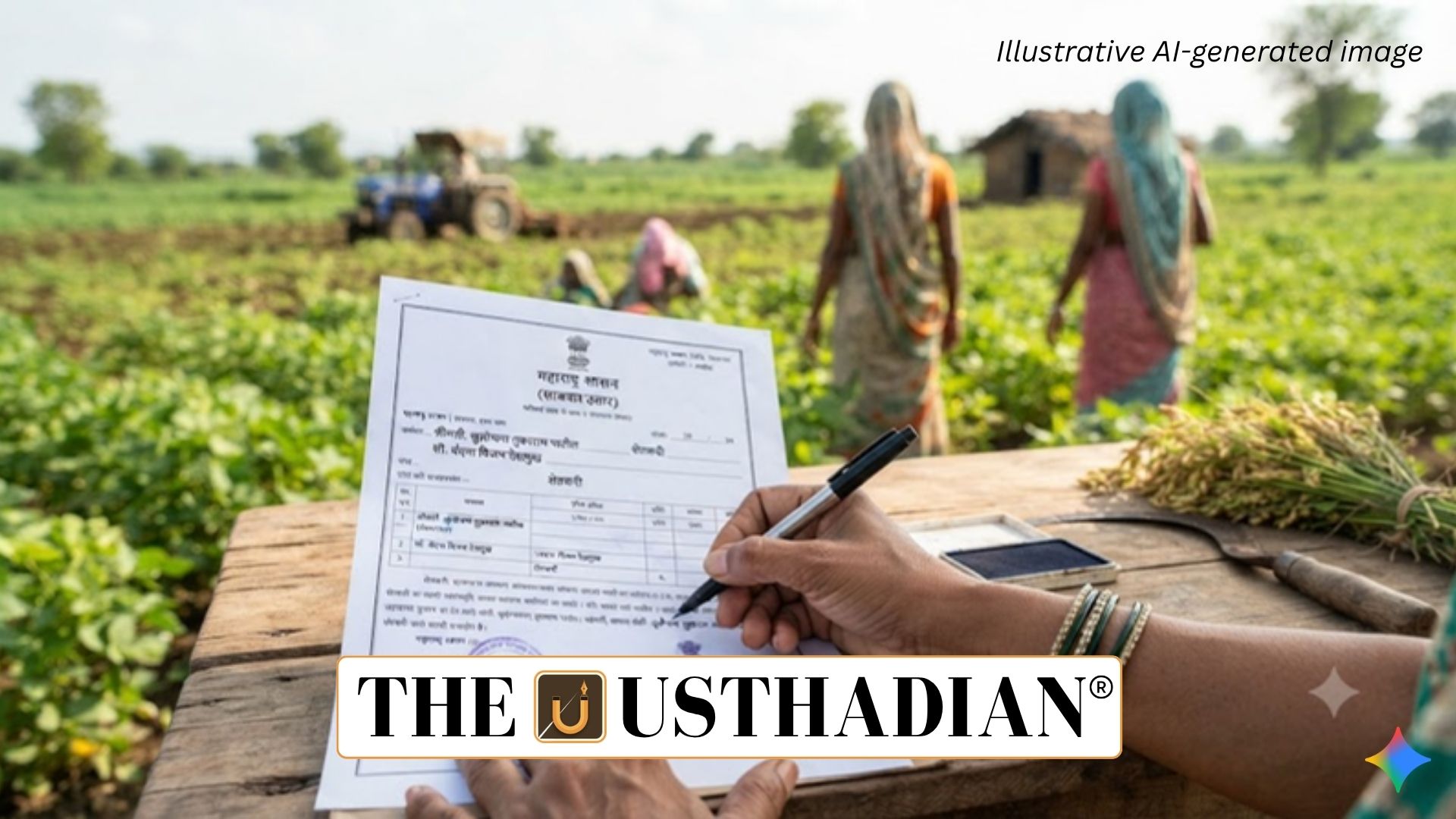
Maharashtra Recognises Women Farmers
Maharashtra Expands Legal Recognition of Women Farmers: Maharashtra has taken a significant step towards recognising the contribution of women to agriculture by passing the Women Farmers’ Empowerment Bill in July 2026. The measure seeks to provide women with an independent identity as farmers even when they do not own agricultural land.
The legislation introduces a Woman Farmer Certificate, separating the definition of a farmer from formal ownership of land. This can help women engaged in cultivation and allied agricultural activities gain better access to government programmes, institutional credit and other support systems.
Land Ownership Is No Longer the Sole Criterion
The proposed framework recognises women who participate in agriculture for at least one agricultural season in a year, irrespective of the nature or ownership of the land on which they work.
Its coverage extends beyond cultivators to include landless agricultural workers, livestock rearers, plantation workers and pastoralists. This activity-based approach is intended to bring women whose agricultural contribution is often absent from official land records into the formal farmer identification system.
Static GK fact: The National Policy for Farmers, 2007 had proposed a broader, activity-based understanding of farmers rather than restricting the definition primarily to land ownership.
Bridging the Recognition Gap
Women play a major role in India’s agricultural workforce, but ownership and administrative records do not always reflect their contribution.
According to the figures cited in the source material, agriculture employed around 110 million women and 127 million men in 2025. Yet only about 14% of operational agricultural landholdings were held by women according to the Agricultural Census 2015–16.
This creates a gap between the worker and owner. Women may cultivate family-owned land, perform livestock-related work or undertake agricultural labour without having their names recorded as landholders.
Impact on Scheme Access
Land records frequently function as an important administrative basis for identifying beneficiaries. Consequently, women without land titles can face difficulties in accessing credit, subsidies, technology, extension services and welfare programmes.
The source material notes that women accounted for only around 23% of PM-KISAN beneficiaries, despite the scheme providing ₹6,000 annually to eligible landholding farmer families.
Static GK Tip: PM-KISAN is a Central Sector Scheme launched in 2019 to provide income support to eligible landholding farmer families.
Earlier State-Level Initiatives
Maharashtra’s move builds on earlier efforts to strengthen women’s participation in agriculture. Kudumbashree in Kerala has supported collective farming by women, while Odisha’s KALIA scheme has included landless and sharecropper beneficiaries.
However, a dedicated recognition mechanism for women farmers that is delinked from land ownership records represents a distinct administrative approach.
The initiative also comes in a significant international context. The United Nations has designated 2026 as the International Year of the Woman Farmer, placing greater attention on women’s contribution to food systems and rural economies.
Implementation Challenges
Legal recognition alone will not guarantee access to benefits. Women will need accessible registration mechanisms, including self-registration and Gram Sabha identification, particularly for those without land titles.
The proposed database will also need integration with existing agricultural information systems. Linking women farmer certificates with Agri Stack and Farmer IDs can help connect their identities with the wider digital agricultural ecosystem.
From Recognition to Empowerment
The effectiveness of the measure will depend on implementation, database interoperability and sustained awareness at the local level. Standardised definitions and certification systems could also make it easier for recognised women farmers to access multiple schemes without repeated registration.
Maharashtra’s initiative therefore highlights a broader policy question: whether a farmer’s official identity should depend primarily on land ownership or actual participation in agriculture. Its implementation may provide useful lessons for improving the visibility and inclusion of women across India’s agricultural system.
Static Usthadian Current Affairs Table
Maharashtra Expands Legal Recognition of Women Farmers:
| Fact | Detail |
| State | Maharashtra |
| Legislation | Women Farmers’ Empowerment Bill |
| Year | 2026 |
| Key provision | Woman Farmer Certificate |
| Recognition basis | Agricultural activity rather than land ownership alone |
| Covered groups | Cultivators, agricultural labourers, livestock rearers, plantation workers and pastoralists |
| Registration | Self-registration or Gram Sabha identification |
| Digital integration | Agri Stack and Farmer IDs |
| PM-KISAN benefit | ₹6,000 per year for eligible landholding farmer families |
| Women’s operational landholdings | About 14% as per Agricultural Census 2015–16 |
| International context | 2026 designated International Year of the Woman Farmer |
| Key objective | Improve recognition and access to agricultural support |