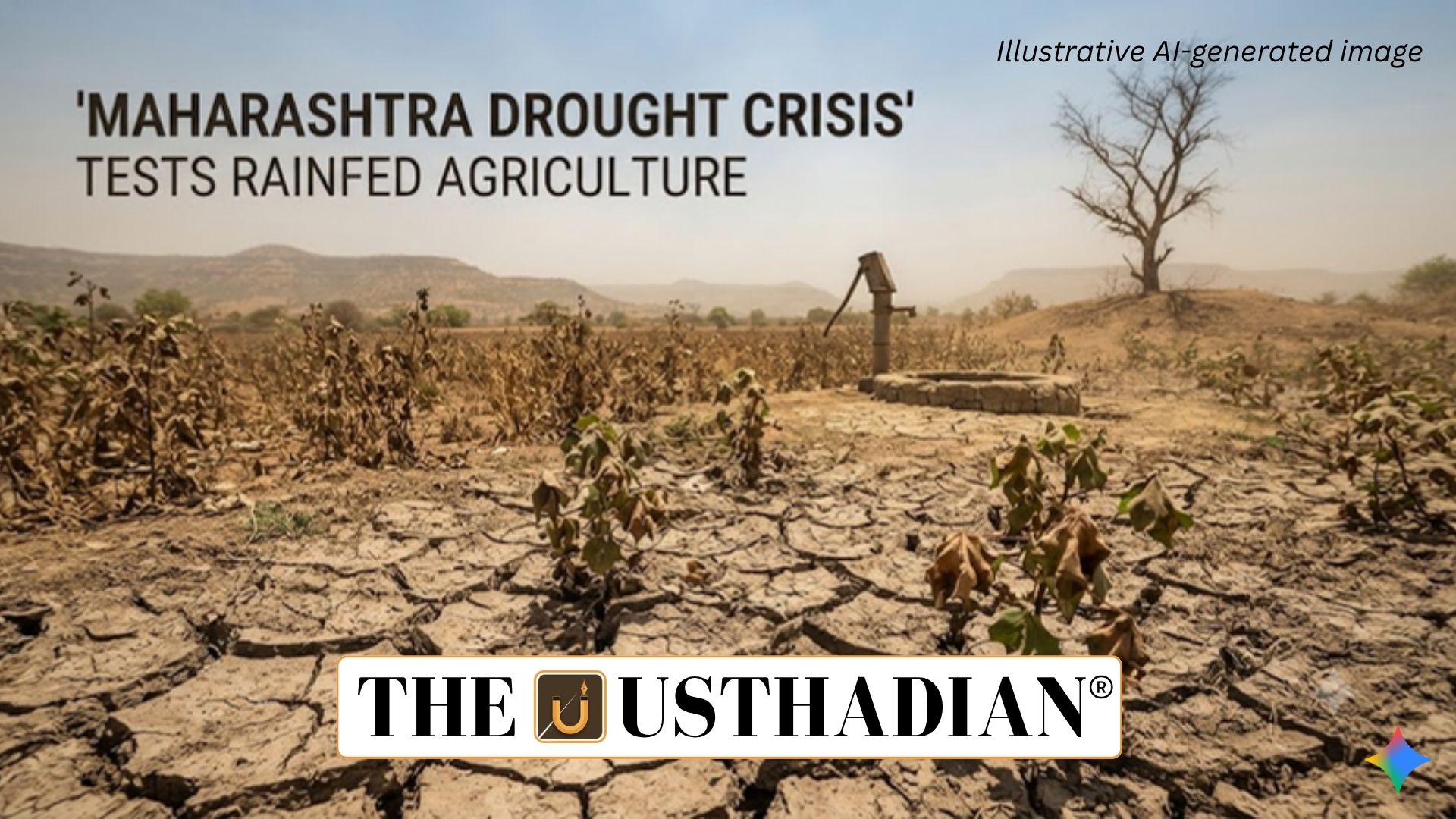
Drought Conditions Intensify in Maharashtra
Maharashtra Drought Crisis Tests Rainfed Agriculture: Maharashtra is facing a severe drought-like situation after prolonged dry spells and uneven monsoon rainfall affected agriculture and water availability. The impact has been particularly serious in Marathwada and parts of Vidarbha, where soybean, cotton and other kharif crops have suffered.
The state government has begun field-level assessments and plans to undertake the formal drought assessment process from October 5, in accordance with the applicable disaster-relief framework.
Why October 5 Is Important
Under the National Disaster Response Fund (NDRF) framework, assessment of a kharif-season drought can begin from October 5, when the southwest monsoon starts its withdrawal phase. For the rabi season, the corresponding assessment can be undertaken in March 2027.
States can assess drought conditions based on local circumstances, but proposals seeking central disaster assistance have to satisfy the relevant NDRF parameters.
Static GK fact: The NDRF is constituted under the Disaster Management Act, 2005 to provide financial assistance for disaster response in situations of severe calamity.
How Drought Is Assessed
Drought assessment is not determined by rainfall deficit alone. Authorities consider indicators including crop damage, rainfall deficiency, soil moisture, food production, groundwater levels, drinking-water availability, fodder availability and migration.
The framework also considers factors such as the Moisture Adequacy Index and the extent of sowing. These indicators help establish the broader agricultural and hydrological impact of deficient rainfall.
Kharif Crops Under Pressure
Erratic rainfall delayed kharif sowing considerably. Instead of beginning around June 10, sowing reportedly began only around July 15, while subsequent dry spells affected flowering and fruit formation.
Soybean and cotton have been among the worst-affected crops in Marathwada and Vidarbha. Sugarcane in parts of Marathwada and western Maharashtra has also faced stress from prolonged moisture shortages.
Water Storage Shows Regional Stress
Water availability has become another major concern. As of September 20, Maharashtra’s major and medium reservoirs were below the corresponding levels of the previous year, while small and micro dams showed greater stress.
Marathwada was the most affected region, with reservoir storage at about 46%, compared with 81% during the same period last year. Other regional storage levels included Amravati 64%, Nagpur 72%, Pune 88%, Nashik 83% and Konkan 76%.
Static GK Tip: Marathwada is an inland region of Maharashtra consisting of eight districts and is particularly vulnerable to rainfall variability because of its dependence on rain-fed agriculture.
Rainfall Deficit Across Districts
According to data cited from the India Meteorological Department (IMD), 31 of Maharashtra’s 36 districts were rain-deficient, with 20 recording deficits between 25% and 58%.
More than 100 of the state’s 355 drought-affected talukas experienced gaps of 40–60 days between rain spells. Short and intense rainfall events in some locations also contributed to runoff, soil erosion and inadequate moisture retention.
Agriculture Needs Greater Irrigation Support
Maharashtra’s vulnerability is linked to its substantial dependence on rain-fed farming. With irrigation potential below 20%, variations in monsoon timing and distribution can have significant consequences for crop production and rural livelihoods.
The drought episode therefore highlights the importance of expanding irrigation, improving water conservation and strengthening climate-resilient agricultural practices alongside immediate relief measures.
Static Usthadian Current Affairs Table
Maharashtra Drought Crisis Tests Rainfed Agriculture:
| Fact | Detail |
| State affected | Maharashtra |
| Formal kharif assessment | From October 5 |
| Rabi assessment | March 2027 |
| Major affected region | Marathwada |
| Marathwada water storage | About 46% as of September 20 |
| Rain-deficient districts | 31 of 36 |
| Major affected crops | Soybean and cotton |
| Key assessment indicator | Moisture Adequacy Index |
| Disaster-relief framework | NDRF |
| Major structural vulnerability | High dependence on rain-fed agriculture |
| Key long-term requirement | Greater irrigation and water conservation |