Major administrative change
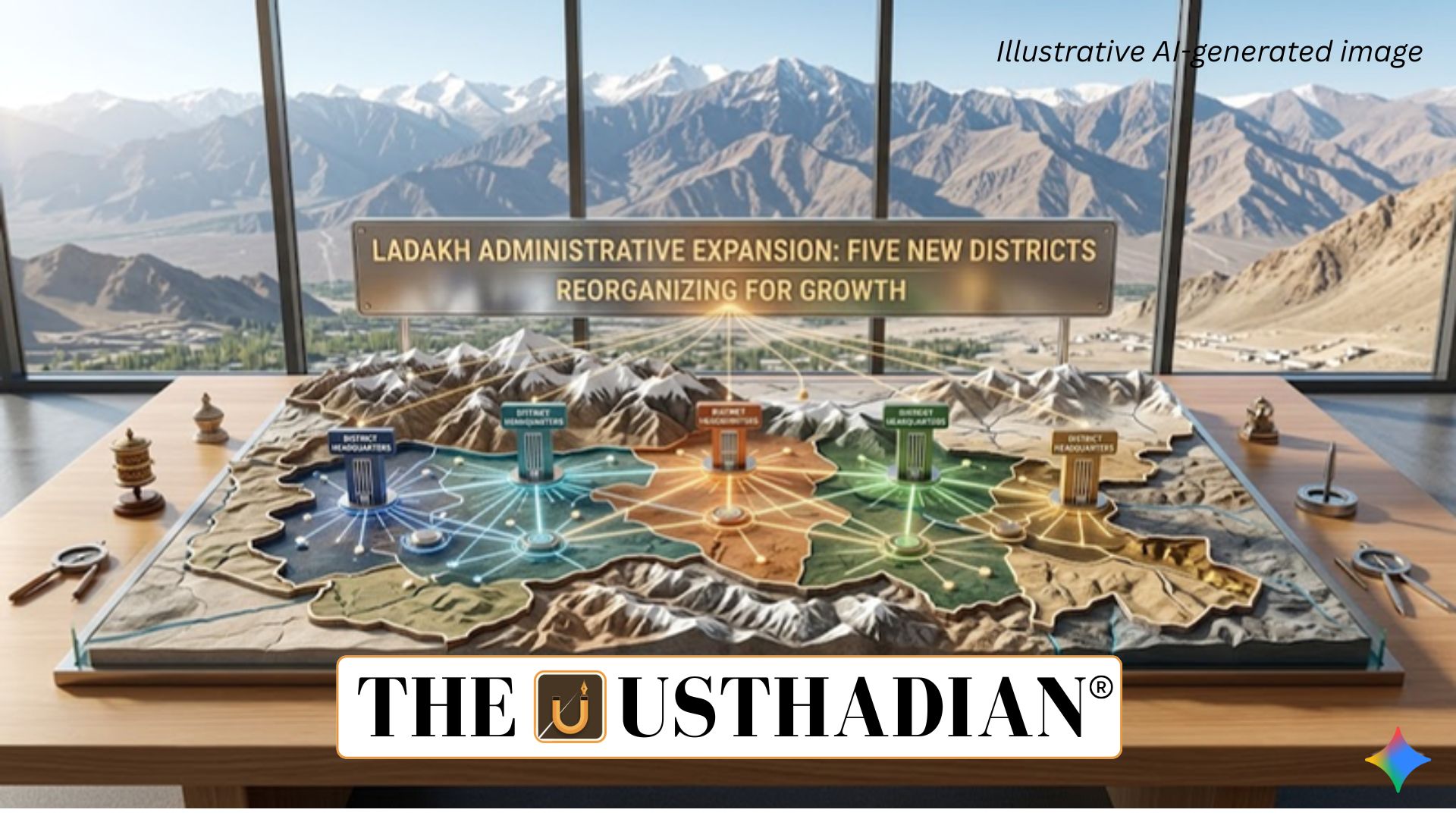
Ladakh Administrative Expansion with Five New Districts: The Union Territory of Ladakh has undergone a significant administrative reform with the creation of five new districts. This decision was approved by Lieutenant Governor Vinai Kumar Saxena, aiming to enhance governance efficiency.
With this move, the total number of districts in Ladakh has increased from two to seven, marking a historic step in administrative restructuring.
Static GK fact: Ladakh is India’s largest Union Territory by area, covering about 86,904 sq km.
Newly created districts
The five new districts are Nubra, Sham, Changthang, Zanskar, and Drass. Earlier, Ladakh consisted only of Leh and Kargil districts.
These regions were previously sub-divisions but are now upgraded to district status. This will allow better administrative reach in remote and strategically sensitive areas.
Need for reorganisation
Ladakh has a sparse population of around 2.74 lakh (Census 2011) spread across rugged terrain. The geographical challenges often delay service delivery and governance processes.
The creation of new districts will bring administration closer to citizens, particularly in far-flung border villages. This is crucial for improving infrastructure and public services.
Static GK Tip: Low population density regions often require smaller administrative units for effective governance.
Administrative and strategic importance
The proposal had received approval from the Ministry of Home Affairs in August 2024 under Home Minister Amit Shah. The restructuring is expected to strengthen grassroots governance.
Ladakh holds immense strategic importance due to its proximity to China and Pakistan borders. Enhanced administrative presence will support both security and development objectives.
Key geographical highlights
Drass is globally known as one of the coldest inhabited places on Earth. It plays a key role in the Kargil region’s strategic landscape.
Changthang is a high-altitude plateau famous for Pashmina wool production and nomadic communities. These regions hold both economic and ecological significance.
Static GK fact: The Karakoram Range and Siachen Glacier are located in the broader Ladakh region.
Political context and impact
Ladakh became a separate Union Territory on 31 October 2019 after the bifurcation of Jammu and Kashmir. The abrogation of Article 370 (5 August 2019) led to this reorganisation.
Currently, Ladakh has limited political representation, with only one Member of Parliament. The new districts are expected to improve local participation and administrative responsiveness.
Way forward
The district expansion will likely boost employment opportunities, entrepreneurship, and regional development. It will also improve delivery of welfare schemes.
A balanced focus on infrastructure, ecology, and security will be essential for sustainable development in this fragile Himalayan region.
Static Usthadian Current Affairs Table
Ladakh Administrative Expansion with Five New Districts:
| Topic | Detail |
| Total districts now | Seven districts |
| New districts | Nubra, Sham, Changthang, Zanskar, Drass |
| Previous districts | Leh and Kargil |
| UT formation date | 31 October 2019 |
| Article 370 abrogation | 5 August 2019 |
| Area of Ladakh | 86,904 sq km |
| Population | Around 2.74 lakh (2011 Census) |
| Strategic importance | Border region near China and Pakistan |