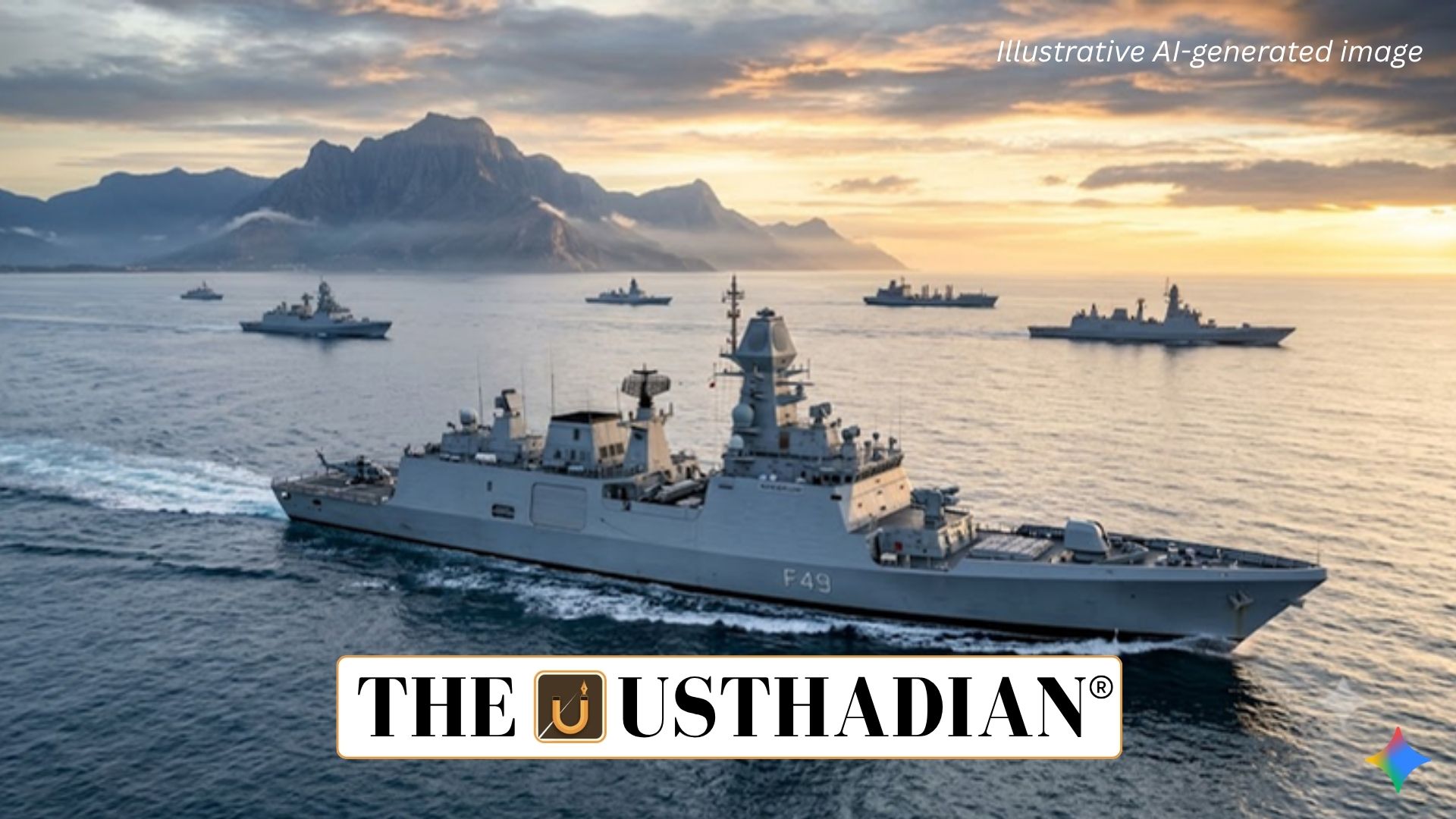
INS Mahendragiri Joins Eastern Fleet
Indian Navy Commissions INS Mahendragiri Frigate into Eastern Fleet: The Indian Navy has commissioned INS Mahendragiri (F38) into its Eastern Fleet on 11 July 2026.
INS Mahendragiri is the sixth and final vessel of the Project 17A stealth frigate programme. Its induction marks another important step towards strengthening India’s indigenous warship-building capabilities and achieving greater self-reliance in defence production.
The commissioning event was held in Visakhapatnam and was attended by Defence Minister Rajnath Singh.
What Is INS Mahendragiri?
INS Mahendragiri is an indigenously designed and built stealth guided-missile frigate of the Indian Navy.
Key details include:
- Pennant Number: F38
- Class: Project 17A
- Role: Multi-purpose stealth frigate
- Designer: Warship Design Bureau of the Indian Navy
- Builder: Mazagon Dock Shipbuilders Limited (MDL), Mumbai
- Indigenous Content: More than 75%
- Fleet: Eastern Fleet
The ship strengthens India’s ability to design and manufacture sophisticated warships domestically.
What Is Project 17A?
Project 17A is the successor to the Project 17 Shivalik-class stealth frigates.
The programme focuses on developing advanced frigates with improved:
- Stealth
- Automation
- Survivability
- Combat capability
- Network-centric warfare capabilities
Project 17A also makes extensive use of modern design techniques and modular construction technology, helping improve construction efficiency and reduce building time.
Major Stealth Features
INS Mahendragiri incorporates several technologies designed to reduce its detectability.
Low Radar Signature
The ship’s design helps reduce its radar cross-section, making it more difficult for hostile systems to detect.
Acoustic Stealth
Advanced measures help reduce underwater and machinery-related acoustic signatures.
Low Heat Signature
The vessel incorporates features designed to reduce its thermal detectability.
Together, these characteristics enhance the ship’s survivability in contested maritime environments.
High Indigenous Content
More than 75% of INS Mahendragiri’s components and systems are indigenous.
The Project 17A programme has involved participation from:
- Defence Public Sector Undertakings (DPSUs)
- Private defence companies
- Micro, Small and Medium Enterprises (MSMEs)
This broad industrial participation strengthens India’s domestic defence manufacturing ecosystem.
Advanced Automation
INS Mahendragiri incorporates a high degree of automation.
Automation helps:
- Improve operational efficiency
- Reduce crew requirements
- Enhance monitoring and control
- Support faster decision-making
Combat Capabilities of INS Mahendragiri
The frigate is designed to perform multiple types of naval warfare.
Anti-Air Warfare
The ship is equipped to detect and engage aerial threats, including hostile aircraft and other airborne targets.
Anti-Surface Warfare
INS Mahendragiri can engage hostile surface vessels and support offensive maritime operations.
Anti-Submarine Warfare
The frigate possesses capabilities for detecting and responding to underwater threats.
Electronic Warfare
The ship incorporates electronic warfare systems that improve its ability to operate in environments involving hostile sensors, communications and electronic countermeasures.
Operational Roles
INS Mahendragiri is not limited to combat missions. It can also undertake a range of maritime security and support operations.
Its roles include:
- Maritime security
- Search and rescue
- Humanitarian Assistance and Disaster Relief (HADR)
- Maritime reconnaissance
- Long-range deployments
- Protection of Sea Lines of Communication (SLOCs)
The ship can operate across the Indian Ocean Region (IOR) and undertake missions beyond the region when required.
Strategic Significance
The induction of INS Mahendragiri is important for India’s maritime security and defence self-reliance.
Strengthening the Eastern Fleet
Its addition enhances the Indian Navy’s operational capabilities on India’s eastern maritime front.
Boost to Aatmanirbhar Bharat
The high indigenous content supports India’s objective of reducing dependence on foreign defence imports.
Strengthening Domestic Shipbuilding
The project demonstrates the growing capability of Indian shipyards, defence companies and MSMEs to manufacture sophisticated naval platforms.
Modernising the Indian Navy
Advanced stealth, automation, electronic warfare and multi-role combat capabilities contribute to the modernisation of India’s surface fleet.
Static Usthadian Current Affairs Table
Indian Navy Commissions INS Mahendragiri Frigate into Eastern Fleet:
| Fact | Detail |
| Ship | INS Mahendragiri |
| Pennant Number | F38 |
| Navy | Indian Navy |
| Fleet | Eastern Fleet |
| Class | Project 17A |
| Project Position | 6th and final vessel |
| Ship Type | Stealth Frigate |
| Designed By | Warship Design Bureau |
| Built By | Mazagon Dock Shipbuilders Limited |
| Location of Commissioning | Visakhapatnam |
| Commissioning Date | 11 July 2026 |
| Defence Minister | Rajnath Singh |
| Indigenous Content | More than 75% |
| Predecessor Programme | Project 17 |
| Earlier Class | Shivalik-class frigates |
| Key Capabilities | Anti-air, anti-surface, anti-submarine and electronic warfare |
| Other Roles | Maritime security, HADR, reconnaissance and search & rescue |
| Major Initiative | Aatmanirbhar Bharat |
| Region of Operations | Indian Ocean Region (IOR) |