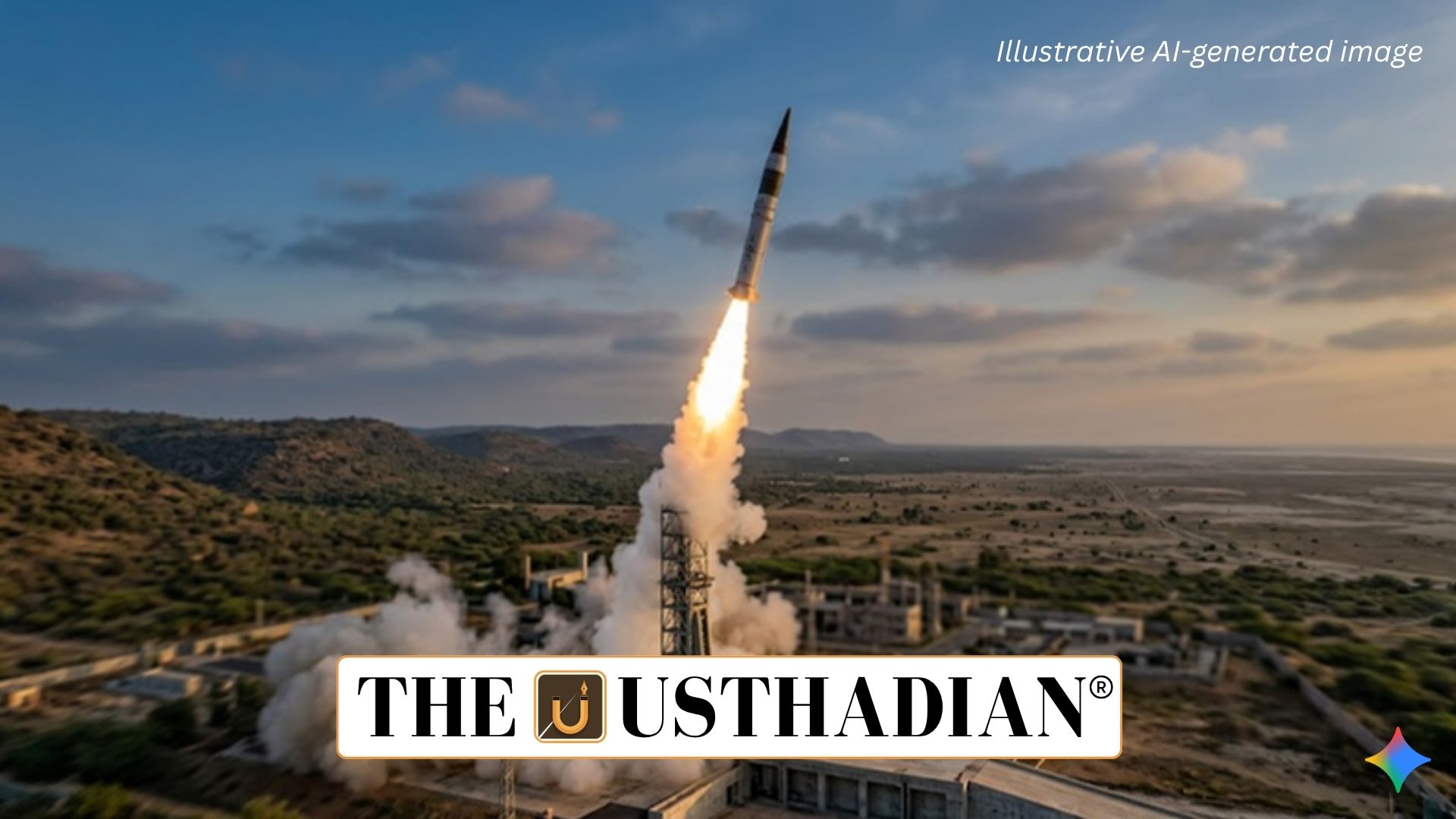
India Successfully Test-Fires Agni-1 Missile
India Successfully Conducts Agni-1 Missile Test Under Strategic Forces Command: India successfully conducted the test launch of the Agni-1 ballistic missile from the Integrated Test Range (ITR), Chandipur, Odisha, on 22 May 2026. The test was carried out under the supervision of the Strategic Forces Command (SFC) and successfully validated all operational and technical parameters.
According to the Ministry of Defence, the launch achieved all mission objectives, reaffirming the operational readiness and reliability of India’s strategic missile systems.
Static GK fact: The Integrated Test Range (ITR), Chandipur, located in Odisha, is one of India’s premier missile testing facilities operated by the Defence Research and Development Organisation (DRDO).
About the Agni-1 Missile
The Agni-1 is a short-range ballistic missile (SRBM) developed by DRDO as part of India’s Agni missile series. It was designed to strengthen India’s strategic deterrence capability by providing a quick-response missile system capable of carrying conventional or strategic payloads, depending on operational requirements.
The missile forms an important component of India’s credible deterrence posture and enhances the country’s defence preparedness.
Static GK Tip: The Agni missile series is named after “Agni”, the Vedic deity of fire, and represents India’s indigenous ballistic missile programme.
Key Features of Agni-1
The Agni-1 missile is designed for rapid deployment and operational flexibility. It is a road- and rail-mobile missile system, enabling quick movement and launch from multiple locations.
Its indigenous design and mobility enhance survivability while providing the armed forces with an effective strategic response capability. The missile plays a vital role in maintaining India’s credible minimum deterrence policy.
Role of the Strategic Forces Command
The missile test was conducted under the Strategic Forces Command (SFC), which is responsible for managing India’s strategic weapons systems. The SFC oversees the operational deployment of strategic missiles, ensures readiness of deterrence capabilities, and supports India’s nuclear command structure.
By regularly conducting operational trials, the SFC ensures that India’s strategic assets remain reliable and combat-ready.
Static GK fact: The Strategic Forces Command (SFC) was established in 2003 as part of India’s Nuclear Command Authority (NCA) to manage the country’s strategic forces.
India’s Agni Missile Programme
The Agni missile programme is one of India’s most significant indigenous defence initiatives. It comprises multiple ballistic missile variants with different operational ranges, enabling the country to maintain an effective strategic deterrence capability.
Developed through decades of research by DRDO, the programme has strengthened India’s self-reliance in missile technology and contributed significantly to national security.
Static GK Tip: The Defence Research and Development Organisation (DRDO) was established in 1958 and functions under the Ministry of Defence to develop advanced defence technologies for the Indian Armed Forces.
Significance of the Test
The successful test of the Agni-1 missile demonstrates India’s continued commitment to maintaining a robust strategic defence posture. Regular validation of missile systems ensures operational preparedness and strengthens national security in a dynamic regional security environment.
The launch also reflects India’s growing technological capability in indigenous defence manufacturing under the vision of Atmanirbhar Bharat.
Static Usthadian Current Affairs Table
India Successfully Conducts Agni-1 Missile Test Under Strategic Forces Command:
| Fact | Detail |
| Missile tested | Agni-1 |
| Missile type | Short-Range Ballistic Missile (SRBM) |
| Test date | 22 May 2026 |
| Test location | Integrated Test Range (ITR), Chandipur, Odisha |
| Supervising authority | Strategic Forces Command (SFC) |
| Developing organisation | Defence Research and Development Organisation (DRDO) |
| Parent ministry | Ministry of Defence |
| Launch capability | Road and rail mobile |
| Strategic role | Credible minimum deterrence and defence preparedness |
| SFC established | 2003 |