DRDO Achieves Another Indigenous Missile Milestone
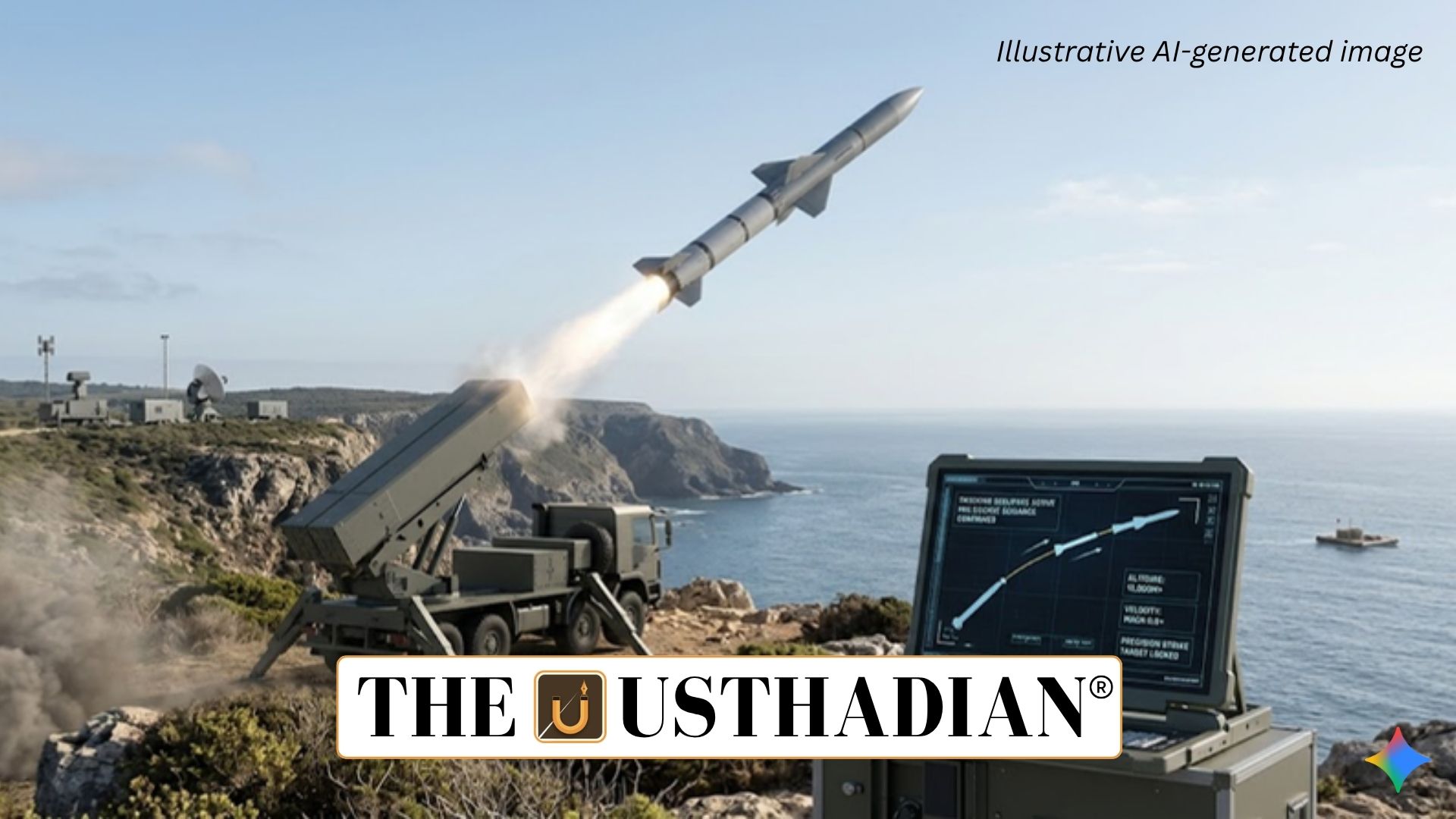
India Strengthens Precision Strike Capability with Successful LRLACM Test: The Defence Research and Development Organisation (DRDO) successfully conducted the flight test of the Long Range Land Attack Cruise Missile (LRLACM) on June 15, 2026, from Dr APJ Abdul Kalam Island off the coast of Odisha. The missile successfully met all mission objectives, marking a significant advancement in India’s indigenous long-range precision strike capability.
The successful trial validated the missile’s performance, navigation, guidance, and control systems. Multiple tracking instruments deployed by the Integrated Test Range (ITR), Chandipur, monitored the missile throughout its flight.
Static GK fact: DRDO functions under the Ministry of Defence and is India’s premier agency responsible for developing indigenous defence technologies and strategic weapon systems.
Understanding the Long Range Land Attack Cruise Missile
The Long Range Land Attack Cruise Missile (LRLACM) is an indigenously developed precision-guided cruise missile designed to destroy strategic land-based targets over long distances. Unlike ballistic missiles, cruise missiles travel at low altitudes, making them difficult for enemy radar systems to detect and intercept.
The missile is capable of accurately striking military infrastructure, command centres, logistics hubs, and other high-value targets. Its advanced navigation system enables it to follow a predetermined flight path with exceptional precision.
Key Features of LRLACM
The missile incorporates several advanced technologies that enhance its operational effectiveness. Its low-altitude flight profile significantly improves survivability against enemy air defence systems while ensuring precision strikes.
The Aeronautical Development Establishment (ADE), Bengaluru, served as the nodal laboratory for the project, with several DRDO laboratories and Indian defence industries contributing to the missile’s development. This reflects India’s growing capability in indigenous defence manufacturing.
Static GK Tip: Cruise missiles generally fly within the Earth’s atmosphere using aerodynamic lift, whereas ballistic missiles follow a high-arching trajectory and re-enter the atmosphere before striking their targets.
Importance for India’s Defence Preparedness
The successful flight test strengthens India’s long-range conventional strike capability and enhances strategic deterrence. Precision-guided cruise missiles are increasingly becoming essential components of modern warfare because they can neutralize high-value targets with minimal collateral damage.
The development also supports the Government’s Atmanirbhar Bharat initiative by reducing dependence on imported missile systems and promoting indigenous defence production. It demonstrates India’s progress in advanced missile technologies and self-reliance in strategic defence capabilities.
Cruise Missiles in Modern Warfare
Modern cruise missiles provide armed forces with flexibility, accuracy, and survivability during military operations. Their ability to fly close to the ground allows them to evade radar detection while maintaining precision throughout the mission.
Such missile systems are widely used for deep-strike operations against critical enemy infrastructure and significantly enhance a nation’s deterrence posture. As geopolitical security challenges evolve, indigenous long-range missile capabilities become increasingly important for safeguarding national interests.
Static GK fact: Dr APJ Abdul Kalam Island, formerly known as Wheeler Island, is located off the coast of Odisha and serves as one of India’s primary missile testing facilities for strategic defence systems.
Static Usthadian Current Affairs Table
India Strengthens Precision Strike Capability with Successful LRLACM Test:
| Fact | Detail |
| Missile Tested | Long Range Land Attack Cruise Missile (LRLACM) |
| Conducting Agency | Defence Research and Development Organisation (DRDO) |
| Test Date | June 15, 2026 |
| Launch Site | Dr APJ Abdul Kalam Island, Odisha |
| Nodal Laboratory | Aeronautical Development Establishment (ADE), Bengaluru |
| Missile Type | Long-range precision-guided cruise missile |
| Monitoring Facility | Integrated Test Range (ITR), Chandipur |
| Key Objective | Strengthen India’s indigenous long-range precision strike capability |
| Defence Initiative | Atmanirbhar Bharat |
| Strategic Significance | Enhances India’s precision strike and deterrence capabilities |