India Achieves a High-Speed Rail Engineering Milestone
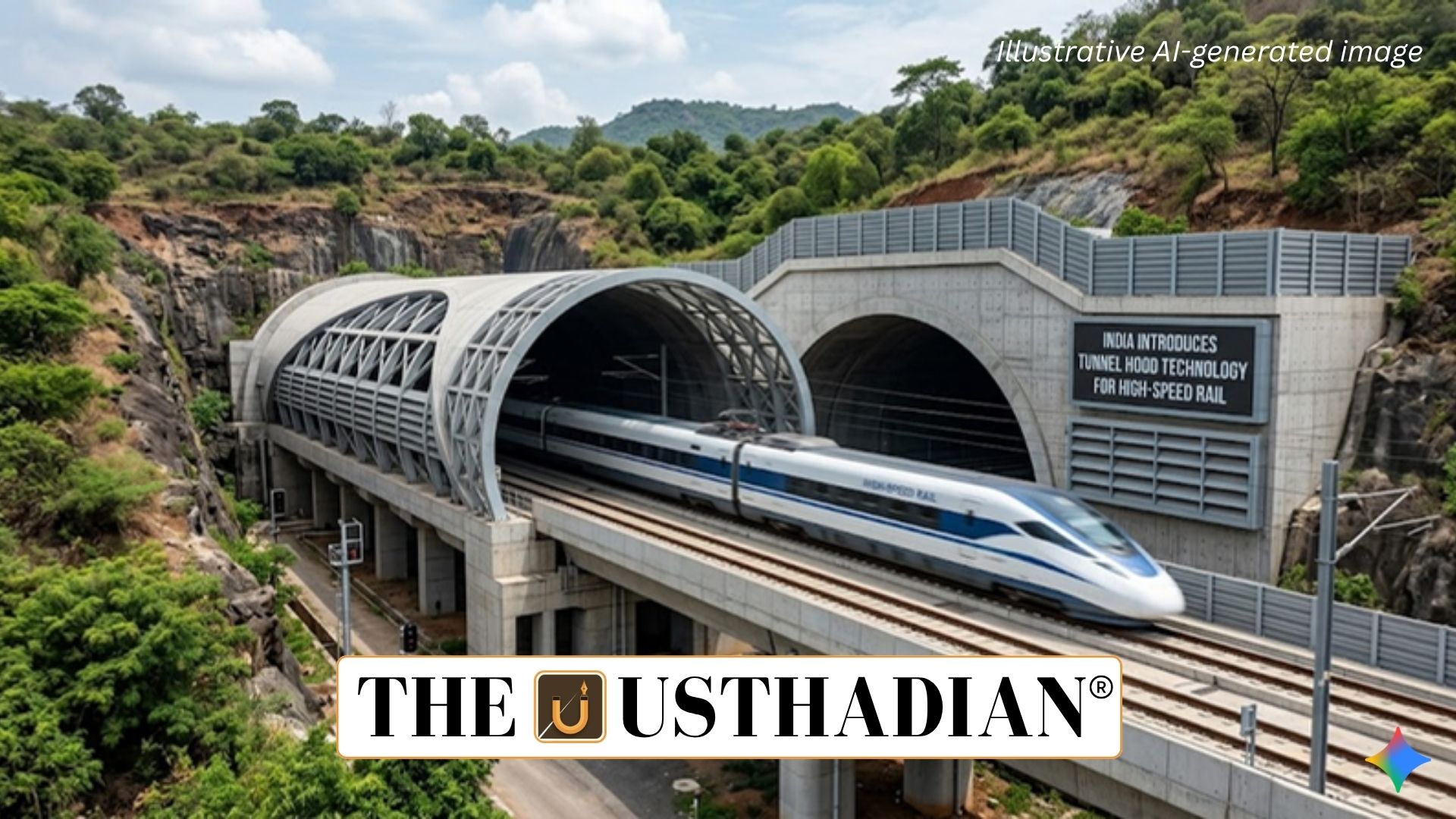
India Introduces Tunnel Hood Technology for High-Speed Rail: India has deployed its first railway tunnel hood technology as part of the Mumbai-Ahmedabad High-Speed Rail (MAHSR) Project. The innovative structures have been installed at tunnel portals to improve the safety, efficiency, and environmental performance of trains operating at speeds exceeding 300 kmph.
The introduction of tunnel hoods marks another major milestone in India’s first bullet train project. By adopting globally proven engineering solutions, the country is strengthening its high-speed rail infrastructure while ensuring greater passenger comfort and reduced environmental impact.
What Are Tunnel Hoods
Tunnel hoods are specially designed structures installed at the entrances and exits of railway tunnels. They act as a transition zone between the open atmosphere and the enclosed tunnel environment.
When a high-speed train enters a tunnel, it compresses a large volume of air ahead of it, creating powerful pressure waves. If unmanaged, these waves generate a loud sound called tunnel boom when the train exits the tunnel. Tunnel hoods help regulate this pressure, ensuring smoother airflow and quieter operations.
Static GK fact: Tunnel boom is an aerodynamic phenomenon that occurs when pressure waves generated by high-speed trains emerge from tunnel exits, producing a loud explosive sound.
How Tunnel Hoods Function
The technology works by allowing compressed air to escape gradually instead of building up suddenly inside the tunnel.
Tunnel hoods are fitted with pressure-relief vents that release part of the compressed air into the atmosphere as a train enters the tunnel. This reduces pressure fluctuations, minimizes shock waves, and significantly lowers noise levels. The result is smoother aerodynamic performance and safer high-speed train operations.
Benefits of Tunnel Hood Technology
The deployment of tunnel hoods provides multiple operational and environmental advantages.
They reduce noise pollution around tunnel exits, improving the quality of life for nearby communities. The technology also enhances passenger comfort by minimizing rapid air-pressure changes inside train coaches. In addition, better airflow contributes to safer, more efficient, and energy-optimized train movement at very high speeds.
Static GK Tip: High-speed rail systems generally operate at speeds of 250 kmph or above on dedicated railway corridors.
Mumbai-Ahmedabad Bullet Train Corridor
The Mumbai-Ahmedabad High-Speed Rail Corridor is India’s first bullet train project and passes through challenging terrain that includes eight mountain tunnels, with seven located in Maharashtra and one in Gujarat.
Tunnel hoods are being installed at both ends of these tunnels to ensure optimal aerodynamic performance. The project is being implemented using Japanese Shinkansen technology, which is globally recognized for its safety, speed, and reliability.
Static GK fact: The National High Speed Rail Corporation Limited (NHSRCL) is the implementing agency for the Mumbai-Ahmedabad High-Speed Rail Project.
Global Significance
Tunnel hood technology is widely used in countries operating advanced high-speed rail networks, including Japan, France, and China. These systems are especially important for trains traveling at speeds above 300 kmph, where aerodynamic effects become more pronounced.
By introducing tunnel hood technology, India is aligning its high-speed rail infrastructure with international engineering standards. The initiative demonstrates the country’s commitment to adopting advanced technologies for sustainable, safe, and world-class transportation.
Static Usthadian Current Affairs Table
India Introduces Tunnel Hood Technology for High-Speed Rail:
| Fact | Detail |
| Project | Mumbai-Ahmedabad High-Speed Rail Corridor |
| Technology Introduced | Tunnel Hood Technology |
| Purpose | Reduce tunnel boom and improve aerodynamic performance |
| Operating Speed | Above 300 kmph |
| Number of Mountain Tunnels | 8 |
| Tunnel Distribution | 7 in Maharashtra, 1 in Gujarat |
| Technology Partner | Japan (Shinkansen Technology) |
| Implementing Agency | National High Speed Rail Corporation Limited (NHSRCL) |
| Key Benefit | Improved safety, reduced noise, and enhanced passenger comfort |
| Static GK | Tunnel boom is caused by pressure waves generated when high-speed trains enter and exit tunnels. |