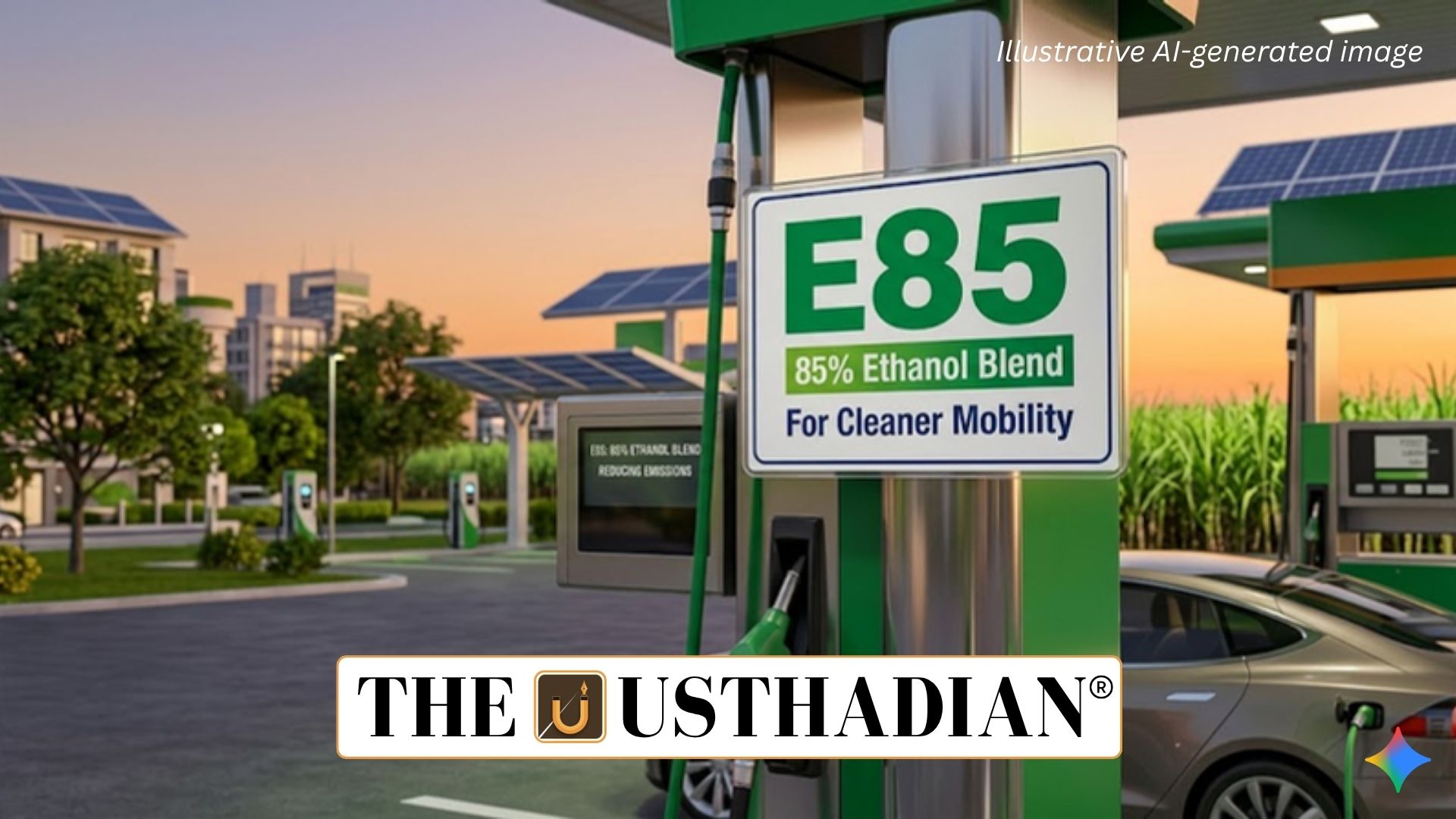
India Launches High Ethanol Blend Fuel
India Introduces E85 Fuel with 85% Ethanol Blend for Cleaner Mobility: India has introduced E85 fuel, a petrol blend containing up to 85% ethanol, as a major step towards reducing dependence on imported crude oil and promoting sustainable transportation. The fuel was launched by Union Minister for Petroleum and Natural Gas Hardeep Singh Puri on the occasion of World Environment Day 2026.
The initiative aims to strengthen India’s energy security, reduce greenhouse gas emissions, support domestic ethanol production, and create new opportunities for farmers involved in biofuel feedstock cultivation.
Static GK fact: World Environment Day is observed every year on 5 June and was established by the United Nations General Assembly in 1972.
What Is E85 Fuel?
E85 is an advanced ethanol-based fuel blend consisting of approximately 85% ethanol and 15% petrol. It is mainly designed for Flex-Fuel Vehicles (FFVs), which can operate using different combinations of ethanol and petrol.
Ethanol is a renewable fuel produced from agricultural resources such as sugarcane, maize, rice, and biomass residues. Compared to conventional petrol, ethanol-based fuels produce lower carbon emissions and provide an alternative source of transportation energy.
The launch of E85 represents the next phase of India’s ethanol blending journey after the successful implementation of E20 petrol, which contains 20% ethanol blending.
Why India Is Promoting E85 Fuel
India imports a significant portion of its crude oil requirements, making the economy vulnerable to fluctuations in global oil prices and international supply disruptions.
The government is promoting E85 fuel to achieve multiple objectives, including:
- Reducing crude oil import dependency
- Improving energy independence
- Lowering carbon emissions
- Increasing domestic ethanol production
- Supporting farmers’ income
- Encouraging cleaner transportation
The initiative aligns with India’s broader objectives of achieving sustainable development and reducing fossil fuel dependence.
Static GK Tip: India’s Ethanol Blended Petrol (EBP) Programme was launched in 2003 to promote the blending of ethanol with petrol and reduce dependence on imported petroleum.
Key Features of E85 Fuel Rollout
The introduction of E85 fuel will initially take place through a phased approach at selected fuel stations across India.
Major highlights of the rollout include:
- Ethanol content of approximately 85%
- Initial availability at around 48–50 fuel stations
- Launch locations include Delhi-NCR, Mumbai, Pune, and Nagpur
- Expansion planned across more regions in future
- Suitable mainly for Flex-Fuel Vehicles
- Expected reduction in transport-related emissions
The phased implementation will allow authorities to evaluate consumer response, infrastructure readiness, and vehicle compatibility.
E85 Fuel Offers Price Benefits
A major advantage of E85 fuel is its expected affordability compared to conventional petrol. The government has announced that E85 will be priced around ₹20 per litre lower than E20 petrol.
The lower price is expected to encourage consumers to adopt flex-fuel vehicles and increase acceptance of alternative fuels. It may also help reduce transportation costs for consumers in the long term.
Benefits for Farmers and Rural Economy
The expansion of ethanol production creates new opportunities for the agricultural sector. Ethanol manufacturing depends on various agricultural resources, including:
- Sugarcane
- Maize
- Rice
- Agricultural waste
- Biomass materials
Higher ethanol demand can provide additional income opportunities for farmers, encourage rural industries, and strengthen the agricultural value chain.
Significance of E85 for India’s Energy Future
The introduction of E85 fuel marks an important milestone in India’s transition towards cleaner energy. By promoting renewable fuels, India aims to balance economic growth with environmental sustainability.
The initiative supports national goals related to energy security, carbon reduction, and green transportation, while also creating stronger links between agriculture and the energy sector.
Static Usthadian Current Affairs Table
India Introduces E85 Fuel with 85% Ethanol Blend for Cleaner Mobility:
| Fact | Detail |
| Fuel Name | E85 Fuel |
| Ethanol Content | Approximately 85% |
| Petrol Content | Approximately 15% |
| Launched By | Hardeep Singh Puri |
| Launch Occasion | World Environment Day 2026 |
| Vehicle Compatibility | Flex-Fuel Vehicles (FFVs) |
| Initial Fuel Stations | Around 48–50 outlets |
| Launch Cities | Delhi-NCR, Mumbai, Pune, Nagpur |
| Price Difference | Around ₹20 per litre lower than E20 petrol |
| Ethanol Programme | Ethanol Blended Petrol (EBP) Programme |