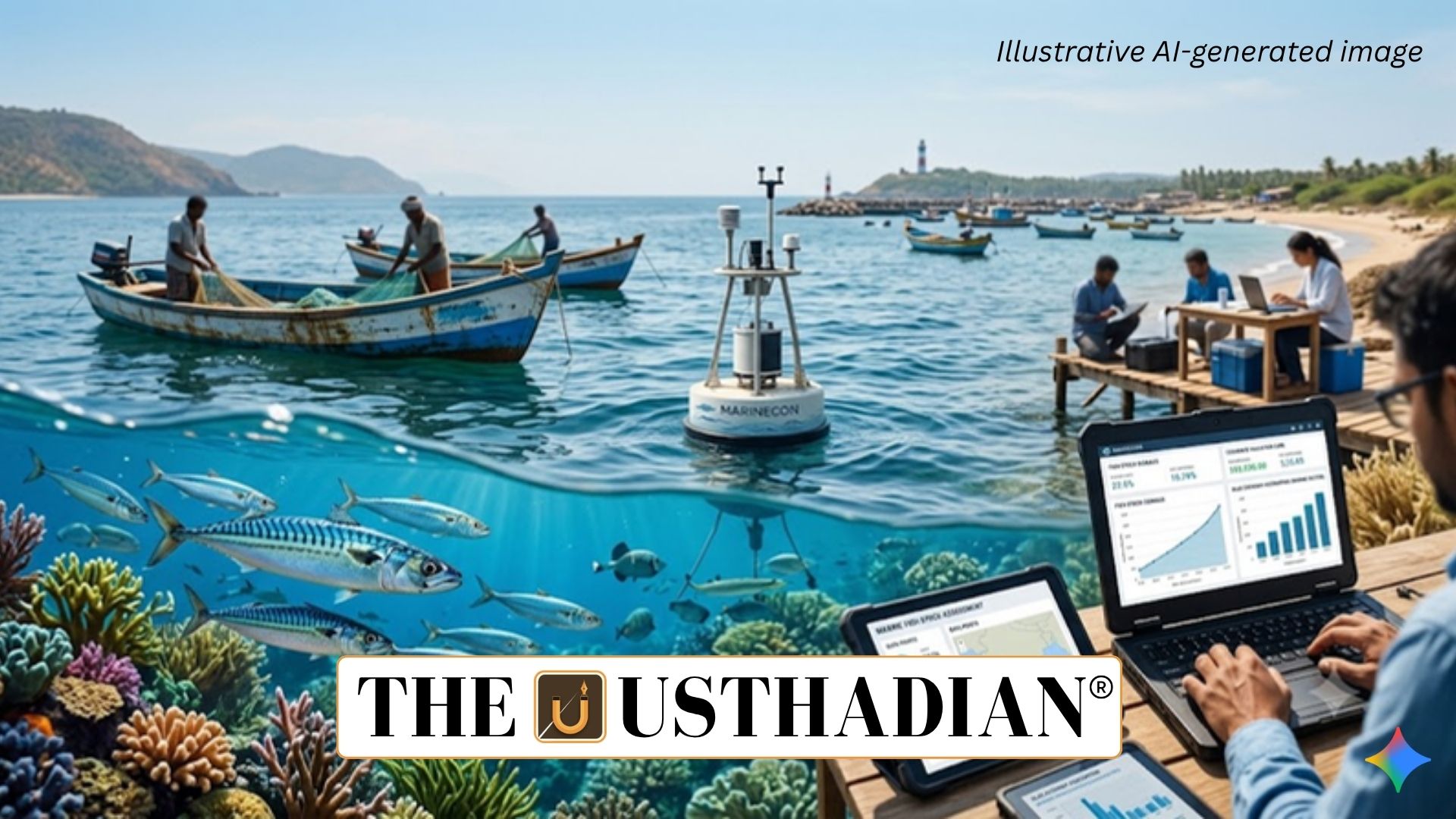
MoSPI Starts Experimental Fish Valuation
India Begins Valuing Marine Fish Stocks for Blue Economy Accounting: The Ministry of Statistics and Programme Implementation (MoSPI) has released a concept paper for assigning a monetary value to India’s marine fish resources. The document is titled Methodological Approach for Compilation of Experimental Monetary Asset Accounts of Marine Fish Resources and was released in August 2026.
The initiative treats fish available in the sea as a form of natural capital. Instead of measuring only annual catches, the proposed framework seeks to estimate whether the underlying fish resource is increasing, declining or remaining stable over time.
SEEA Provides the Accounting Framework
The methodology is based on the United Nations System of Environmental-Economic Accounting (SEEA). This framework connects environmental resources with conventional economic accounts.
Under this approach, harvesting fish represents an economic flow generated from a natural asset. Valuing the remaining stock can therefore help policymakers understand whether present fishing activity is sustainable.
Static GK fact: SEEA is an internationally accepted statistical framework used to integrate environmental information with economic accounting.
Fisheries Hold Major Economic Importance
India is among the world’s largest fish-producing countries and contributes about 8% of global fish production. Total fish production in 2024-25 reached around 19.77 million metric tonnes, with inland fisheries accounting for the dominant share.
Marine fish production increased from about 34.43 lakh tonnes in 2013-14 to nearly 46.15 lakh tonnes in 2024-25. Fisheries also support the livelihoods of millions of people across coastal and inland regions.
Marine exports are another major component of the sector. India exports hundreds of varieties of marine products to international markets, making fisheries important for both employment and foreign-exchange earnings.
Why Production Data Alone Is Not Enough
Annual fish catch figures indicate how much is being harvested, but they do not fully reveal whether specific fish stocks can continue supporting the same level of extraction.
Climate change, excessive fishing pressure, habitat degradation and changes in marine ecosystems can reduce future availability even when present production appears strong.
The proposed asset accounts aim to capture this hidden dimension by combining physical stock condition with economic value.
How Fish Stocks Will Be Valued
The proposed methodology begins by identifying important fish species based on their commercial, ecological and economic significance.
Historical landing data, including roughly 10 years of species-wise information, will be used to assess stock trends. Researchers will then estimate the likely asset life of each resource.
A key concept is resource rent, which represents the income attributable to the natural resource after deducting labour costs, operational expenses, depreciation and normal returns on capital.
Future resource rents will be projected and discounted to present value, using a proposed 2% real discount rate.
Blue Economy Gains Policy Importance
India’s blue economy includes fisheries, ports, shipping, tourism, offshore energy and other ocean-based activities. Current estimates place its contribution at roughly 4% of GDP.
India possesses a coastline of about 11,100 km and an Exclusive Economic Zone exceeding 2 million sq km, giving the country significant marine resource potential.
Static GK Tip: An Exclusive Economic Zone extends up to 200 nautical miles from the coastal baseline under the United Nations Convention on the Law of the Sea.
Better Accounting Can Improve Sustainability
A monetary marine asset account could help India decide whether to expand fishing, restore depleted stocks or regulate harvesting more strictly.
Its real value will depend on whether the data contributes to better fishery management, stronger coastal livelihoods and sustainable use of ocean resources.
Static Usthadian Current Affairs Table
India Begins Valuing Marine Fish Stocks for Blue Economy Accounting:
| Fact | Detail |
| Initiative | Monetary valuation of marine fish resources |
| Ministry | Ministry of Statistics and Programme Implementation |
| Concept Paper | Methodological Approach for Compilation of Experimental Monetary Asset Accounts of Marine Fish Resources |
| Global Framework | UN System of Environmental-Economic Accounting |
| Total Fish Production 2024-25 | 19.77 MMT |
| Marine Fish Production 2024-25 | 46.15 lakh tonnes |
| Global Production Share | About 8% |
| Proposed Discount Rate | 2% real rate |
| India’s Coastline | About 11,100 km |
| India’s EEZ | Over 2 million sq km |
| Main Economic Concept | Resource rent |
| Wider Policy Area | Blue economy |