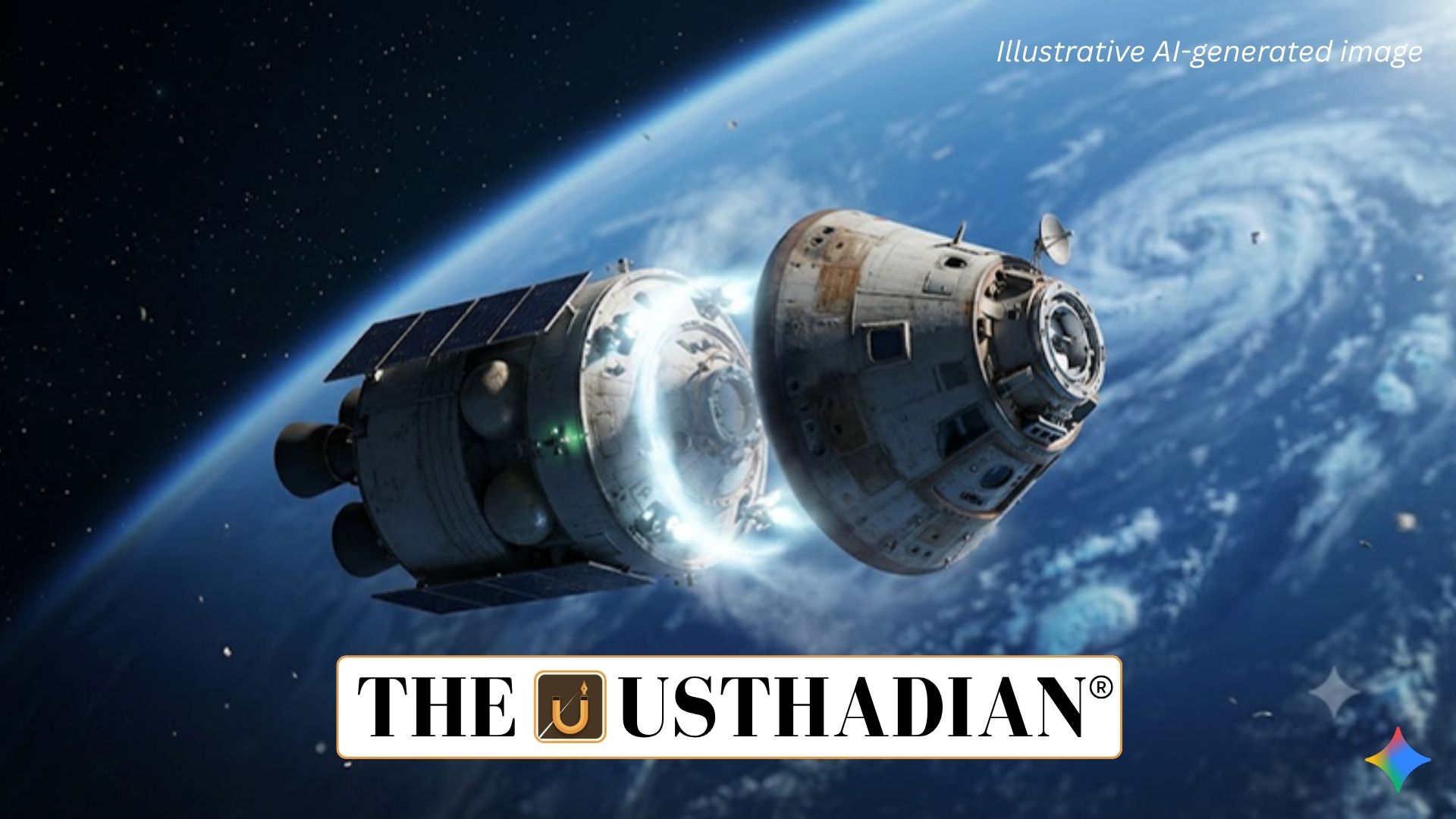
Separation Tests Successfully Completed
ISRO Validates Gaganyaan Module Separation Systems: The Indian Space Research Organisation (ISRO) completed a series of Crew Module–Service Module (CM-SM) separation tests on 16 October 2026 at the Vikram Sarabhai Space Centre (VSSC) in Thiruvananthapuram, Kerala.
The tests evaluated the separation mechanism and its ability to withstand mechanical shocks generated during the process. This milestone strengthens confidence in spacecraft safety systems ahead of the first uncrewed G1 mission, scheduled for 2026 according to the supplied report.
Static GK fact: VSSC, located in Thiruvananthapuram, Kerala, is a major ISRO centre associated with launch vehicle development.
About the Gaganyaan Mission
Gaganyaan is India’s human spaceflight programme, designed to demonstrate the capability to send Indian astronauts into low Earth orbit (LEO) and safely return them to Earth.
The programme involves the development of human-rated launch vehicles, life-support systems, navigation technology, crew protection and recovery mechanisms.
The G1 mission is planned as an uncrewed flight to evaluate critical systems before human spaceflight. Successful separation testing is an important step towards validating the spacecraft’s operational readiness.
Static GK fact: ISRO is India’s national space agency, headquartered in Bengaluru, Karnataka.
Crew Module and Service Module
The Gaganyaan Orbital Module consists of two principal components with distinct functions.
Crew Module (CM): This is the pressurised spacecraft section in which astronauts travel. It incorporates essential systems such as avionics, navigation equipment and thermal protection. It must protect the crew during flight and atmospheric re-entry.
Service Module (SM): This module provides services required during the mission, including electrical power and other spacecraft support functions. Structural connections and umbilical interfaces link the two modules.
Before atmospheric re-entry, the Crew Module must separate from the Service Module in the correct sequence. Reliable separation is essential for the Crew Module’s safe return and recovery.
How the Separation Tests Were Conducted
ISRO used an instrumented test facility at VSSC to simulate the integrated Crew Module and Service Module configuration.
The tests examined the separation process, including the disconnection of umbilical connections, and measured the mechanical shocks produced during separation. These assessments help determine whether critical Crew Module equipment can withstand the loads generated by the operation.
Critical Systems Verified
The tests assessed the performance and resilience of several important Crew Module systems.
- Avionics and inertial navigation: Support spacecraft electronics, control, orientation and movement measurement.
- Thermal protection system: Protects the Crew Module against extreme heating during re-entry.
- Aft and conical heat shields: Form parts of the Crew Module’s thermal protection arrangements.
- Deployable umbilical shield: Protects the umbilical interface during separation.
- Pyrotechnic devices: Enable controlled separation and deployment operations.
- Crew Module uprighting system: Helps orient the module appropriately during recovery.
- Thermal and humidity control system: Maintains suitable environmental conditions inside the Crew Module.
Static Usthadian Current Affairs Table
ISRO Validates Gaganyaan Module Separation Systems:
| Fact | Detail |
| Mission | Gaganyaan |
| Space agency | ISRO |
| Test date | 16 October 2026 |
| Test location | VSSC, Thiruvananthapuram, Kerala |
| CM | Houses and protects astronauts |
| SM | Provides power and other spacecraft support |
| G1 mission | Planned first uncrewed Gaganyaan flight |
| Key objective | Validate separation reliability and spacecraft safety |
| Re-entry protection | Thermal protection system and heat shields |
| Mission goal | Demonstrate human spaceflight and safe return to Earth |