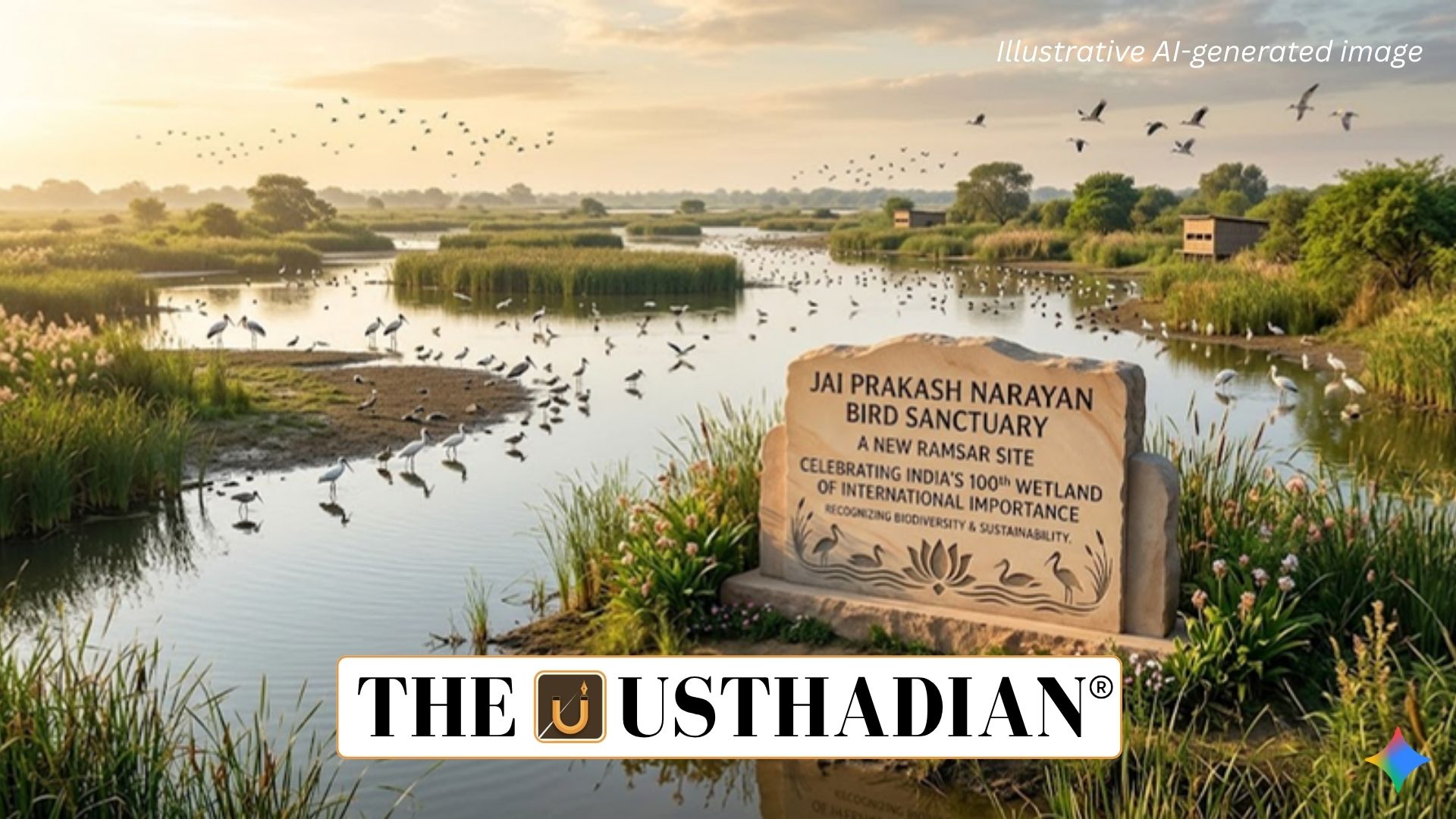
India Reaches the Milestone of 100 Ramsar Sites
India Achieves 100 Ramsar Sites with Inclusion of Jai Prakash Narayan Bird Sanctuary: India has achieved a major milestone in wetland conservation with the inclusion of Jai Prakash Narayan Bird Sanctuary (Surha Tal) in Ballia, Uttar Pradesh, as the country’s 100th Ramsar Site. The announcement was made on World Environment Day (5 June 2026), highlighting India’s continued commitment to protecting ecologically important wetlands.
The recognition strengthens India’s position as one of the leading countries in wetland conservation under the Ramsar Convention. It also reflects sustained efforts to preserve biodiversity and promote sustainable management of water ecosystems.
Static GK Fact: World Environment Day is observed every year on 5 June and is led by the United Nations Environment Programme (UNEP) to promote global environmental awareness and action.
About Jai Prakash Narayan Bird Sanctuary
Jai Prakash Narayan Bird Sanctuary, popularly known as Surha Tal, is located in the Ballia district of Uttar Pradesh. The wetland serves as an important habitat for numerous resident and migratory bird species.
The sanctuary supports rich aquatic biodiversity and performs several ecological functions, including water regulation, breeding, nesting, and feeding of birds. It also contributes to maintaining the ecological balance of the surrounding region.
Static GK Tip: Ballia is situated in the eastern part of Uttar Pradesh, near the confluence of the Ganga and Ghaghara rivers.
What is a Ramsar Site?
A Ramsar Site is a wetland designated under the Ramsar Convention on Wetlands, an international treaty adopted in 1971 at Ramsar, Iran. The Convention promotes the conservation and wise use of wetlands because of their ecological, economic, cultural, scientific, and recreational importance.
Ramsar Sites provide vital habitats for migratory birds, endangered species, aquatic life, and numerous plant species while also supporting flood control, groundwater recharge, and climate resilience.
Static GK Fact: India became a Contracting Party to the Ramsar Convention in 1982.
Significance of the 100th Ramsar Site
The inclusion of Surha Tal marks an important achievement in India’s environmental conservation journey. It demonstrates the country’s growing emphasis on protecting wetlands as essential ecosystems for biodiversity, water security, and climate adaptation.
The recognition also encourages sustainable management practices, strengthens local conservation efforts, and enhances opportunities for eco-tourism and environmental education.
Recent Additions to India’s Ramsar List
India has significantly expanded its network of internationally important wetlands in recent years.
Recent additions include:
- June 2026: Jai Prakash Narayan Bird Sanctuary (Surha Tal), Uttar Pradesh – 100th Ramsar Site
- April 2026: Shekha Jheel Bird Sanctuary, Uttar Pradesh – 99th Ramsar Site
- January 2026: Patna Bird Sanctuary (Uttar Pradesh) and Chhari-Dhand (Gujarat)
- December 2025: Siliserh Lake (Rajasthan) and Kopra Jalashay (Chhattisgarh)
These additions reflect India’s continued efforts to conserve diverse wetland ecosystems across different states.
Importance of Wetlands
Wetlands are among the world’s most productive ecosystems and provide numerous ecological and socio-economic benefits.
Their major functions include:
- Conserving biodiversity
- Supporting migratory birds
- Flood control
- Groundwater recharge
- Carbon sequestration
- Water purification
- Sustaining fisheries and livelihoods
Protecting wetlands is essential for achieving long-term environmental sustainability and climate resilience.
Static GK Tip: India has the largest network of Ramsar Sites in Asia, reflecting its strong commitment to wetland conservation and biodiversity protection.
Static Usthadian Current Affairs Table
India Achieves 100 Ramsar Sites with Inclusion of Jai Prakash Narayan Bird Sanctuary:
| Fact | Detail |
| Milestone | India’s 100th Ramsar Site |
| Ramsar Site | Jai Prakash Narayan Bird Sanctuary (Surha Tal) |
| Location | Ballia, Uttar Pradesh |
| Announcement | World Environment Day (5 June 2026) |
| International Treaty | Ramsar Convention, 1971 |
| Convention Venue | Ramsar, Iran |
| India Joined Convention | 1982 |
| Ecological Importance | Wetland conservation and migratory bird habitat |
| Recent Previous Ramsar Site | Shekha Jheel Bird Sanctuary (99th) |
| National Significance | Strengthens biodiversity conservation and sustainable wetland management |